

By Editorial Staff
October 2, 2026
In a sobering assessment of the state of global humanitarian relief, the United Nations has announced a new $160 million injection of funds intended to reach 87 million people trapped in the world’s most forgotten emergencies. However, the announcement, spearheaded by UN Emergency Relief Coordinator Tom Fletcher, came with a stark caveat: in the current geopolitical climate, the movement of money is no longer the primary hurdle to saving lives.
The funding, released by the UN Office for the Coordination of Humanitarian Affairs (OCHA), represents a desperate effort to bolster operations in 12 crises that have largely fallen off the international media’s radar. Yet, as Fletcher noted, the "sticking point" is no longer just a lack of capital, but a profound crisis of access.
The Main Facts: A Call for Political Will
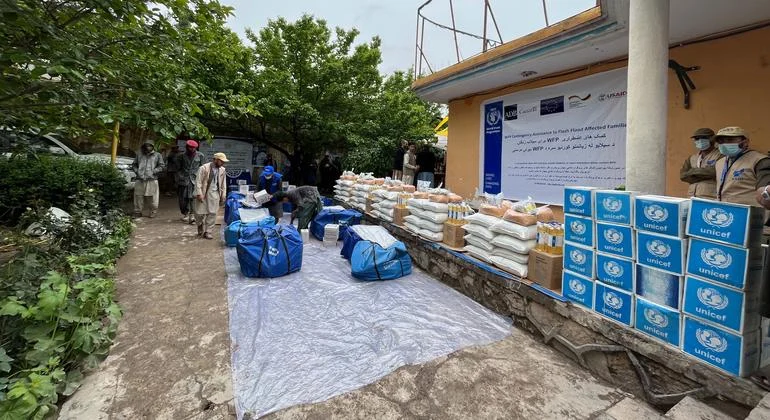
The core of the UN’s strategy for the final quarter of 2026 is a two-pronged approach: immediate financial infusion and a high-stakes diplomatic campaign. The $160 million allocation is designed to provide life-saving food, medicine, and shelter to populations who are currently beyond the reach of traditional aid networks.
"We have 87 million people to reach, and no time to waste," Mr. Fletcher stated during the announcement. "Today’s new funding will help us get aid to people who might otherwise be left behind. But money alone won’t get us there: leaders must exercise political will to open access, remove obstacles and help us reach people whose lives are on the line."
The crisis is characterized by what aid workers call "administrative strangulation." In conflict-heavy regions, bureaucratic hurdles—such as denied visas for humanitarian workers, the freezing of supply convoys at borders, and the imposition of arbitrary security taxes—have rendered even well-funded programs ineffective. The UN’s message is clear: without the cooperation of local power brokers and international actors, the money currently sitting in the Central Emergency Response Fund (CERF) is merely a temporary bandage on a festering wound.
Chronology of a Crisis: The 2026 Humanitarian Landscape
The trajectory of the 2026 humanitarian crisis can be traced back to the compounded shocks of early-year geopolitical realignments and climate-induced displacements.
- Q1 2026: Escalation in regional conflicts across the Horn of Africa and the Middle East leads to a 15% increase in displaced populations.
- Q2 2026: OCHA reports that donor fatigue is beginning to manifest, with funding for "non-headline" crises dropping to historic lows.
- August 2026: A comprehensive review by the UN’s internal monitoring body reveals that 11 million people in five specific conflict zones (Afghanistan, the Occupied Palestinian Territory, South Sudan, Sudan, and Yemen) are effectively blocked from receiving consistent aid.
- September 2026: Tom Fletcher takes the helm, identifying "access diplomacy" as the cornerstone of his mandate.
- October 2, 2026: The release of the $160 million package, accompanied by a public call for a shift in diplomatic engagement.
This chronology highlights a shift in strategy. Where the UN once focused on "emergency response" as a logistical problem, it is now treating it as a political one. The move to consolidate funding into a single, rapid-response package marks an attempt to force the international community to acknowledge the link between diplomatic neglect and human starvation.
Supporting Data: Where the Money Goes
The $160 million is categorized into two distinct buckets. The lion’s share, $150 million, is drawn from the Central Emergency Response Fund (CERF). The CERF, established by the General Assembly in 2005, remains the gold standard for rapid-response financing. Its ability to release funds within hours of an emergency—rather than weeks—has made it the "last line of defense" for the world’s most vulnerable.
Breakdown of the Funding Strategy:
- Direct Humanitarian Aid ($150 Million): Targeted at the 12 most underfunded crises, identified through an analysis of over 100 humanitarian indicators, including caloric intake, mortality rates, and displacement frequency.
- Disability Inclusion ($10 Million): A specialized allocation dedicated to ensuring aid delivery is inclusive. People with disabilities are statistically more likely to be left behind during evacuations or food distribution efforts. This funding aims to bridge that gap.
- The Catalyst Partnership: By teaming up with the UN Global Disability Fund, the UN is adding $4 million in technical support. This is a critical development, as it seeks to empower local disability organizations rather than relying solely on international NGOs.
Since its inception, the CERF has distributed $10.2 billion across 117 countries. With this latest release, the total CERF allocation for 2026 stands at $483 million. However, with an annual funding target of $1 billion, the UN remains roughly $500 million short of its own self-imposed goal for the year, underscoring the fragility of this humanitarian lifeline.
Official Responses and Diplomatic Implications
The response from the international diplomatic community has been cautious. While donor nations have generally applauded the initiative, the reality of "access" remains a geopolitical minefield.
In the Occupied Palestinian Territory and Sudan, for instance, the UN is essentially asking for a ceasefire in bureaucratic hostilities. Mr. Fletcher’s team is currently in negotiations with regional actors to create "humanitarian corridors" that are immune to political shifting.
"We are not asking for permission to do politics," said one UN aide speaking on condition of anonymity. "We are asking for the right to deliver life-saving supplies to children who have nothing to do with the wars their leaders are fighting. That is a basic tenet of international humanitarian law, and it is being ignored."
The implications are dire. If the "access" issue is not resolved, the $160 million will likely be consumed by increased overhead costs—such as the price of chartering expensive airlifts to bypass blocked road routes or the cost of hiring private security firms to ensure the safety of convoys in lawless territories.
The Human Dimension: Including the Excluded
One of the most significant aspects of this announcement is the explicit mention of people with disabilities. In many crisis zones, the "forgotten" are often those with limited mobility, sensory impairments, or those who lack the social capital to navigate aid distribution points.
By setting aside $10 million specifically for this demographic, the UN is attempting to shift the model from "mass distribution" to "targeted reach." The inclusion of the Global Disability Fund suggests a move toward sustainable infrastructure. Instead of just handing out food, the funds will be used to build local capacity—training local advocates, installing accessible water points, and ensuring that emergency messaging is available in formats accessible to all.
Conclusion: The Long Road Ahead
The path forward for the UN in late 2026 is fraught with difficulty. The $160 million is a vital injection of energy, but it is not a solution to the structural rot that currently plagues global aid delivery.
The UN’s message to the world is both a plea and a warning. By linking financial aid to the necessity of "political will," Tom Fletcher is signaling that the UN will no longer accept the status quo of being a bank that pays for its own exclusion. If the international community wants to solve these crises, it must stop treating humanitarian aid as an afterthought and start treating the logistics of delivery as a core pillar of international security.
As the winter months approach for many of these 12 crisis zones, the window for effective intervention is closing. The 87 million people waiting for this aid represent a cross-section of the world’s most desperate—they are the victims of wars they did not start and the casualties of a political system that has, for too long, prioritized diplomatic convenience over human life. The UN’s $160 million is a start, but as Fletcher rightly noted, it is merely the beginning of the journey, not the destination.
The world now watches to see if the political walls will crumble, or if this funding will simply serve as a witness to the tragedies it was intended to prevent.
 Raul Delapena Setiawan
 Pevita Pearce
