

By Patricia Hernandez
Published October 4, 2026, 2:19 PM EDT
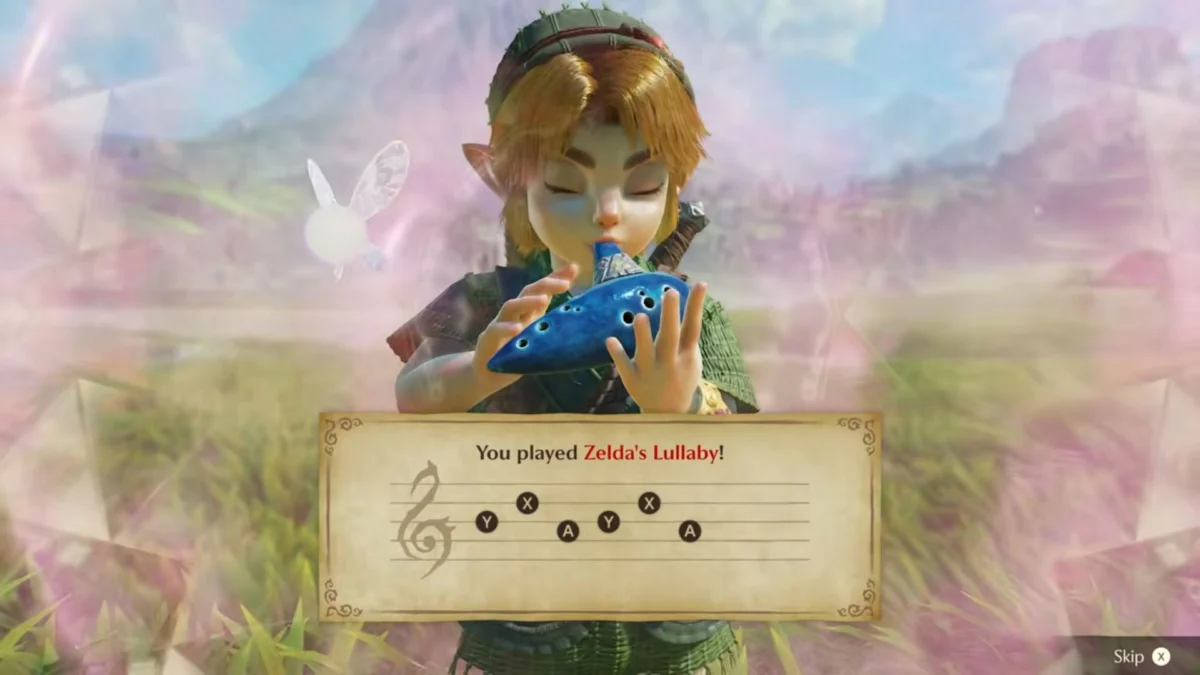
Nintendo is pulling out all the stops for its next major hardware era, and it is anchoring the upcoming generation with one of the most celebrated titles in video game history. During a recent broadcast dedicated to the franchise’s milestone legacy, Nintendo officially detailed its upcoming remake of The Legend of Zelda: Ocarina of Time for the newly announced Nintendo Switch 2.
Slated for release on November 5, 2026, the modernized classic is receiving a massive technical overhaul, complete with high-definition visual improvements and modern quality-of-life enhancements. However, what has truly captured the attention of the gaming community are the innovative peripheral integrations and companion app features that extend the gameplay far beyond standard console boundaries. From physical musical instruments to robust companion app interactions, Nintendo is redefining what a modern game remake can entail.
Main Facts: What We Know About the Ocarina of Time Remake
The upcoming reimagining of the Nintendo 64 masterpiece aims to bridge the gap between nostalgic reverence and modern hardware capabilities. While core level designs, dungeon layouts, and narrative beats remain faithful to the original 1998 release, the development team has completely rebuilt the assets from the ground up to take advantage of the Switch 2’s advanced graphical processing power.
Beyond the audiovisual upgrades, Nintendo has confirmed two major ecosystem additions that interact directly with the core software:

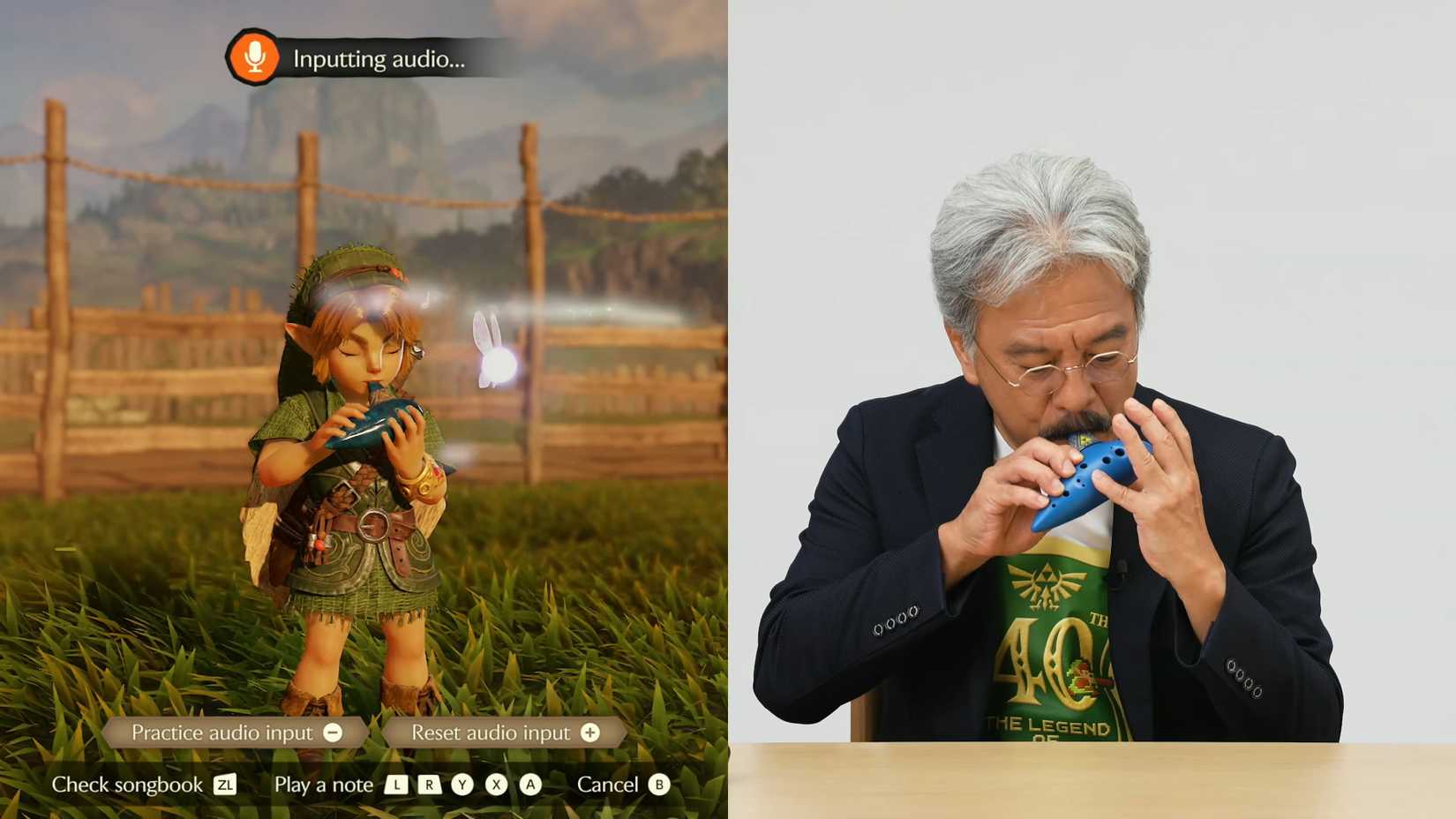
- Physical Ocarina Support: Players can purchase a fully functional, physical wind instrument that links directly to the game via wireless technology, allowing players to perform notes in real life that translate instantaneously to Link’s on-screen actions.
- Expanded Nintendo Switch App Integration: The companion app returns with an upgraded suite called "Zelda Notes," featuring 11 distinct modules designed to track progress, reward exploration, and offer interactive daily challenges.
Series producer Eiji Aonuma demonstrated these systems during the recent broadcast, showing that Nintendo is investing heavily in creative immersion rather than settling for a simple graphical upscale.
Chronology: The Journey from the Nintendo 64 to the Switch 2
To understand the magnitude of this upcoming remake, it is helpful to look back at the trajectory of The Legend of Zelda: Ocarina of Time and how Nintendo has nurtured the property over nearly three decades:
- November 1998: The original Ocarina of Time launches on the Nintendo 64, revolutionizing 3D action-adventure game design, lock-on targeting mechanics, and cinematic storytelling. It becomes one of the highest-rated video games of all time.
- November 2011: Nintendo releases The Legend of Zelda: Ocarina of Time 3D for the Nintendo 3DS, introducing stereoscopic 3D visuals, streamlined inventory management, and the revamped "Master Quest" mode.
- 2023–2025: As part of the broader ecosystem expansion for modern hardware, Nintendo tests various companion app metrics and connectivity tools, laying the groundwork for deeper mobile integration seen in titles like Tears of the Kingdom.
- September 2026: During the The Legend of Zelda 40th Anniversary Direct, Nintendo officially unveils the Switch 2 remake, showcasing real-world ocarina hardware and the comprehensive Zelda Notes app features.
- November 5, 2026: The Legend of Zelda: Ocarina of Time for Nintendo Switch 2 is scheduled to launch worldwide.
Supporting Data: Breaking Down the Zelda Notes App and Peripherals
The integration between the physical world, mobile devices, and the Nintendo Switch 2 console forms the backbone of the new features. Nintendo has detailed several key components within the Zelda Notes app ecosystem and hardware lineup.
1. The Physical Ocarina and Alternative Input Methods
During the anniversary presentation, Eiji Aonuma showcased a physical, custom-crafted blue ocarina. When played in the real world, the console’s receiver detects the pitch and finger placement, causing Link to play the exact same notes within the game engine. Aonuma famously demonstrated this by playing "Epona’s Song" to summon Link’s trusty horse.
For players who do not purchase the physical instrument, Nintendo has ensured alternative access:

- Controller Button Inputs: Traditionalists can continue using standard button combinations.
- Microphone Hum Detection: The Switch 2 controllers feature an integrated microphone capable of tracking hummed notes, allowing players to vocalize melodies to achieve the same in-game results.
2. Gossip Quests and World Exploration
The Zelda Notes app introduces a scavenger-hunt style module known as "Gossip Quests." The app provides photographs of specific, often obscure locations hidden within Hyrule.
- Gameplay Loop: Players must track down these exact coordinates in the game world.
- Rewards: Finding these locations yields points that can be exchanged for alternative ocarina scores and cosmetic tracks.
- Accessibility: A built-in hint button is available for players struggling to locate esoteric formations, balancing challenge with approachability.
3. "Today’s Record" and Achievement Tracking
Nintendo has traditionally shied away from conventional, system-wide achievement architectures, but the Zelda Notes app introduces a dedicated tracking system for this release. "Today’s Record" logs player accomplishments in chronological order, attaching automated screenshots to milestone events.
4. Digital Practice with "Play Ocarina"
For players wanting to practice on the go, the app features a digital interface styled after the azure instrument. It provides guided playback modes—teaching players tempo and duration—and allows users to record custom compositions. These creations can then be exported and shared via QR codes, opening the door for community-driven meme culture within the game’s musical framework.
5. Daily Trivia: The Ocarina of Time Quiz
To keep players engaged outside of active play sessions, the app hosts a daily trivia challenge:
- Format: Players must answer questions within a strict 10-second window, selecting from four multiple-choice answers accompanied by reference imagery.
- Volume: The database contains over 2,000 unique questions covering lore, botany, architecture, and character minutiae (e.g., “Which plant family do Bomb Flowers belong to?”).
- Economy: Players receive one free attempt per day, with subsequent attempts costing 20 in-game Rupees. Consecutive correct answers elevate the player’s internal ranking, tracked playfully through "Egg Level" and "Cucco Level" milestones.
Official Responses and Unrevealed Features
While Nintendo showcased a significant amount of the game’s supplementary software, the presentation deliberately left several elements shrouded in mystery. During the deep-dive segments of the anniversary broadcast, several menu options were visible on screen but left unexplained by presenters:
- Map: Likely an advanced, interactive overlay for tracking collectibles and fast-travel points.
- Hall of Fallen Foes: Speculated to be a boss-rush mode or a comprehensive combat archive.
- Global Play Data: An analytics suite tracking community statistics worldwide.
- Photo Studio: A likely expansion of the camera mechanics popularized in modern Zelda titles, allowing customized poses and filters.
- Threads of Time: A mysterious module that may relate to costume changes or timeline-shifting mechanics.
- amiibo: Continued hardware figure support, though specific functionality remains unannounced.
Nintendo representatives have indicated that further information regarding these unverified modules will be released closer to the November launch date.
Implications for the Industry and the Nintendo Switch 2
The announcement of The Legend of Zelda: Ocarina of Time for the Switch 2 carries significant implications for both Nintendo’s business strategy and the broader video game industry.
First, by tethering physical hardware peripherals—such as the real-world ocarina—to a digital software release, Nintendo is leaning back into its historical penchant for inventive, tactile gimmicks that separate its platforms from traditional console competitors. This strategy mirrors historical successes like the Wii Balance Board or Nintendo Labo, though refined here to appeal to an older, more nostalgic demographic of dedicated fans.
Second, the heavy reliance on the Nintendo Switch mobile app for meta-gameplay features like Gossip Quests and daily quizzes demonstrates an ongoing effort to maintain player engagement outside of active living-room play sessions. By gamifying daily routines through trivia and exploration prompts, Nintendo is fostering a continuous, service-like loop around a single-player, narrative-driven classic.
Ultimately, The Legend of Zelda: Ocarina of Time proved in 1998 that it could redefine what an adventure game could be. As it arrives on the Nintendo Switch 2 this November, Nintendo is betting that modernized presentation combined with creative peripheral integration can make a legendary journey feel entirely brand new once again.
 Asep Darmawan
 rifanmuazin
 Pevita Pearce
