

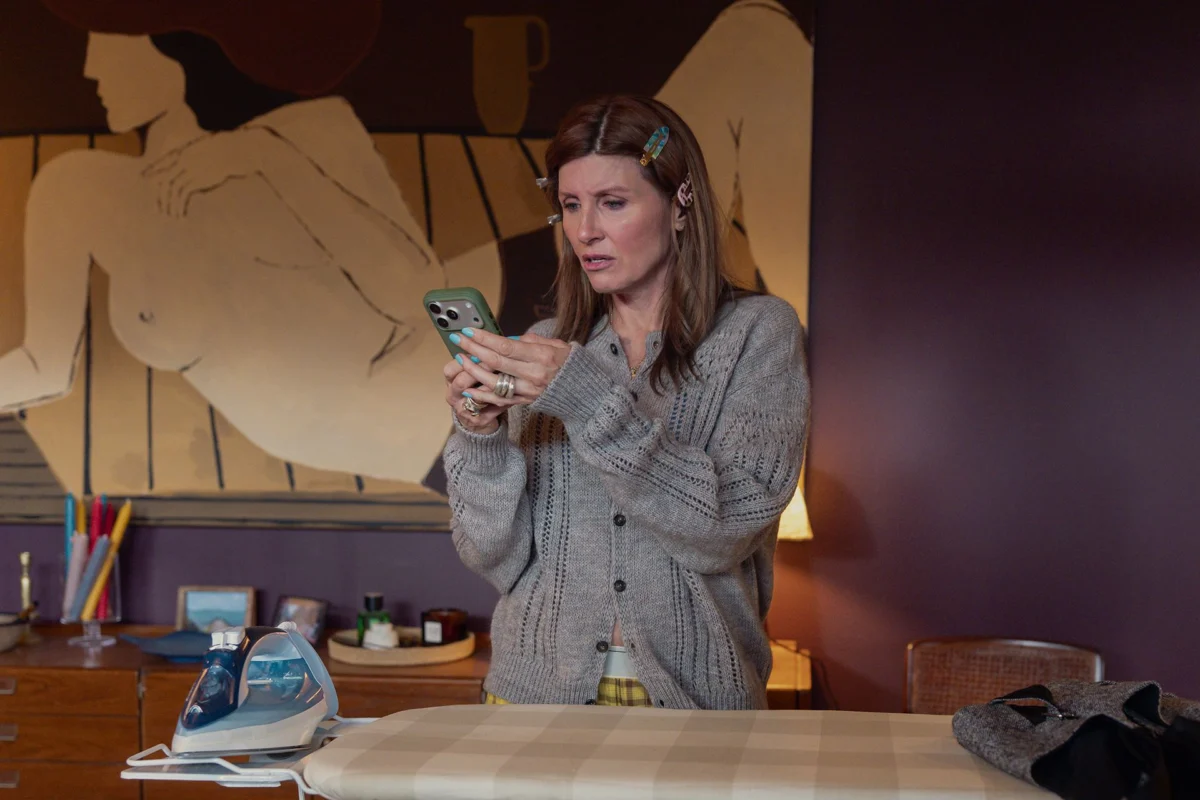
In the ever-evolving landscape of contemporary television, few creators possess the uncanny ability to marry sharp, observational humor with the raw, jagged edges of the human condition quite like Sharon Horgan. Following the global success of Bad Sisters, Catastrophe, and Motherland, Horgan has cemented her reputation as a chronicler of modern domesticity. Her latest project, the eight-episode HBO series Youth, marks a departure into the complexities of the mid-life transition—a period defined by the paradox of newfound independence and the crushing weight of societal expectation.
As the series takes audiences on a journey through the life of Alex, a 50-year-old divorcée, the backdrop of the show becomes a character in its own right. From the historic, soot-stained corridors of Clerkenwell to the sun-drenched, tranquil shores of Mallorca, Youth uses its geography to mirror the internal shifts of its protagonist.
The Premise: Navigating the Second Act
At its core, Youth is an exploration of the “second act.” Horgan, who stars as Alex, portrays a woman finding herself suddenly single after a divorce. The series eschews the tropes of the typical "mid-life crisis" comedy, opting instead for a nuanced look at the search for intimacy and professional fulfillment at 50.
The narrative is complicated by the presence of her 18-year-old son, Ruari (played by newcomer Aran Murphy, son of Cillian Murphy), whose journey serves as a poignant counterpoint to his mother’s. While Alex attempts to reconcile her career and her desire for connection, Ruari is shown navigating the digital minefield of the modern era—specifically, the distorted, often harmful iterations of masculinity found in online echo chambers.
The supporting cast is a testament to the project’s prestige, featuring Rupert Friend, Sharlene Whyte, and Robbie Gee, alongside powerhouse cameos from Harriet Walter, Anne Reid, Freddie Fox, and Damian Lewis.
A Chronology of Production: From London to the Mediterranean
The production of Youth was a transatlantic endeavor, designed to capture the duality of a woman caught between her grounded, work-focused life in the UK and the escapist possibilities of the continent.
- May 2026: Initial location scouting and primary photography commenced in London. Production teams were spotted in Islington, focusing on the industrial-chic aesthetics of Wenlock Road and Union Wharf.
- Mid-May 2026: The production expanded its reach to the Balearic Islands. Reports surfaced via the Majorca Daily Bulletin that Rupert Friend and key crew members were on location in the picturesque village of Sant Elm.
- Summer 2026: Final interior shoots were completed in iconic London venues, most notably the restoration-heavy site of The Old Sessions House.
- September 20, 2026: Youth premiered on HBO, receiving critical acclaim for its visual storytelling and thematic depth.
The Architectural Backdrop: Where Was ‘Youth’ Filmed?
The Old Sessions House: A Literary Landmark
Perhaps the most significant location in the series is The Old Sessions House in Clerkenwell. Serving as the office for the fictional literary agency where Alex works, the building provides a sense of gravitas that anchors the show’s professional narrative.

Constructed between 1780 and 1782, the building, originally known as the Middlesex Quarter Sessions, served as a courthouse for over a century. Its history is inextricably linked to literature; it is widely cited as the courthouse where the titular character in Charles Dickens’ Oliver Twist appeared. By choosing this site, the production design team—led by Horgan herself, who pushed for authenticity—created an atmosphere of historical weight that contrasts with the modern, often ephemeral nature of Alex’s personal life. As Horgan noted during a set visit, shooting within the building’s actual walls, rather than using it as a mere exterior, provided the cast with a tangible sense of place that helped inform their performances.
Lucky Cat: The Elegance of Mayfair
In stark contrast to the historical weight of Clerkenwell, the series utilizes Gordon Ramsay’s high-end Asian-inspired restaurant, Lucky Cat in Mayfair, for key work-related meetings. The sleek, dark-toned interior and the meticulous aesthetic of the space serve as a visual metaphor for the high-pressure world of publishing that Alex inhabits. It represents the "aspirational" life—a world of luxury that feels both attainable and alienating to a woman in the midst of a personal identity crisis.
Islington: The Residential Reality
To ground the show in the everyday, the production team utilized the residential pockets of Islington. Specifically, the canal-side vistas of Wenlock Road and Union Wharf offer a glimpse into the gentrified, post-industrial beauty of North London. These locations serve as the setting for the series’ quieter, more intimate moments, allowing the audience to witness the domestic struggles that define Alex’s daily life.
Sant Elm, Mallorca: The European Escape
While London provides the grit, Mallorca provides the breath of fresh air. The inclusion of Sant Elm, a quiet coastal village on the southwestern tip of the island, represents a shift in the show’s pacing. Though the specific narrative arc of the Spanish scenes remains a point of speculation for many viewers, the visual shift from the grey, canal-lined streets of London to the azure waters and rugged cliffs of the Balearics highlights the theme of freedom that Horgan explores throughout the series.
Supporting Data: Thematic Influences and Creative Vision
The series does not exist in a vacuum. It is the result of years of Horgan’s observations regarding the "post-divorce" experience. In a recent interview with The Guardian, Horgan spoke candidly about the inspiration behind the series:
"When I found myself divorced, I genuinely thought I’d be alone forever. I didn’t even know if I’d ever have sex again. There’s that extreme fear of being alone and being lonely. But at the same time, you think you have a freedom as well. You do suddenly think: ‘My kids have finished school, I’ve got some time to try and get this right.’"
This quote serves as the ideological pillar of Youth. The series is less about the mechanics of dating and more about the existential dread—and subsequent liberation—that comes with the realization that one’s "first life" has concluded.

Official Responses and Industry Reception
The decision to cast Aran Murphy as Ruari has been a focal point of industry discussion. The chemistry between Horgan and the younger Murphy is frequently cited by critics as the heart of the series. By casting a non-professional who brings a raw, authentic energy to the role of a teenager navigating the toxic masculinity of the digital sphere, Horgan has managed to tackle a difficult subject without falling into didacticism.
HBO’s investment in the project signals a continued commitment to adult-oriented, character-driven dramas. The production’s choice to film on location in high-profile areas like Mayfair and historic landmarks like The Old Sessions House reflects a broader trend in high-end television: the "prestige location." By using real-world heritage sites, the series gains a sense of permanence and legitimacy that soundstage production simply cannot replicate.
Implications: The Future of the "Mid-Life" Genre
Youth stands as a benchmark for how television can address the aging experience. It avoids the common trap of making the 50-year-old protagonist a victim of her circumstances. Instead, it presents Alex as an agent of her own narrative—a woman who is, for better or worse, re-learning how to live.
The implications for future productions are clear: audiences are hungry for stories that mirror their own complex, messy, and often contradictory lives. By grounding these emotional arcs in specific, historically rich, and visually arresting locations, Youth elevates the domestic drama to the level of high art.
As the series continues to find its audience, the legacy of its production locations will likely grow, with fans and tourists alike visiting the canal paths of Islington and the hallowed halls of The Old Sessions House to catch a glimpse of the world where Alex found her voice. In the end, Youth is a reminder that the journey of self-discovery is not reserved for the young—it is a lifelong pursuit, best explored in the most evocative corners of the world.
 Lina Irawan
 Neng Nana
 Evan Lee Salim
