

Beyond the reach of the modern map, where the dense, humid embrace of the tropical rainforest meets the churning Atlantic, lies a territory that defies conventional travel narratives. Gabon, a Central African nation the size of Colorado, remains one of the planet’s most enigmatic frontiers. With 88 percent of its landmass cloaked in ancient, carbon-sequestering rainforest and a population of fewer than 2.5 million, the country functions less like a modern state and more like a primordial remnant of a forgotten world. Here, cave-dwelling crocodiles shimmer with an unnatural orange hue, mandrills organize into "super-troops" numbering in the hundreds, and hippos—creatures typically associated with riverbeds—are known to surf the oceanic waves.
To visit Gabon is to step into a space where the veil between the tangible and the spiritual is perilously thin. It is a place of profound ecological wealth and political volatility, a "Last Eden" that stands at the precipice of its own future.

The Bwiti Ritual: A Communion with the Unseen
The sensory experience of Gabon begins not in its capital, but in the outskirts of villages like Mikumu, where the ancient Bwiti spiritual discipline thrives. On a recent excursion, the air grew thick with the resinous scent of burning Okoumé wood. Musicians, huddled in a tight circle, beat long, cylindrical drums with a rhythm that seemed to synchronize with the relentless equatorial sun.
The ritual serves as a portal to the Marumba spirit, an animistic figure capable of both terror and protection. Dancers, their bodies painted with sacred white ash, moved with a frenetic intensity. Suddenly, the arrival of Marumba was announced by a sharp, collective inhalation of breath from the onlookers. Swaddled in thick layers of raffia, crowned with feathers, and wearing a stark, multi-colored wooden mask, the entity emerged, crawling across a corrugated iron roof before descending to initiate a percussive, dance-driven benediction. For the people of Mikumu, this is not performance art; it is a vital social mechanism. "We call him when somebody dies or when there’s a celebration," explains local fixer Guillermo Casasnovas. "Although sometimes he appears and we don’t know why."

Chronology of a Shifting Landscape
The modern history of Gabon is inextricably linked to the Bongo dynasty, which ruled the nation for over half a century. The recent transition of power has left the nation in a state of tentative flux.
- 2002: Under the influence of naturalist Dr. Mike Fay and his 2,000-mile "Megatransect" expedition, Gabon formalizes a massive national parks system, securing 7.5 million acres of protected land.
- 2023: The long-standing administration of Ali Bongo is abruptly ended by a military coup. Bongo, while often criticized for his authoritarian control, had successfully positioned Gabon as a global leader in environmental conservation and carbon-credit trading.
- Post-Coup: Brice Oligui Nguema, a cousin to the former president, assumes power following an election. The current political climate remains stable yet cautious, as the nation navigates the transition between its reliance on fossil fuel exports and its burgeoning eco-tourism sector.
Supporting Data: The Ecological Stakes
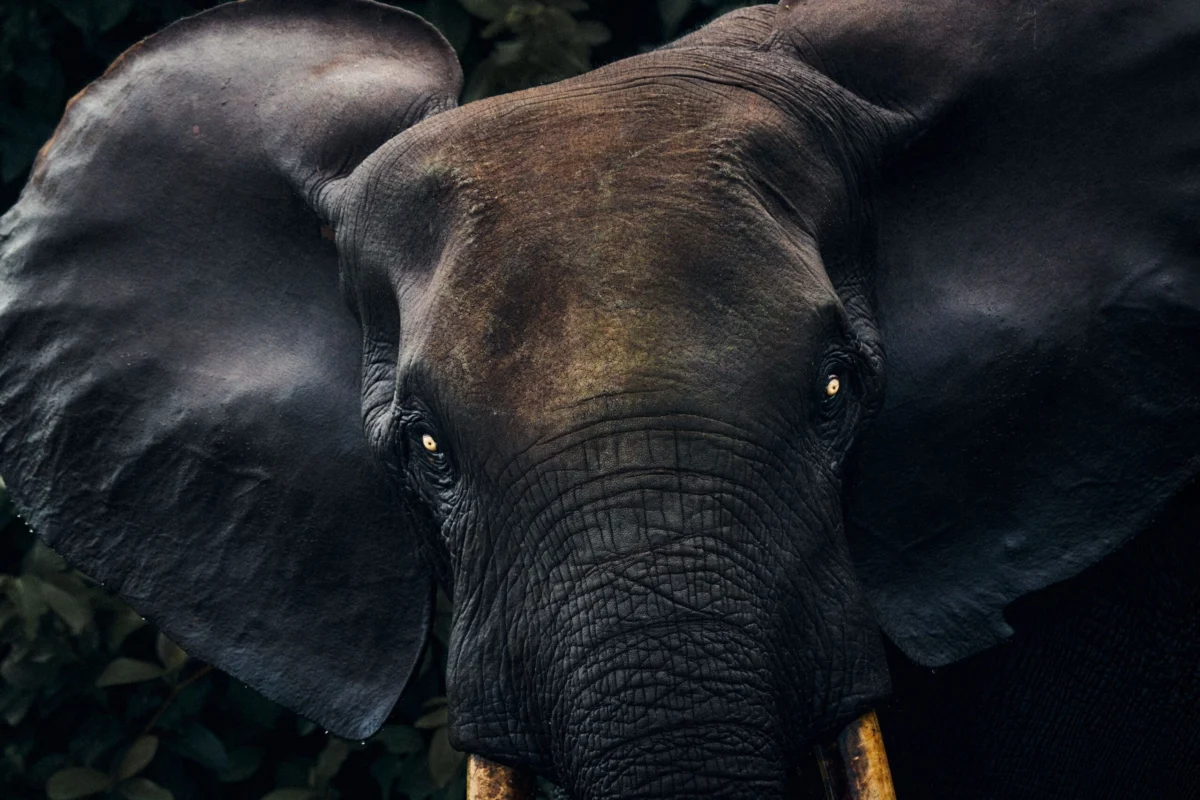
Gabon’s environmental significance cannot be overstated. It is the final stronghold for the African forest elephant, harboring roughly 95,000 individuals—nearly 65 percent of the global population. Unlike their savanna cousins, these elephants are smaller, possess slender, spear-like tusks, and are frequently spotted venturing onto the beaches to feed on salt-rich vegetation.

The challenge, however, is the constant friction between human survival and wildlife conservation. Unemployment in the country hovers around 20 percent, leading to frustration among local communities who perceive that the state has prioritized the protection of megafauna over the economic welfare of its citizens. Organizations like Space for Giants have attempted to bridge this gap by installing mobile electric fences to mitigate human-wildlife conflict, yet the systemic issues of infrastructure and employment remain the primary hurdles to sustainable development.
The Loango Jewel: Where Forest Meets Ocean
Loango National Park stands as the undisputed jewel of the Gabonese conservation crown. Extending over 150 miles along the Atlantic coast, it provides a rare mosaic of ecosystems. Here, one can witness buffalos grazing in open savannas, while lowland gorillas—a species whose population in the Congo Basin is estimated at 360,000—navigate the tangled mangroves.

Access to Loango is a test of endurance. Travelers must navigate through Port-Gentil, often requiring small aircraft, followed by boat transfers through channels thick with papyrus. Ndola Camp, situated on the edge of a lagoon, offers a glimpse into the raw, unpolished nature of Gabonese tourism. Unlike the highly commercialized lodges of East Africa, accommodation here is modest, emphasizing the environment over luxury.
The experience of trekking through the park is humbling. Guide Ulrich "Borince" Bora Moussouami notes that the path forward is often fraught with debris—not just from the forest, but from the industrial world. Plastic waste, carried by ocean currents from as far as Angola and the Democratic Republic of the Congo, litters the pristine beaches, forming a dystopian contrast to the natural beauty of the landscape.

Official Responses and Conservation Policy
The Gabonese government, through its various investment arms, has signaled a desire to maintain the "Green Gabon" mandate established under the Bongo regime. This includes "debt-for-nature" swaps brokered by organizations like The Nature Conservancy, which aim to refinance national debt in exchange for marine conservation commitments.
However, the reality on the ground often lags behind policy. Rangers, once the primary stewards of these protected zones, have faced irregular pay, leading to a decline in the active maintenance of beaches and trail systems. The persistence of industrial oil rigs, which burn along the horizon like toxic torches, remains a contentious point for environmentalists who argue that the country’s economic dependence on hydrocarbons is fundamentally incompatible with its branding as "Africa’s Last Eden."

Implications: The Future of the Wilderness
The true value of Gabon lies in its "untapped potential," but this is a double-edged sword. For the adventurous traveler, it offers a rare, visceral connection to nature. For the conservationist, it is a race against time. The habituation of a single troop of gorillas in Loango, a project managed since 2005 by the Max Planck Institute, represents the peak of what is possible. Watching a silverback named Kamaya lead his family through the forest, witnessing 10 million years of evolution in a single gaze, one realizes that the wilderness here is not just a destination—it is a responsibility.
The forest remains the backbone of Gabonese identity. As Clark Issogui, a local chef and musician, aptly puts it, "We need to protect the forest; it’s our roots. Without it, we are lost."

A Note for the Future Traveler
Gabon is not a destination for the casual tourist. It requires patience, a tolerance for high costs, and an acceptance of the unexpected. The infrastructure is sparse, the politics are fluid, and the wildlife does not appear on cue. However, for those willing to endure the humidity and the isolation, the reward is an encounter with a world that has largely vanished elsewhere.
Whether one is watching thousands of African grey parrots roost at sunset over the Ndogo Lagoon, or witnessing the hypnotic, ash-dusted dance of the Bwiti, Gabon offers something that has become increasingly rare in the 21st century: the genuine, terrifying, and beautiful feeling of being somewhere truly wild. As the nation moves forward, the hope is that it can balance the demands of a modern economy with the preservation of its mystical, unseen realms. If it succeeds, it will remain a sanctuary for the spirit, both human and animal, for generations to come.
 Lina Irawan
 Neng Nana
 Ammar Sabilarrohman
