

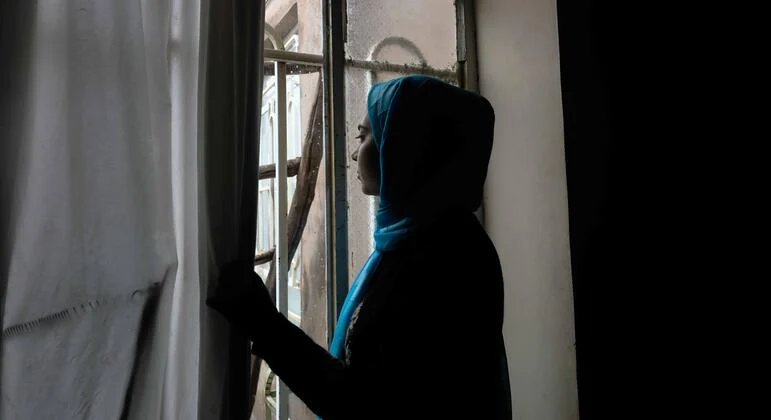
8 October 2026 – As Afghanistan grapples with one of the most complex displacement crises in recent history, the United Nations has issued a grave warning regarding the deteriorating human rights situation for women and girls. Taliban authorities have intensified their enforcement of strict dress codes, leading to a wave of arrests and detentions, even as the country struggles to absorb record numbers of returning refugees.
Main Facts: A Pattern of Systemic Coercion
The United Nations Assistance Mission in Afghanistan (UNAMA) has formally documented a disturbing surge in the policing of women’s attire and public conduct. Between July and September 2026, the mission verified the detention of at least 52 women and one girl in the provinces of Herat and Kabul.
These detentions are not merely isolated incidents but part of a systematic campaign of intimidation. Women have been apprehended for perceived violations of the de facto authorities’ draconian dress codes. Specifically, authorities have targeted women for "improper" hijab usage, such as failing to wear a chador (a full-body cloak), displaying hair, utilizing colorful scarves, or wearing makeup. Furthermore, the presence of women in public spaces without a mahram—a male guardian—continues to be a primary catalyst for harassment and arrest.
While UNAMA has confirmed these figures, the organization stresses that the actual number of victims is likely significantly higher. The deep-seated culture of fear, combined with the social stigma associated with detention, prevents many families from reporting incidents to international monitors.
Chronology of Erosion: From 2021 to the Present
The current crackdown is the latest chapter in a multi-year erosion of fundamental rights. To understand the gravity of the situation, one must look at the timeline of the Taliban’s restrictive policies:
- August 2021: The Taliban seize control of Kabul, marking a swift end to the previous administration. Initial assurances regarding women’s rights are quickly dismantled.
- 2021–2022: Secondary education for girls is suspended, and women are systematically removed from the professional workforce. Public life becomes increasingly inaccessible.
- 2023: The enforcement of the mahram requirement and strict dress codes moves from "guidance" to active, violent policing.
- July–September 2026: UNAMA records a sharp spike in arrests specifically linked to the interpretation of "modesty," signaling a new phase of state-sanctioned surveillance.
- October 2026: The UN releases comprehensive reports highlighting the intersection of human rights abuses and the humanitarian burden of 6.5 million returning refugees.
The Humanitarian Burden: Record Returns and Reintegration
While women face an increasingly claustrophobic domestic environment, the country is simultaneously attempting to integrate a massive influx of people. According to the International Organization for Migration (IOM), nearly 6.5 million Afghans have returned from Iran and Pakistan since 2023.
This mass movement of people is placing an unprecedented strain on an already fragile infrastructure. Mihyung Park, the IOM Chief of Mission in Afghanistan, emphasized that the scale and pace of these returns necessitate support that goes far beyond initial transit assistance.
"The findings show that many returnees intend to stay and rebuild their lives, but their ability to do so depends on access to livelihoods, safe shelter, documentation, and essential services," Park stated. The IOM’s Returnee Resilience Overview highlights a critical gap: while returnees are committed to stabilizing their lives, the lack of a legal and economic framework to support them threatens to turn a temporary migration challenge into a permanent humanitarian catastrophe.
Official Responses and International Obligations
The international community, through agencies like UNAMA and the IOM, has been unequivocal in its condemnation of the Taliban’s recent actions.
UNAMA’s reports have documented not only arrests but also verbal abuse, physical beatings, and threats directed toward women, including female shopkeepers who were attempting to earn a living in a collapsing economy. The UN mission has repeatedly characterized these actions as a direct violation of international human rights law, specifically targeting the rights to freedom of movement, expression, and bodily autonomy.
"The de facto authorities must cease these discriminatory enforcement practices," a UN spokesperson noted. The international body argues that these actions are not only violations of human dignity but are also counter-productive to the stability the Taliban claims to seek. By marginalizing half the population, the authorities are effectively ensuring that any hope for sustainable economic recovery remains out of reach.
Implications: The High Cost of Marginalization
The implications of the current trajectory are profound and multi-faceted.
1. Social Stigma and Psychological Trauma
For many Afghan women, the "short-term" detention described by the authorities is misleading. In a conservative society where the public arrest of a woman can lead to lasting ostracization, the social stigma can be as devastating as the incarceration itself. This results in women self-isolating, which in turn leads to increased rates of mental health crises, including depression and anxiety, among a population already traumatized by decades of conflict.
2. Economic Destabilization
The exclusion of women from the workforce—including the harassment of female shopkeepers—strips households of essential income. In a country where the economy is in freefall and reliance on humanitarian aid is absolute, removing women from the economic equation is an act of economic self-sabotage. When women cannot work or move freely, the entire family unit suffers, particularly households headed by women or those among the 6.5 million returnees attempting to establish new lives.
3. The Failure of Integration
The IOM’s call for "area-based reintegration" implies that stability cannot be achieved if the rights of the returnees are not protected. A returnee who is denied the right to work, or who is subjected to arbitrary detention based on their gender or dress, is unlikely to contribute to the long-term stability of their community. The lack of documentation—a major issue identified by the IOM—further complicates this, as women are often the first to lose access to legal identity papers, rendering them invisible to state and aid services.
4. A Test for International Diplomacy
The ongoing situation serves as a litmus test for the international community’s engagement with the de facto authorities. There is a delicate balance between providing essential humanitarian aid—which is desperately needed by the 6.5 million returnees—and maintaining a firm stance on human rights. The UN is currently navigating this by urging for "durable solutions" that tie aid to the respect for human dignity and the cessation of discriminatory practices.
Conclusion: A Path Forward?
The convergence of the human rights crisis and the refugee integration challenge presents an existential threat to Afghanistan’s future. For the millions of Afghans attempting to rebuild their lives, the state’s current priorities—policing the clothes of women and enforcing rigid social codes—stand in stark contrast to the urgent needs of the population for food, shelter, and basic human security.
As the UN continues to monitor the situation, the message remains clear: true stability in Afghanistan cannot be built on the back of repression. Without a reversal of the current policies targeting women and a robust, inclusive strategy for the reintegration of millions of returnees, the country risks further descent into isolation and systemic collapse. The international community, through its aid agencies and diplomatic channels, remains the only bridge between the current crisis and a potential, albeit narrow, path toward a more stable and humane future for all Afghans.
 Muslim
 Jia Lissa
 Pevita Pearce
