

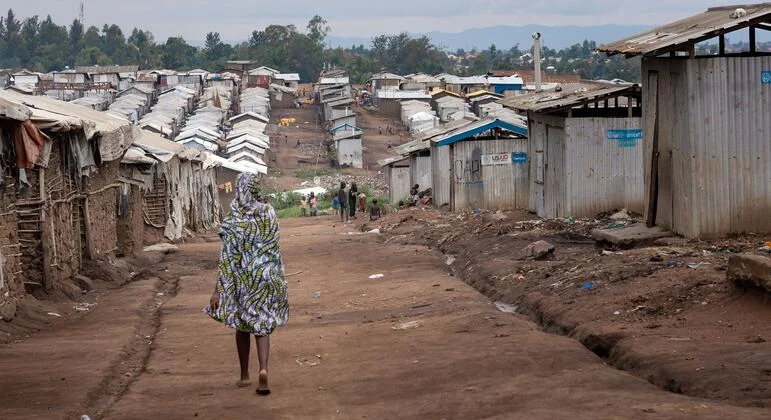
The year 2026 marks a sobering inflection point in the global effort to eradicate deprivation. According to the latest data released by the United Nations Development Programme (UNDP) and Oxford University, the global fight against poverty has suffered a significant setback. For the first time since the inception of the Multidimensional Poverty Index (MPI) in 2010, the world is witnessing a tangible, upward trend in the number of people suffering from overlapping hardships. With 1.2 billion people now classified as multidimensionally poor, the international community is facing a stark reality: the progress of the last decade is not only slowing—it is regressing.
Main Facts: A Crisis Beyond Income
The MPI serves as a sophisticated diagnostic tool that moves beyond the traditional, limited metric of monetary income. It paints a more holistic picture of human suffering by tracking 10 specific indicators across three essential dimensions: health, education, and standard of living. These indicators include nutrition, child mortality, years of schooling, and access to fundamental infrastructure such as clean drinking water, sanitation, electricity, and decent housing.
Under the index’s rigorous criteria, an individual is categorized as "multidimensionally poor" if they face deprivation in one-third or more of these indicators. The 2026 update, which encompasses 108 countries and represents roughly 78 percent of the global population, reveals that 1.2 billion people fall into this category. This figure represents an alarming increase of 51.5 million people compared to the 2025 findings. Perhaps most heart-wrenching is the demographic composition of this group: 617 million—more than half—are children. Furthermore, 83 percent of these individuals reside in rural areas, highlighting a persistent geographic divide in development.
Chronology of the Crisis
To understand the current crisis, one must look back at the origins of the MPI. Launched in 2010, the index was a revolutionary attempt to capture the "hidden" faces of poverty. For over a decade, many nations saw steady, if sometimes incremental, progress. However, the trajectory began to waver as the compounding effects of global instability—ranging from climate-induced disasters and post-pandemic economic shocks to geopolitical conflict—began to outpace social safety nets.
- 2010–2015: A period of optimistic momentum, where nations like China demonstrated that rapid, large-scale poverty reduction was possible through sustained policy intervention.
- 2016–2020: Progress became uneven. While some nations maintained their trajectory, the "last mile" of poverty reduction proved harder to reach as inequalities deepened.
- 2021–2024: A period of stagnation. The combined pressures of rising inflation, food insecurity, and debt distress in the Global South began to neutralize gains in schooling and healthcare.
- 2025–2026: The current "wake-up call." Demographic growth in the world’s most vulnerable regions began to significantly outstrip the capacity of states to provide basic services, leading to the first global increase in multidimensional poverty since the index began.
Supporting Data: The Geography of Deprivation
The 2026 report provides a granular view of where the crisis is most acute. Sub-Saharan Africa and South Asia continue to account for the overwhelming majority of global deprivations. In these regions, the intersection of rapid population growth and insufficient infrastructure investment creates a "poverty trap."
The report notes a two-pronged cause for the recent spike. In 95 countries where new, localized survey data was unavailable, researchers used updated population estimates to extrapolate the figures. This exercise alone added 16 million people to the poverty count, illustrating how population growth is effectively "outrunning" development efforts. The remaining increase stems from 13 countries where new, primary data was collected, confirming that the incidence of poverty is genuinely rising in specific, high-risk regions.
The data reveals a "mixed picture" of fragile success. Countries such as Egypt, Nepal, Tajikistan, Angola, and Zambia have managed to reduce the percentage of their populations living in multidimensional poverty. However, in Angola and Zambia, population growth remains so high that the total number of people living in poverty has actually increased despite the lower percentage rates.
Nigeria serves as a cautionary tale. Having made commendable strides in the 2010s to pull millions out of poverty, the nation now faces a reversal. Both the poverty rate and the absolute number of people struggling to afford basic necessities have risen, proving that developmental success is not a permanent state but a fragile condition that requires constant, vigilant reinforcement.
Official Responses: "This is Unacceptable"
The reaction from the highest levels of the United Nations has been one of urgent alarm. UNDP Administrator Alexander De Croo did not mince words when discussing the implications of the 2026 report.
"The rise in poverty should be a wake-up call for the world," De Croo stated. "Behind these figures are 1.2 billion people facing hardships that reinforce one another: hunger, missed schooling, and a lack of clean water or electricity. This is unacceptable."
De Croo’s rhetoric emphasizes the interconnected nature of the problem. Because the MPI measures overlapping deprivations, the data shows that once a household falls into poverty, it is rarely a single issue. A lack of electricity often correlates with poor schooling outcomes, which in turn leads to lower earning potential and poorer health outcomes for the next generation. By calling this "unacceptable," the UNDP is challenging the international community to move away from siloed development strategies—where health and education are treated as separate agendas—toward a more integrated, "whole-of-society" approach.
Implications and the Path Forward
The ultimate objective, as laid out in the United Nations Sustainable Development Goals (SDGs), is to reduce the proportion of people living in poverty by at least half before 2030. While the 2026 update paints a grim picture, the authors of the report maintain that this goal remains achievable.
The evidence for this optimism lies in the "success stories" documented within the same report. The UNDP highlights that 33 countries have successfully halved their MPI value in fewer than 15 years. Among these, six are in sub-Saharan Africa—a region often unfairly characterized by its challenges rather than its triumphs. Eswatini, for example, saw its multidimensional poverty rate plummet from 39 percent to eight percent. China, during its peak growth period between 2010 and 2014, demonstrated that systemic change can happen with startling speed, cutting its MPI value by more than half in just four years.
The Lessons of Success
What distinguishes these successful nations from those currently struggling? The report points to three key factors:
- Integrated Policy: Successful nations addressed health, education, and infrastructure concurrently rather than prioritizing one at the expense of others.
- Scalability: Governments that focused on nationwide coverage, rather than fragmented pilot programs, saw the most significant reductions in poverty rates.
- Political Will: Sustained commitment, even during periods of economic volatility, allowed countries to weather external shocks without dismantling their core social programs.
The 2026 MPI report is not merely a tally of misery; it is a roadmap for potential recovery. It underscores the urgency of renewed action while simultaneously providing a template for how to reverse the trend. For the 1.2 billion people caught in the cycle of overlapping deprivations, the global response in the next four years will determine their future. The international community has the data, the tools, and the proven examples of success; the question remains whether it has the resolve to turn the tide before the decade concludes. As the UN development chief noted, progress is possible—but only if the world decides that the current status quo is truly intolerable.
 Jia Lissa
 Pevita Pearce
 Nana Wu
