

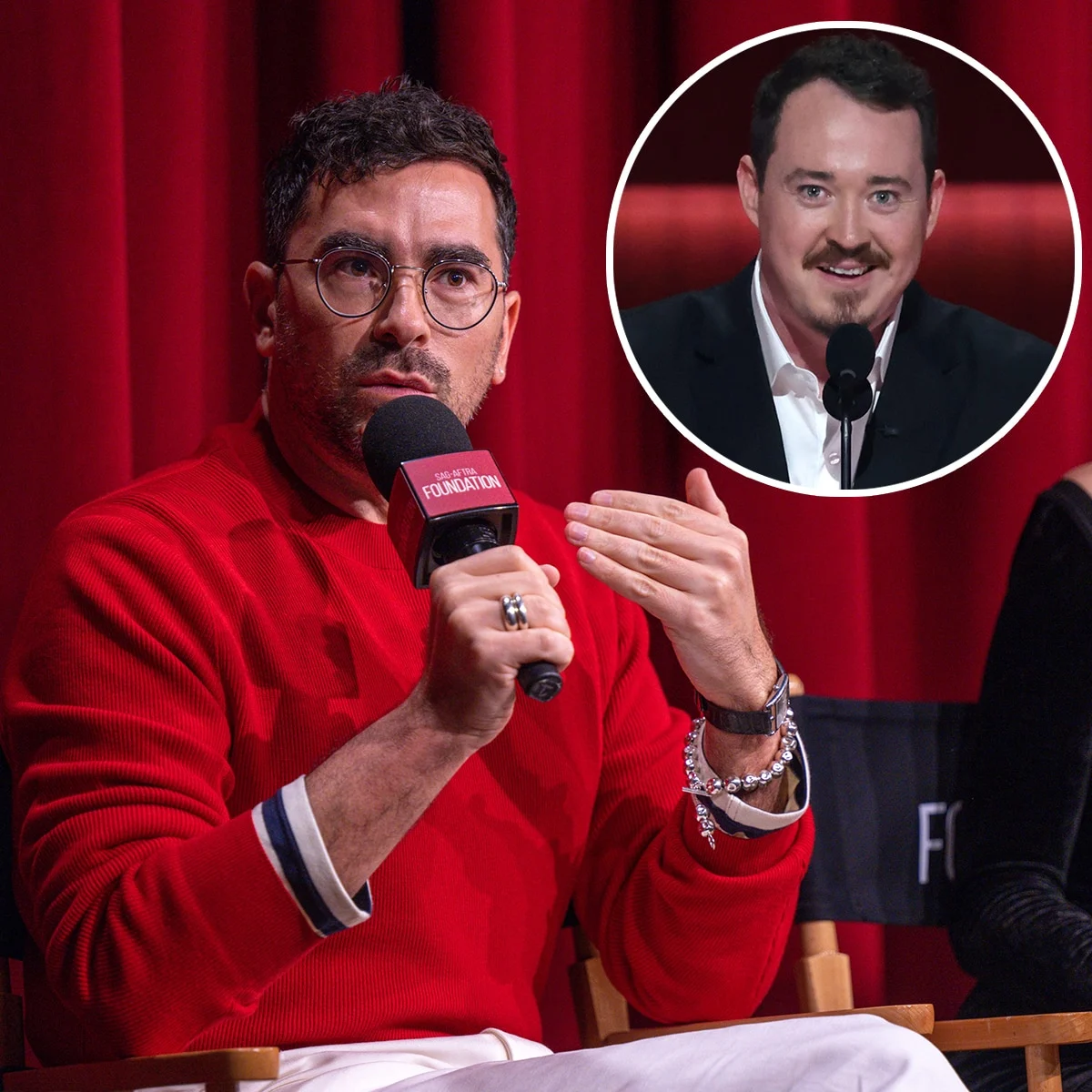
The landscape of modern comedy is increasingly becoming a lightning rod for broader societal debates regarding gender, accountability, and the boundaries of acceptable public discourse. This week, those tensions reached a boiling point following an appearance by comedian Shane Gillis on Saturday Night Live. His opening monologue, which featured derogatory comments about women at the gym, has ignited a fierce backlash from fellow industry figures, most notably Schitt’s Creek creator and actor Dan Levy.
What began as a late-night comedy set has evolved into a national conversation about misogyny, the responsibility of male public figures to intervene in toxic rhetoric, and the evolving standards for what is deemed appropriate for broadcast on national television.
The Monologue: A Comedic Choice Under Fire
During the October 10 episode of Saturday Night Live, Shane Gillis, serving as the evening’s host, took to the stage with a set that aimed for observational humor but landed squarely in controversy. In a segment reflecting on his return to the gym in New York City, Gillis expressed confusion and derision toward the attire worn by women in athletic spaces.
“I haven’t been to the gym in so long. I didn’t know women just dressed like wh–es now,” Gillis stated during the live broadcast. He continued, doubling down on the premise by describing the specific cut of the shorts and the physical nature of gym attire in graphic, objectifying terms. The monologue relied heavily on the framing that women’s choice of clothing in public spaces is an invitation for sexualized scrutiny—a narrative that many critics argue contributes to a broader culture of harassment.
The Response: Dan Levy’s Call to Action
The criticism was swift and sharp. Dan Levy, known for his work on the critically acclaimed Schitt’s Creek, took to Instagram on October 11 to address the monologue. Eschewing the standard “agree to disagree” approach often seen in Hollywood, Levy offered a rigorous critique of the harm inherent in such jokes.
“Women wearing short shorts to the gym does not make them wh–es,” Levy stated in his video. “It makes the men calling them wh–es misogynists. There’s a difference there.”
Levy’s argument went beyond a simple defense of the women being targeted; he pivoted toward a systemic critique of male silence. He highlighted the double standard prevalent in fitness environments, noting, “I’ve seen more men’s nipples at the gym than I’ve ever seen women showing their bodies off.”
Most importantly, Levy positioned this as a litmus test for male solidarity. “To be perfectly honest, more men need to be standing up in opposition to it,” he argued. “Because it’s complacency that has created the environment with which women are sexually assaulted, and it’s a conversation as opposed to a crime. Men need to be defending women more. This is not a women’s issue. This is an everybody issue.”
Supporting Voices and Industry Reactions
Levy’s stance resonated deeply within the entertainment industry. His comments section became a hub of solidarity, with prominent figures validating his perspective. Sophia Bush and Hilarie Burton, both noted for their long-standing advocacy, offered messages of gratitude, while actress Elizabeth Banks summarized the sentiment concisely by writing, “Nailed it.”
The public backing of Levy serves as a barometer for how quickly the tide is turning against “locker room” style humor in mainstream media. While some segments of the audience maintain that comedy should have no boundaries, the industry appears to be moving toward a model where the “it’s just a joke” defense is increasingly rejected by peers and audiences alike.
The Broader Context: A History of Hollywood Feuds
The clash between Gillis and Levy is but one chapter in a long history of public disputes that have defined Hollywood’s evolution. From the long-simmering friction between Sex and the City stars Kim Cattrall and Sarah Jessica Parker, which highlighted the complexities of professional versus personal relationships, to the cultural debates sparked by Maren Morris and Cassadee Pope regarding gender and identity in the country music sphere, these feuds are rarely just about personal animosity.
In the case of JoJo Siwa and Candace Cameron Bure, the disagreement began as a personal slight but grew into a debate over inclusivity and traditional values. Similarly, the public sparring between Nicki Minaj and Cardi B at New York Fashion Week underscored the pressures of high-stakes celebrity and the intense scrutiny of parenting and professional conduct.
These instances, much like the Gillis/Levy incident, demonstrate that in the age of social media, public figures are rarely allowed to operate in a vacuum. Every comment, slight, or joke is subject to real-time analysis, and the consequences for violating community standards are immediate.
Implications for the Future of Comedy
The implications of the Saturday Night Live incident are twofold. First, it highlights a generational shift in comedy. The “edgy” style of comedy that relies on shock value and the objectification of protected groups is facing unprecedented pressure to modernize. As Levy noted, the normalization of such language creates a dangerous environment where objectification is trivialized, potentially leading to more severe societal consequences.
Second, the incident forces a conversation about the role of the platform. Saturday Night Live has long been a cultural institution that both reflects and shapes the American zeitgeist. By providing a stage for rhetoric that many find offensive, the show is now being asked to reconcile its legacy of “boundary-pushing” comedy with contemporary demands for inclusivity and respect.
As of this writing, representatives for Shane Gillis have not issued a formal response to the criticism or to the specific concerns raised by Levy. This silence may be a strategic choice, but it also leaves the public to draw its own conclusions about the comedian’s intent and his willingness to engage with the modern discourse.
Conclusion: A Shift in Accountability
The dialogue between Dan Levy and the supporters of his critique represents a pivotal moment for the entertainment industry. It is no longer enough for celebrities to remain neutral when they witness language that disparages women. The expectation is shifting toward active, vocal allyship.
As society continues to navigate the complexities of free speech versus the harm of derogatory rhetoric, the industry will have to decide which direction it leans: toward the preservation of controversial comedic tropes or toward a new standard of accountability that prizes dignity and respect. The rapid and overwhelming support for Levy’s critique suggests that for many in Hollywood, that decision has already been made.
This, however, does not mean the debate is settled. Comedy, by its nature, will always push against the walls of social norms. The question for the future is not whether comedy should be allowed to challenge these norms, but whether it can do so without resorting to the dehumanization of those it targets. Until then, the friction between comedians and their critics will remain a defining feature of the entertainment landscape.
 Dwi Wanna
 Nana Muazin
 Suro Senen
