

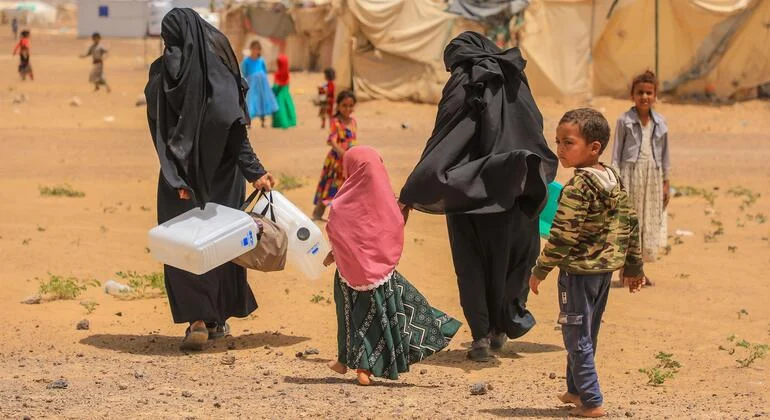
UNITED NATIONS, New York — The United Nations Security Council convened an emergency session on Friday, October 9, 2026, to address what top officials are describing as a catastrophic return to full-scale warfare in Yemen. After a fragile period of relative calm, the nation—already battered by over a decade of conflict—is witnessing a dramatic escalation that threatens to undo years of humanitarian efforts and diplomatic mediation.
The UN Special Envoy for Yemen addressed the Council with a sobering assessment: the September Houthi offensive has effectively shattered the status quo, signaling that the 12-year-old conflict has entered a volatile new chapter. Compounding this internal strife, the ongoing regional confrontation between the United States and Iran has spilled across Yemen’s borders, turning the country into a secondary theater for a much larger geopolitical struggle and triggering a massive, renewed displacement crisis.
Main Facts: A Nation on the Brink
The current crisis is defined by a convergence of local military aggression and broader international hostilities. Following the launch of a coordinated Houthi offensive in mid-September, frontlines that had remained largely static for months have erupted in violence.
The renewed fighting has moved beyond conventional tactical maneuvers, with reports of increased ballistic missile activity and drone strikes targeting key infrastructure. This surge in violence has come at the worst possible moment for the civilian population, who were already struggling with the collapse of basic services.
Simultaneously, the spillover from the U.S.-Iran conflict has introduced a level of complexity that experts suggest may render traditional peace-building efforts ineffective. Military assets, communication lines, and transit routes across the Red Sea and inland Yemen are being contested not only by domestic factions but by the shifting strategic interests of regional and global powers. The result is a total suspension of the humanitarian de-escalation protocols that were established earlier this year.
Chronology: The Road to Re-escalation
To understand the current emergency, one must look at the rapid deterioration of security since the summer of 2026.
- June–August 2026: A period of "cautious ambiguity." While skirmishes continued, backchannel negotiations in Oman and Qatar hinted at a potential long-term ceasefire agreement.
- September 1, 2026: The regional conflict between the United States and Iran intensifies following a naval incident in the Persian Gulf.
- September 10, 2026: Houthi forces, capitalizing on the regional distraction, launch a coordinated offensive in the Ta’iz and Ma’rib governorates.
- September 20, 2026: Reports emerge of civilian infrastructure—including water filtration plants and regional hospitals—being struck, leading to the first of many waves of mass displacement.
- October 5, 2026: UN humanitarian agencies warn that aid supply chains are "severely compromised" due to the closure of key ports.
- October 9, 2026: The UN Security Council meets in emergency session as the UN Special Envoy declares that Yemen has officially fallen back into full-scale war.
Supporting Data: The Human and Material Toll
The humanitarian data accompanying this escalation is harrowing. According to the latest briefings provided to the Security Council, the following indicators highlight the severity of the crisis:
1. Displacement Statistics
Since September 10, aid organizations estimate that over 150,000 people have been forced to flee their homes in the central and western governorates. This brings the total number of internally displaced persons (IDPs) in Yemen to a record high, straining existing camps that were already operating at 200% capacity.
2. Infrastructure Collapse
The offensive has resulted in the destruction of at least four major water pumping stations in the Ta’iz region, which served a population of approximately 400,000. Access to clean water, which was already a luxury, is now a primary driver of disease outbreaks, including reports of early-stage cholera clusters.
3. Food Insecurity
With the escalation of the U.S.-Iran regional tensions, commercial shipping through the Red Sea has plummeted. Yemen, which relies on imports for nearly 90% of its food, is facing a looming famine. Prices for basic staples—flour, cooking oil, and fuel—have spiked by 300% in the last four weeks alone.
Official Responses: Diplomacy Under Pressure
The emergency session of the Security Council was characterized by urgent calls for a return to the negotiating table, though the tone was markedly different from previous meetings.
The UN Special Envoy:
"The time for half-measures has passed," the Envoy stated. "We are no longer discussing the ‘threat’ of a return to war; we are witnessing it. The parties involved in this conflict must realize that by allowing themselves to be pawns in a wider regional struggle, they are sacrificing the future of the Yemeni people. There is no military solution to this conflict, yet we continue to see the abandonment of political dialogue."
International Representatives:
- The United States: Emphasized that the current offensive is an "unacceptable provocation" and reiterated its commitment to protecting its strategic interests, while calling on the Security Council to impose stricter sanctions on entities providing military aid to the Houthi movement.
- Regional Powers: Several representatives from Middle Eastern nations expressed concern over the "inevitable spillover" of the U.S.-Iran conflict, calling for a "localized firewall" to keep Yemen out of the broader regional confrontation.
- Humanitarian Advocacy Groups: Representatives from the IOM (International Organization for Migration) and WFP (World Food Programme) issued a joint plea, demanding an immediate humanitarian corridor. They argued that the politicization of aid delivery is a violation of international law and is contributing directly to preventable deaths.
Implications: A Geo-Political Quagmire
The implications of this return to full-scale war are profound and extend far beyond Yemen’s borders.
The Regionalization of the Conflict
Yemen is no longer an isolated conflict. It has become a strategic frontier for the U.S.-Iran standoff. If the Security Council fails to establish a clear framework for neutrality, Yemen risks becoming a permanent battlefield for proxy warfare, where the domestic actors are merely conduits for the interests of external powers.
The Collapse of the Aid Model
For years, the UN has utilized a "humanitarian-first" approach to Yemen. However, with the current escalation, it is becoming clear that aid cannot keep pace with the destruction caused by modern, high-intensity weaponry. The current crisis forces a rethink of the UN’s role in the country: should the organization shift its focus from temporary relief to a more aggressive, politically-driven mediation, or does the security situation necessitate a full withdrawal of non-essential personnel?
The Risk of Long-term Instability
The displacement crisis of 2026 threatens to create a "lost generation" in Yemen. Children who have known only war for their entire lives are now facing the destruction of their schools and the loss of family units. The psychological and physical toll will likely affect the country’s stability for decades to come, creating a cycle of poverty and resentment that is difficult to break.
Conclusion: A Call to Action
As the Security Council session concluded, the consensus remained elusive. While the rhetoric of peace was present, the reality on the ground continues to be defined by artillery fire and the movement of refugees. The UN has warned that without an immediate cessation of hostilities and a commitment from all regional actors to de-escalate, the situation in Yemen will continue to spiral toward a humanitarian catastrophe of unprecedented proportions.
The international community now faces a critical juncture. The decisions made in the halls of the United Nations over the coming days will determine whether the current escalation is merely a temporary setback or the beginning of a final, total collapse of the Yemeni state. For the millions of civilians trapped in the crossfire, the hope remains that diplomacy—long stalled—can find a path forward before the window for intervention closes entirely.
For ongoing updates on the situation in Yemen, including emergency briefing schedules and humanitarian access reports, please refer to the UN Press Office. To support relief efforts, stay tuned to the UN News app or subscribe to the official newsletter for daily field updates.
 Muslim
 Jia Lissa
 Nana Wu
