

In the automotive industry, a name is far more than a mere label; it is the cornerstone of a vehicle’s identity, a shorthand for its performance, and a critical component of its marketability. Yet, as the industry pivots toward an electrified, software-defined future, the noble art of car naming appears to be in a state of terminal decline. From the whimsical, tongue-in-cheek strategies of tech disruptors to the increasingly sterile, alphanumeric soup of modern electric vehicle (EV) lineups, the process of christening a new car has become a tortuous exercise in legal maneuvering and linguistic caution.
The Muskian Paradox: Marketing as a Punchline
Elon Musk, the CEO of Tesla and a man whose public persona is often defined by his penchant for provocation, has long treated the automotive market as his personal playground. When he introduced the Tesla Model S, followed by the 3, X, and Y, he wasn’t just organizing a product lineup—he was orchestrating a sophomoric pun. Arranged in his preferred order, the badges read S-3-X-Y.
It is a classic Musk maneuver: ignoring the "pesky numeral" or the actual chronological order of production in favor of a grand, disruptive narrative. The "3" was a forced compromise, inserted because Ford held the trademark rights to the "Model E" and refused to relinquish them. Musk’s willingness to prioritize a joke over coherent nomenclature speaks to his broader philosophy: in the world of high-tech disruption, traditional rules are mere suggestions. Yet, while Tesla’s branding has been undeniably effective, it highlights a shift toward treating vehicles as software-integrated hardware, where the name matters less than the tech stack underneath.
The Weight of Heritage: Italy and the Poetry of Motion
While Silicon Valley favors the pun, European marques often lean into the romanticism of their heritage. During a recent event at the Transamerica Pyramid in San Francisco, Ferrari executive chairman John Elkann unveiled the name for the company’s first electric vehicle: Luce.
In Italian, the word means "light," carrying the double connotation of illumination and the rejection of weight—a poignant choice for a brand attempting to shed the heaviness associated with massive battery packs. However, the name underscores the perils of global marketing. While "Luce" is poetic in Milan, it becomes "Lucy" in London or New York, losing its linguistic elegance in the transition.
This challenge is one that Maserati has navigated with consistent brilliance. By leaning into its Italian roots, the brand has successfully marketed cars with names that sound like poetry—Quattroporte (four-door), Ghibli, Khamsin, and Mistral. These names evoke the exoticism of desert winds and the sophistication of Mediterranean engineering. When a name rolls evocatively around the mouth, the consumer is often willing to overlook the fact that the name is simply a literal description of the vehicle’s utility.
The Legendary Origins of Iconic Badges
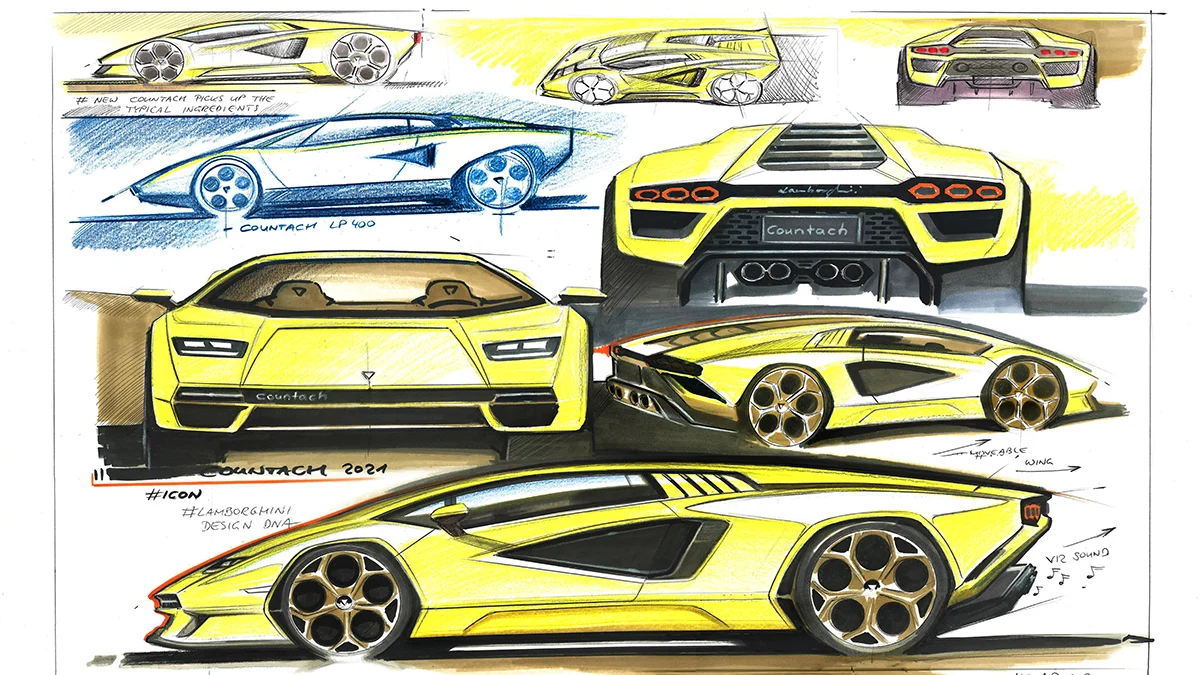
History is littered with stories of how some of the most iconic cars received their monikers. The Lamborghini Countach, for instance, stands as a masterclass in phonetic potency. The legendary designer Marcello Gandini once recounted the origin of the name to this author. It was not a product of a focus group or a marketing committee, but an exclamation of genuine amazement from a Piedmontese technician.
"He was a huge man, very strong, with enormous hands," Gandini recalled. "He spoke almost entirely in the Piedmontese dialect… the term means ‘contagion,’ but he used it in the sense of admiration or amazement." By capturing that raw, visceral reaction and stamping it onto the show car, Lamborghini created a name that has resonated for decades. It is a stark contrast to today’s corporate-approved, focus-grouped naming conventions, which prioritize safety and trademark availability over soul.
The Global Burden: Why Modern Names Are Losing Their Flavor
As companies like Land Rover expand their reach to over 170 countries, the challenge of naming a car has become a nightmare of global legal compliance. A name that sounds aspirational in English might carry a vulgar or nonsensical meaning in a secondary market.
This necessity for universal neutrality has given rise to a plague of "fabricated nonsense." Names like the Land Rover Evoque or the Nissan Qashqai are constructed to sound vaguely exotic yet distinctly modern, stripped of any real etymological roots. When the meaning is drained from a name, manufacturers often default to the "alphanumeric assemblage."
While the BMW 3 Series has earned its numerical status through decades of consistency, newer entries like the Honda e:Ny1 or the Toyota bZ4X feel sterile and disconnected. These names are designed to emphasize the "electric" and "tech" nature of the vehicle, yet they fail to ignite the imagination. They represent a retreat from the "name" toward the "code," turning the automobile into just another piece of consumer electronics.
Chronology of Naming Fails: A Linguistic Minefield
The history of automotive branding is punctuated by instances where companies clearly failed to conduct a basic linguistic audit of their target markets. The results are often comical, if not catastrophic:
- The Pajero Problem: Mitsubishi’s off-roader, the Pajero, is a staple in many markets. However, in Spanish-speaking countries, the name is a vulgar slang term for an individual who engages in self-gratification. The company was forced to rename the vehicle the Montero in those territories to avoid public embarrassment.
- The Audi e-tron: In a similar oversight, Audi pushed forward with the e-tron branding for its electric range. While it sounds futuristic in German or English, in French, the word étron is a crude term for "excrement." One might imagine that a multi-billion-dollar corporation would check its dictionary before launching a flagship EV line in France.
- The Japanese Whimsy: Japan has provided the world with some of the most bewilderingly named vehicles in history. The Mazda Bongo Friendee, the Daihatsu Naked, and the Isuzu Mysterious Utility Wizard serve as reminders that when you move outside the Western naming paradigm, the results can range from the endearing to the utterly bizarre.
Implications: Where Do We Go From Here?
The current trajectory of car naming is indicative of a broader trend: the commodification of the automobile. As we transition away from the internal combustion engine and toward standardized platforms and software-defined architectures, the individuality of the vehicle is being sacrificed on the altar of efficiency.
Jaguar’s recent decision to name its new electric vehicle the Type 01—where "0" signifies zero emissions and "1" signifies the new era—is a perfect case study in the current malaise. It is logical, accurate, and deeply uninspiring. When a brand as storied as Jaguar moves from the evocative names of its past to a digit-based designation, it signals that the industry is more concerned with signaling its green credentials than with capturing the driver’s soul.
Perhaps there is a lesson here for the industry. A car is more than a tool for transport; it is a statement of intent, an extension of the owner’s personality, and a piece of cultural history. While manufacturers will always face the constraints of international trademark law and linguistic sensitivity, there is still a desperate need for creativity.
If Elon Musk can command the global stage with a joke, surely the established automotive titans can find a way to name their vehicles with something more than a spreadsheet of alphanumeric codes. Until they do, we will continue to look back fondly on the Stingrays, the Countachs, and the Eldorados of the world—names that, unlike their successors, actually meant something.
 Ali Ikhwan
 Siti Muinah
 Ammar Sabilarrohman
