

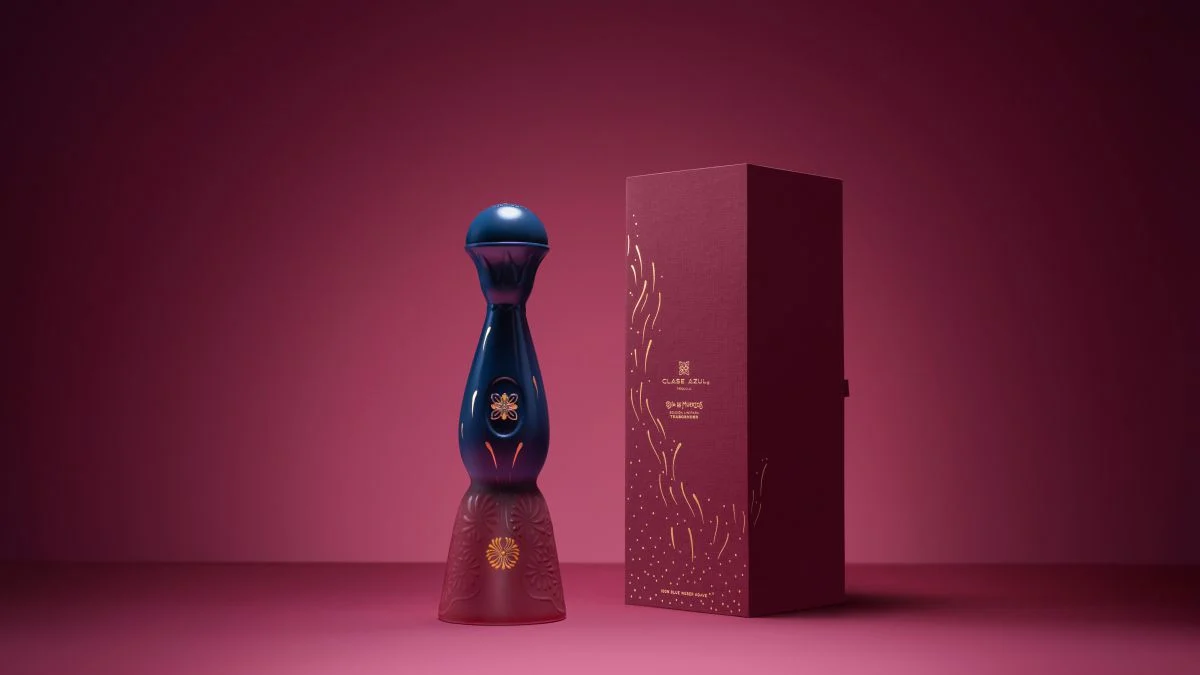
As the autumnal veil thins and the scent of marigolds begins to permeate the air, the luxury spirits world turns its collective gaze toward Mexico. For the aficionados of high-end tequila, October has become synonymous with a singular event: the annual unveiling of the Clase Azul Día de Muertos limited-edition decanter. This year, the brand pivots from its long-running, multi-chapter narrative series to introduce a standalone masterpiece that bridges the gap between viticulture and agave spirits: Día de Muertos Edición Limitada Trascender.
Main Facts: The Intersection of Agave and Champagne
The Trascender release is not merely a tequila; it is an exercise in complex maturation. Master Distiller Viridiana Tinoco has curated a blend of two distinct añejo tequilas, each aged for a rigorous 30 months. The first component is matured in traditional American whiskey barrels, providing the foundational backbone of vanilla, caramel, and structural oak. The second component, however, represents a daring departure from tradition: it is aged in casks previously utilized for the fermentation of wine destined to become Champagne.
This specific choice of cask introduces the phenomenon of autolysis to the spirit. During the fermentation of Champagne, yeast cells break down, releasing amino acids and peptides that impart the characteristic toasted, bready, and nutty profile of fine sparkling wine. In the context of this tequila, those compounds manifest as sophisticated aromas of pear, apple, and sourdough on the nose, followed by a palate defined by agave nectar, delicate cacao nibs, and toasted walnut.
The decanter itself, a hallmark of the Clase Azul identity, remains an artisanal triumph. Featuring a striking blue and magenta glaze accented with 24-karat gold brush strokes, the bottle is adorned with the iconic marigold—the cempasúchil—symbolizing the bridge between the living and the departed. Limited to a run of 10,000 one-liter decanters and retailing for $2,000, Trascender represents one of the most exclusive spirits to hit the global market this year.
A Chronological Evolution: From 2017 to Trascender
To understand the significance of Trascender, one must look back at the brand’s history of seasonal storytelling. Clase Azul first flirted with the concept of a high-end Día de Muertos expression in 2017. That initial release was so well-received by collectors that it fundamentally altered the secondary market for luxury tequila. In fact, a bottle from that inaugural 2017 set recently made headlines as the most expensive tequila ever sold at auction, underscoring the brand’s ability to treat spirits as tangible, appreciating assets.
Following the success of that early release, the brand launched the Nuestros Recuerdos (Our Memories) series in 2021. Over the course of three years, the series grew to include five distinct expressions: Sabores, Colores, Aromas, Música, and Recuerdos. Each bottle served as a chapter in a multi-year narrative, exploring the sensory and cultural elements of the Mexican holiday. With the conclusion of the Recuerdos series last year, the brand stood at a crossroads. According to brand representatives, Trascender is not the beginning of a new series but the inauguration of a new philosophy: releasing Día de Muertos expressions as singular, standalone works of art that are unburdened by the requirements of a multi-year cycle.
Supporting Data: The Science of Autolysis in Agave
The technical brilliance of Trascender lies in the interplay between the agave and the French oak-influenced wine casks. In the world of spirits, the term "autolysis" is rarely associated with tequila. Usually, a master distiller seeks to highlight the "terroir" of the agave plant—the minerality of the soil, the sweetness of the cooked agave heart, and the influence of the local yeast strains.
By introducing the "aromatic legacy" of Champagne fermentation, Tinoco has effectively layered a secondary, complex narrative onto the spirit. The breakdown of yeast cells in the wine casks creates a specific sensory profile that complements the inherent vegetal sweetness of the blue Weber agave.

- The Nose: The influence of the Champagne casks provides a crisp, orchard-fruit profile—think bruised pear and tart green apple—balanced by the yeasty, brioche-like scent of high-end sourdough.
- The Palate: The 30-month maturation process in American whiskey barrels ensures that the tequila retains its identity as an añejo, offering a velvety mouthfeel that carries notes of cacao nibs and the deep, roasted warmth of walnut.
This is a spirit designed for slow contemplation, mirroring the reflective nature of the holiday it honors.
Official Responses: Voices from the Distillery and the Studio
The philosophy behind the creation was summarized by Master Distiller Viridiana Tinoco, who framed the spirit as a philosophical meditation on existence. "The soul of the agave, a plant that embodies patience, resilience, and cyclical life, meets the memory of the wine," Tinoco stated. "Together, they give rise to a spirit that celebrates a permanence that transcends time."
Complementing this, Creative Director Sofía Ortiz emphasized the visual and tactile nature of the decanter, noting that the artistic process was a return to the brand’s core identity. "For this piece, we wanted to go back to our essence, our hand-applied feathered brush strokes, to root ourselves as we honored one of Mexico’s most beautiful celebrations," Ortiz explained. "With each brushstroke, the flowers come to life and transform into light, emerging against the depths of a dark blue night. This is our way of retelling an ancient story about the passage from the earthly world into the spiritual one."
Implications: The Future of Luxury Tequila
The release of Trascender has several major implications for the luxury spirits market. First, it signals a shift away from the "series-based" marketing model that has dominated the industry for the past five years. By moving toward standalone, high-concept releases, brands like Clase Azul are signaling that they intend to prioritize quality and unique innovation over the pressure of maintaining a multi-year, interconnected product cycle.
Second, the $2,000 price point for a one-liter decanter reinforces the positioning of tequila as a category that sits firmly alongside the finest Scotches, Cognacs, and Japanese whiskies. As the tequila industry continues to shed its historical perception as a party spirit and embraces its status as a sophisticated, terroir-driven craft, releases like Trascender serve as vital "proof of concept."
Finally, the geographical distribution of the product—spanning from the brand’s boutique in San José del Cabo to the "Loft" in Brooklyn—highlights the global reach of Mexican culture. The Día de Muertos holiday is no longer just a regional celebration; it is a global cultural moment, and luxury brands are playing a significant role in its international interpretation.
For the collector, Trascender represents a departure from the predictable. It is a spirit that demands attention, not only for the liquid inside but for the story it tells about the evolution of the agave spirit. Whether it is displayed as a piece of art or poured to mark a special occasion, Día de Muertos Edición Limitada Trascender is a reminder that in the hands of a master, tequila is a medium as capable of expressing profound emotion as any fine art.
As collectors and enthusiasts scramble to acquire one of the 10,000 decanters, the takeaway is clear: the era of the "standard" luxury tequila is over. We have entered the era of the storyteller, where each bottle is a transient moment captured in ceramic and gold, inviting us to contemplate the beauty of what remains when we move from the earthly to the spiritual.
 Ali Ikhwan
 Siti Muinah
 Ammar Sabilarrohman
