

This story is part of The Oeno Files, our weekly insider newsletter to the world of fine wine.
In an era where the global wine market is hyper-focused on indigenous identity, Sicilian winemakers are currently doubling down on the island’s heritage varieties. From the volcanic slopes of Mount Etna to the sun-drenched plains of the interior, the spotlight is firmly fixed on Nero d’Avola, Nerello Mascalese, Lucido, and Grillo. Yet, at the historic Tenuta Regaleali estate, the Tasca d’Almerita family is moving against the tide. They have just unveiled a limited-edition, Bordeaux-style blend that serves as both a radical departure from current trends and a profound tribute to the family’s pioneering spirit.
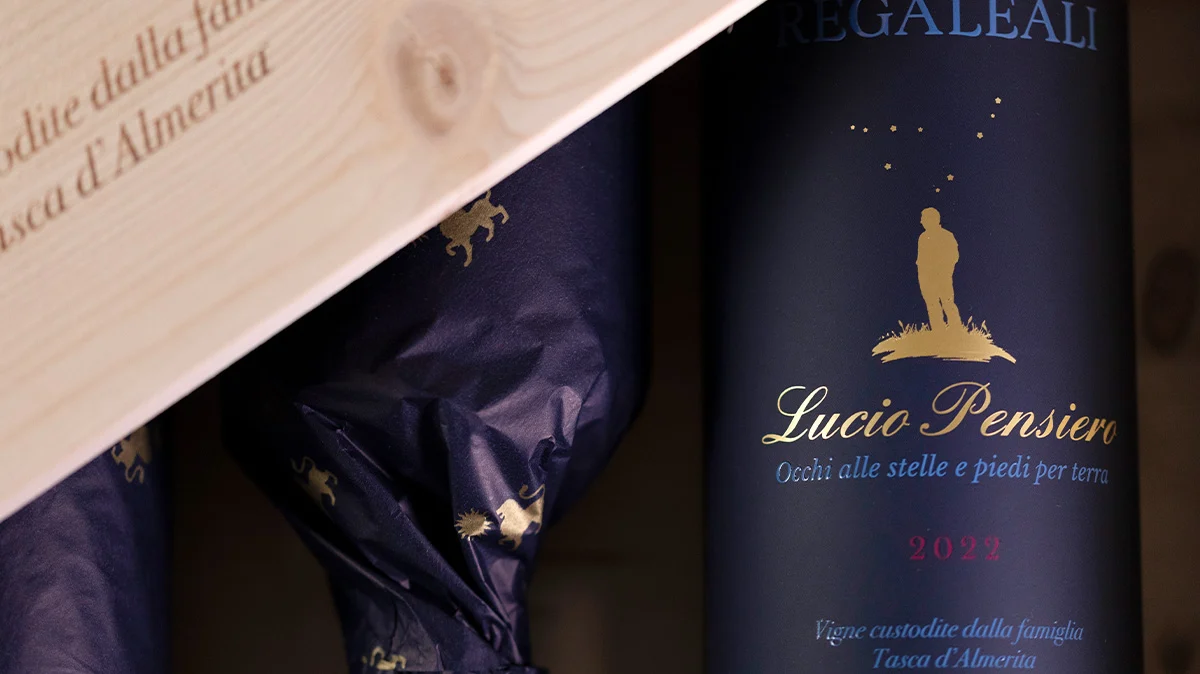
Named Lucio Pensiero—Italian for "Lucio’s Thoughts"—this inaugural 2022 vintage is a testament to the vision of the late Lucio Tasca, the visionary who first introduced French varieties to the Sicilian landscape in the late 1970s. With fewer than 5,500 bottles produced and a mere 300 allocated to the United States, this wine is not just a release; it is a historical artifact in liquid form.
The Genesis of an Icon: A Chronology of Innovation
To understand Lucio Pensiero, one must look back to the middle of the 20th century. Alberto Tasca, the eighth generation of the family and current steward of Tenuta Regaleali and four other Sicilian estates, points to the foundational work of his grandfather, Giuseppe.
"In 1959, he planted Nero d’Avola and Perricone on the San Lucio hill, laying the foundations for Rosso del Conte," Alberto explains. It was a time of consolidation and respect for the local canon. However, the late 1970s brought a seismic shift in the family’s philosophy, driven by the restless curiosity of Lucio Tasca.
The Secret Trial of 1979
The popular narrative suggests that Lucio planted his French vines in total secrecy, hiding them from the prying eyes of the wine authorities. In reality, the secrecy was a private, family-oriented endeavor. In 1979, without the explicit permission of his father, Giuseppe, Lucio planted a small experimental trial at Tenuta Regaleali: four rows each of Cabernet Sauvignon, Chardonnay, Pinot Noir, and Sauvignon Blanc.
At the time, these international varieties lacked any standing under Sicily’s stringent regional wine regulations. They were essentially "outlaw" vines. Lucio’s motivation was not merely rebellious; it was strategic. He recognized that to put Sicily on the global map, he needed a bridge—a common language that international collectors could understand. By demonstrating the potential of the Regaleali terroir through the lens of globally recognized grapes, he aimed to prove that the island was capable of world-class viticulture. After several years of rigorous observation, the results were undeniable, validating his experimental spirit.

The Terroir of Regaleali: A Landscape of Extremes
The Cabernet Franc, Merlot, and Cabernet Sauvignon that comprise Lucio Pensiero are grown exclusively at Tenuta Regaleali, a sprawling 1,500-acre estate situated approximately two hours southeast of Palermo. The property has been in the Tasca d’Almerita family since 1830 and represents a diverse ecosystem where wheat, grain, olive trees, and almond trees coexist with the vines.
"One of the unique characteristics of the estate is its extraordinary range of growing conditions," says Alessandro Tasca, the ninth generation of the family. "Regaleali extends across six hills, from approximately 450 to 850 meters (1,475 to 2,790 feet) in elevation, with different soils, exposures, and microclimates."
This verticality is the secret to the wine’s precision. The winemaking team possesses the rare luxury of choosing between distinct parcels, each offering a different expression of the same grape variety. While the Cabernet Sauvignon in the blend originates from the original 1979 plantings, the Cabernet Franc is a product of more recent, high-altitude selections. As climate change alters the viticultural map, the family remains nimble. Alessandro notes that while Merlot is a component of this first vintage, the composition of Lucio Pensiero will evolve with the climate. The family is committed to adaptation, ensuring the wine always captures the unique "voice" of the estate, regardless of the vintage’s challenges.
Tasting the Legacy: Sensory Impressions
Because this release is not yet widely available in the United States, we conducted a private tasting of the 2022 Lucio Pensiero at the estate with Valerio D’Angelo, the estate manager and sommelier.
In the glass, the wine presents a deep, impenetrable purple hue. The nose is a complex tapestry of blackberry, cassis, and leather, underscored by a sophisticated hint of sage and violet. On the palate, the wine is marked by plush, well-integrated tannins that support a luscious core of purple plum, eucalyptus, and lavender. There is a distinct, grounding earthiness that defines the finish, punctuated by a bright, citrus-driven orange peel acidity.
Despite spending 18 months in new French oak barrels, the wine shows no signs of heavy-handed extraction. It is remarkably balanced—a structural marvel that is already drinking beautifully but possesses the tannic architecture to age gracefully for decades.
Expert Perspectives: A Bridge Between Worlds
The release has sent ripples through the sommelier community. Marco Reitano, chief sommelier at the three-Michelin-starred La Pergola in Rome, offers a compelling analysis: "The structure and aromatic complexity transport you to the Right Bank of Bordeaux, but the vibrant acidity and mineral salinity recall what only the high-altitude vineyards of Regaleali could produce with such precision." Reitano goes further, labeling the wine a "masterpiece reminiscent of The Leopard," the seminal Sicilian novel. To him, it is a Bordeaux-style blend that remains "profoundly and proudly Sicilian at heart."

Maurizio Cerio, sommelier at the two-Michelin-starred Don Alfonso 1890 in Sorrento, notes that the wine represents the "above and beyond" mentality that defined Lucio Tasca’s career. "It is a modern wine, certainly easy on the palate but one that lingers on the taste buds," Cerio observes. "This first vintage can be enjoyed immediately, but if you want something more, you should wait, because it has a lot to offer."
Implications for the Future: Defining "Tradition"
The significance of Lucio Pensiero extends beyond the bottle. It challenges the binary view that a wine must be either "native" or "international." Instead, it suggests that the true heritage of a family-run estate is the act of innovation itself.
"For our family, tradition has never meant keeping things exactly as they were," Alessandro Tasca reflects. "It is more about understanding what previous generations were trying to achieve and finding your own way to carry that thinking forward."
By honoring his father with this release, Alessandro is not just bottling a blend of Cabernet and Merlot; he is bottling a philosophy. Lucio Tasca famously ignored trends, choosing instead to follow his palate and his convictions. The success of this inaugural vintage proves that when a wine is crafted with such intention—a deep respect for the land combined with an unwavering desire to explore its limits—it transcends the category of a "blend." It becomes a legacy.
As the wine industry continues to grapple with climate change and evolving consumer tastes, the story of Lucio Pensiero serves as a reminder that the most enduring traditions are those that are brave enough to change. For the Tasca family, the future of Sicilian wine isn’t just in the soil of the past; it’s in the ongoing, thoughtful dialogue between the earth and the imagination.
 Ali Ikhwan
 Siti Muinah
 Ammar Sabilarrohman
