

Main Facts: The 2028 Presidential Exploration
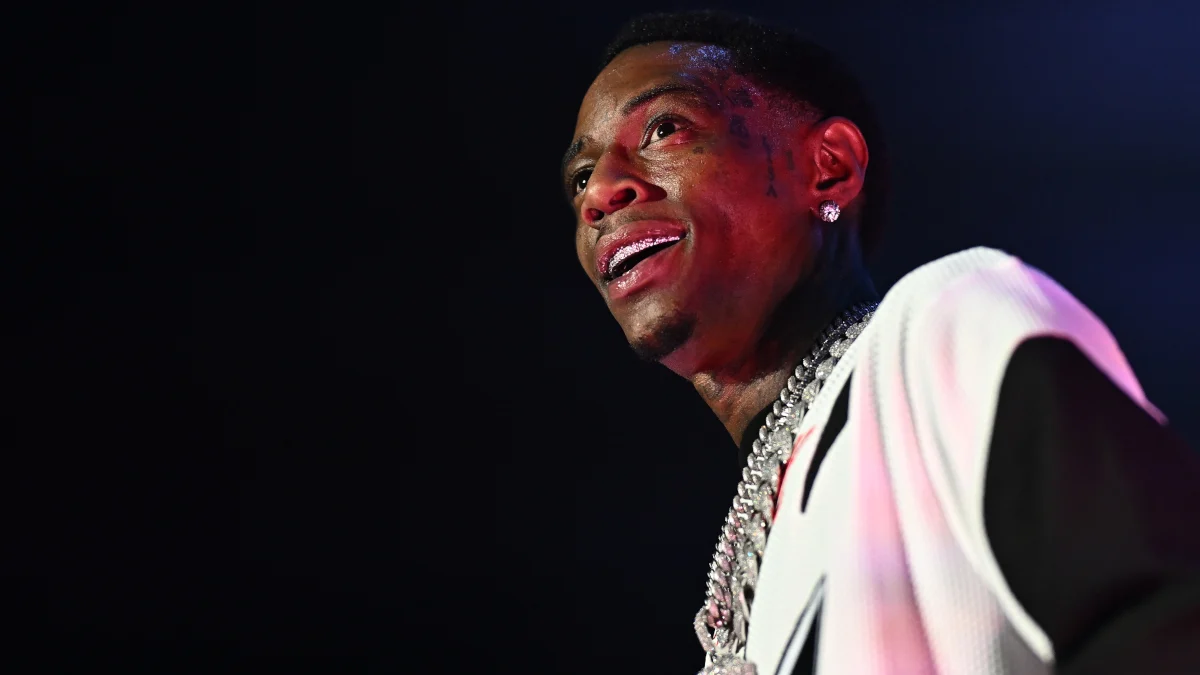
In a political landscape increasingly defined by unconventional figures and the blurring lines between pop culture and governance, American hip-hop pioneer Soulja Boy has officially signaled his intention to enter the political arena. On a Saturday evening, the multi-platinum artist, entrepreneur, and internet culture trailblazer took to social media to announce that he is exploring a run for the Presidency of the United States in the 2028 election cycle.
The announcement, accompanied by a striking visual of the rapper superimposed against a dramatic, wave-swept red, white, and blue American flag, immediately captured the attention of both the entertainment industry and political pundits alike. While celebrity political bids are no longer unprecedented in modern American history, Soulja Boy’s entry—should it materialize into an official campaign—would shatter a distinct ceiling: he would become the first major rap artist to occupy the Oval Office.
Rather than relying entirely on vague platitudes typical of exploratory social media posts, the artist—born DeAndre Cortez Way—laid out a foundational four-pillar platform. According to his public statements, a potential Soulja Boy administration would focus intensely on:
- Economic Opportunity: Expanding pathways to wealth creation, supporting small businesses, and addressing wealth disparities.
- Criminal Justice Reform: Modernizing the legal system, addressing systemic inequities, and advocating for rehabilitation.
- Education: Overhauling archaic learning models to better prepare students for a modern, globalized economy.
- The Future of Technology and AI: Preparing the nation for the ethical, economic, and societal disruptions driven by artificial intelligence and emerging tech sectors.
"From music to business to technology, I’ve always believed in thinking bigger and challenging what’s possible," Soulja Boy stated in his announcement. "Now I’m exploring what it means to bring that same vision to public service. A new chapter. A bigger vision. A commitment to creating opportunities for the next generation."
Chronology: From Internet Pioneer to Political Aspirant
To understand Soulja Boy’s trajectory toward a potential 2028 presidential campaign, one must trace a career that has consistently mirrored—and often anticipated—the shifts in digital connectivity, modern capitalism, and youth culture over the last two decades.
The Early Digital Era (2007–2010)
Long before TikTok algorithms dictated chart success, a teenage DeAndre Way mastered the mechanics of the early internet. Operating out of Southaven, Mississippi, and Atlanta, Georgia, the young artist utilized platforms like SoundClick, MySpace, and YouTube to distribute his music directly to consumers. In 2007, his self-released single "Crank That (Soulja Boy)" became a viral phenomenon. Driven by a simplistic yet wildly catchy dance craze, the song claimed the number one spot on the Billboard Hot 100 and made Soulja Boy the first independent artist to achieve massive mainstream success via self-promotion on the internet.
The Serial Entrepreneur and Tech Early Adopter (2011–2020)
As his musical output evolved, Soulja Boy transitioned rapidly into the business world. He was among the first prominent musicians to monetize his brand through non-traditional avenues, launching clothing lines, sneaker brands, and an early foray into consumer electronics. Notably, his ventures into branded gaming consoles and digital asset experimentation positioned him as an early adopter of internet-native commerce. While some of these business ventures were met with skepticism or public amusement, they cemented his reputation as a tireless hustle-driven entrepreneur who was unafraid to fail in the public eye in pursuit of the next big trend.
Cultural Resurgence and Web3 Integration (2021–2025)
Entering the 2020s, Soulja Boy cemented his status as a living legend of internet culture. Younger generations recontextualized his early work, viewing him not merely as a novelty act from the late 2000s, but as the foundational architect of the modern viral music industry. During this period, he expanded his investments into the tech sector, cryptocurrency, and digital media production. His social media presence remained ubiquitous, characterized by unfiltered streams, business announcements, and direct engagement with millions of followers.
The 2028 Exploratory Phase (Late 2026)
The culmination of this nearly twenty-year public evolution arrived in late 2026. Recognizing the shifting nature of political discourse—where digital nativity and direct-to-consumer communication often outweigh traditional political pedigree—Soulja Boy formally announced his exploration of the 2028 presidential race, positioning himself as a voice for a generation raised on the internet, crypto, and fast-paced technological change.
Supporting Data: The Intersection of Celebrity, Tech, and Politics
Soulja Boy’s prospective run does not occur in a vacuum. It sits at the intersection of several significant socio-economic trends shaping the modern American populace: demographic shifts, technological disruption, and the declining trust in traditional political institutions.
Digital Natives Coming of Age by 2028
By the time the 2028 presidential election takes place, the demographic makeup of the American electorate will have shifted dramatically. Millennials and Generation Z will make up the vast majority of active voters. These generations possess vastly different priorities compared to their predecessors, placing higher values on technological literacy, AI integration, decentralized finance, and progressive social reforms.
Soulja Boy’s platform directly targets these concerns, particularly through his emphasis on artificial intelligence and modern economic opportunity. Statistics show that younger voters are increasingly skeptical of career politicians, viewing them as out-of-touch with the realities of the modern gig economy, housing affordability, and digital-first industries.
The Viability of Non-Traditional Candidates
American political history features a long, if checkered, tradition of non-traditional candidates entering the presidential fray. From business tycoons like Donald Trump and Ross Perot to cultural figures like wrestler Jesse Ventura (who became Governor of Minnesota) and actor Arnold Schwarzenegger (Governor of California), the electorate has frequently shown an appetite for outsiders who promise to disrupt stagnant political machinery.
While entering the race as an independent or third-party candidate presents formidable structural hurdles—including ballot access laws, debate thresholds, and fundraising apparatuses—the modern media ecosystem favors candidates with built-in reach. With tens of millions of combined followers across Instagram, X, YouTube, and TikTok, Soulja Boy possesses a direct pipeline to voters that bypasses traditional media gatekeepers entirely.
Official Responses and Public Reaction
As expected, the announcement generated a polarized, highly engaged wave of reactions across social media, entertainment outlets, and political commentary channels.
Fan and Cultural Reception
Among his core fanbase and large segments of internet culture, the reaction was a mixture of enthusiastic support and ironic amusement. Memes celebrating a hypothetical "Soulja Boy Administration" flooded platforms within minutes of his post. Supporters argued that a candidate who understands the struggles of independent entrepreneurship and digital infrastructure is better suited to navigate the twenty-first century than aging career politicians.
Many fans pointed to his resilience in the music industry—bouncing back from financial setbacks, changing trends, and public controversies—as proof of his tenacity. "If he can teach America how to crank that, he can certainly fix the economy," read one viral comment shared thousands of times on X.
Skepticism and Political Analysis
Conversely, mainstream political analysts and critics greeted the announcement with profound skepticism, characterizing it as a publicity stunt or a branding exercise designed to generate headlines for upcoming musical or business releases. Critics noted the vast gulf between social media posturing and the complex, grueling reality of running a viable presidential campaign, which requires thousands of local volunteers, deep-pocketed super PACs, and an intimate understanding of constitutional law, foreign policy, and legislative mechanics.
Moreover, skeptics pointed to Soulja Boy’s past controversies—including public spats, legal issues, and unorthodox business ventures—as potential vulnerabilities that would be heavily scrutinized by opposing political campaigns and investigative journalists.
Implications: What a Soulja Boy Run Means for 2028
Whether Soulja Boy’s 2028 presidential exploration evolves into a fully realized campaign or remains a fascinating cultural footnote, the announcement carries profound implications for the future of American politics.
The Gamification and Entertainment Value of Politics
The potential candidacy highlights the ongoing evolution of politics into a branch of the entertainment industry. When political figures increasingly rely on viral moments, influencer partnerships, and meme culture to capture voter attention, it opens the door wide for actual entertainers to step directly into the arena. Soulja Boy’s bid suggests that the barrier to entry for political discourse is no longer law school or municipal office, but cultural resonance and reach.
Shifting Policy Debates Toward Tech and AI
By making artificial intelligence and the future of technology a core pillar of his platform, Soulja Boy underscores an issue that traditional politicians have often struggled to address with genuine fluency. As AI rapidly transforms the workforce, copyright law, national security, and education, the demand for leadership that understands these digital disruptions from a practitioner’s perspective is growing. Even if Soulja Boy does not reach the Oval Office, his emphasis on these topics forces a broader conversation about how future leaders must adapt to a tech-driven world.
Redefining Authenticity in Leadership
Ultimately, the Soulja Boy 2028 exploratory announcement reflects a deep-seated public desire for authenticity. Traditional politicians are frequently viewed as overly scripted, cautious, and disconnected from the everyday struggles of ordinary citizens. In contrast, figures like Soulja Boy—who have lived out loud, made mistakes in public, and built empires from scratch using sheer willpower and internet ingenuity—offer a radically different archetype of leadership.
As the road to 2028 unfolds, the political establishment would be wise not to instantly dismiss the cultural currents represented by unexpected candidates. Whether the "Soulja Boy Party" ever materializes on a national ballot or simply serves as a disruptive cultural mirror, the message is clear: the rules of engagement for American democracy are changing, and the next generation of leaders may come from places the establishment never saw coming.
 Layla Zulfa
 Nana Muazin
 Asep Darmawan
