

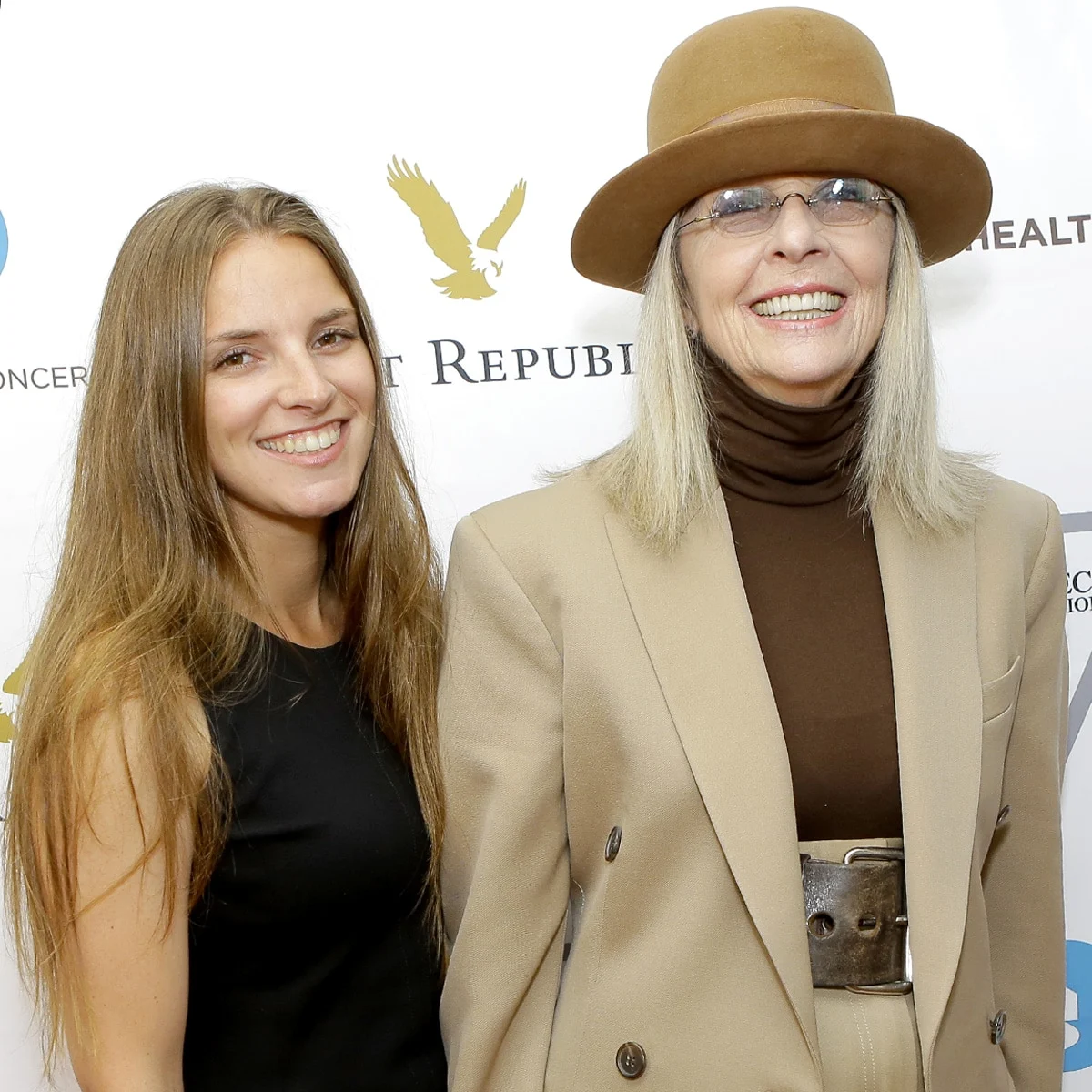
One year has passed since the world bid a poignant farewell to one of cinema’s most idiosyncratic and beloved figures, Diane Keaton. The Oscar-winning actress, known as much for her signature tailored menswear and iconic hats as for her unparalleled range in films like Annie Hall and Book Club, died at the age of 79 following a battle with pneumonia. While her contributions to the silver screen remain a permanent fixture of Hollywood history, it is the personal void left behind that remains most profound for her family.
In a deeply moving tribute shared on the first anniversary of her mother’s death, Dexter Keaton White opened up about the complexities of grief, articulating the struggle of navigating a world that feels fundamentally altered by her absence.
The Weight of Absence: A Daughter’s Heartfelt Tribute
On October 10, Dexter Keaton White—whom Diane adopted in 1996—took to Instagram to share a reflective message, marking exactly one year since the loss of her mother. Posting a vintage black-and-white photograph of the pair, Dexter captured the surreal nature of mourning, noting that the passage of time feels both instantaneous and eternal.
"One year without you, mom," Dexter wrote. "It somehow feels like yesterday and forever ago all at once."
The post served as a candid admission of the difficulties inherent in moving forward after such a significant loss. For Dexter, the grief is not found only in the grand milestones, but in the quiet, mundane occurrences of daily life. "I’m still trying to get used to a world where I can’t call you, have you there for a hug, or go on adventures with you," she continued. "It’s the everyday moments that remind me just how much I wish you were still here."
Dexter’s tribute serves as a poignant reminder that behind the veil of fame and the accolades of the Academy, the late actress was, above all, a mother whose presence was the anchor for her children. She concluded her message with a simple, enduring vow: "I love you and I miss you. Always."
A Bond Transcending Time: Reflecting on Shared Memories
To accompany her written tribute, Dexter shared a cherished image from her 2021 wedding to Jordan White. The photograph captures a candid, intimate moment between mother and daughter: Dexter, radiant in a white wedding gown, and Diane, instantly recognizable in her signature aesthetic—a crisp pantsuit, hat, and sunglasses.
The image serves as a powerful symbol of their relationship. The genuine joy on both their faces as they look into each other’s eyes reflects a deep, foundational connection that defined their lives. This was not merely a celebrity red-carpet appearance; it was a private, familial moment that underscored the personal life Diane Keaton nurtured outside of the glaring spotlight of the industry.
Chronology of a Storied Life: From Stage to Screen
Diane Keaton’s journey in the spotlight was one of evolution, courage, and creative risk-taking. From her early days in the late 1960s to her final projects, she remained a singular force in American cinema.
- 1969: Keaton makes her mark on the Broadway stage, showcasing the raw talent that would soon transition to film.
- 1972: Her breakthrough role as Kay Adams in The Godfather introduces her to global audiences, establishing her as a versatile dramatic talent.
- 1977: The release of Annie Hall cements her status as a cultural icon. Her portrayal of the titular character redefined the romantic comedy genre and influenced fashion trends for decades to come.
- 1996: A milestone year in her personal life, as she adopts her daughter, Dexter, embarking on the journey of single motherhood.
- 2001: Keaton expands her family with the adoption of her son, Duke.
- 2003: She delivers a critically acclaimed performance in Something’s Gotta Give, proving her continued relevance and comedic timing in mid-career.
- 2018–2024: Keaton enjoys a late-career renaissance, starring in hits like Book Club, proving that her appeal transcends generations.
- October 2024: The industry and her family mourn her passing at age 79 following a battle with pneumonia.
The Philosophy of Motherhood: A Personal Choice
While Diane Keaton achieved monumental success as an actress, director, and producer, she often spoke of her decision to become a mother in her 50s as one of her most rewarding, albeit unconventional, life choices. Unlike many of her peers who navigated early marriage and family life, Keaton embraced the role of a single parent with the same deliberate, independent spirit she brought to her film roles.
In a 2008 interview with The Ladies’ Home Journal, she reflected on this decision, noting, "Motherhood was not an urge I couldn’t resist. It was more like a thought I’d been thinking for a very long time. So I plunged in."
This "plunging in" resulted in a deep, tight-knit family unit. By choosing to prioritize her role as a mother later in life, Keaton was able to offer her children a version of herself that was fully realized, weathered by life experience, and deeply committed to their development. This philosophy of deliberate parenting is perhaps why the loss is felt so acutely by her children; their relationship was built on a conscious choice to be present, which shaped the foundation of their home life.
Supporting Data: The Impact of Loss
Grief experts often note that the "firsts" following a death—the first birthday, the first holiday, the first anniversary—are the most challenging for survivors. For Dexter Keaton White, this has been an ongoing journey. Earlier this year, she paid tribute to her mother on the first Mother’s Day following her passing, writing on Instagram: "Missing her voice, her hugs, her presence, and everything that made her home."
These public tributes are more than just social media posts; they are therapeutic outlets for a daughter processing the loss of a parent who was also a public icon. The emotional resonance of these posts has drawn support from fans worldwide, highlighting the communal way in which the public mourns the loss of figures who have been part of the cultural fabric for decades.
Implications for Her Legacy
The legacy of Diane Keaton is multifaceted. There is the professional legacy: the Oscar, the Golden Globes, the genre-defining performances, and the influence on fashion. But there is also the human legacy: the family she raised, the values she instilled, and the quiet, personal love she provided her children.
The vulnerability displayed by Dexter serves as a poignant reminder of the humanity behind the celebrity. Often, the public forgets that iconic figures are, at their core, someone’s mother, mentor, or friend. The ongoing tributes emphasize that Keaton’s impact was not confined to a theater screen or a DVD collection; it lived in the daily "adventures" and "hugs" she shared with her daughter.
As we look back at the images of her life—from the fresh-faced actress of 1969 to the silver-haired icon of 2024—the narrative is clear: Diane Keaton lived a life that was both grand in scope and deeply intimate in its personal connections. Her children, Dexter and Duke, remain the keepers of that legacy, carrying forward the lessons of a woman who famously "plunged in" to life, and who, even after her passing, continues to teach those she left behind about the enduring power of love.
In the final analysis, the grief expressed by her family is a testament to the success of her life. One does not mourn this deeply unless they were loved this profoundly. For the world, she was a movie star; for Dexter, she was, and remains, a guiding light. As the anniversary passes, the focus remains on the enduring nature of that bond, proving that while the person may be gone, the influence—and the love—remains permanently etched in the lives of those who knew her best.
 Nana
Nana
 Nana Muazin
 Suro Senen
