

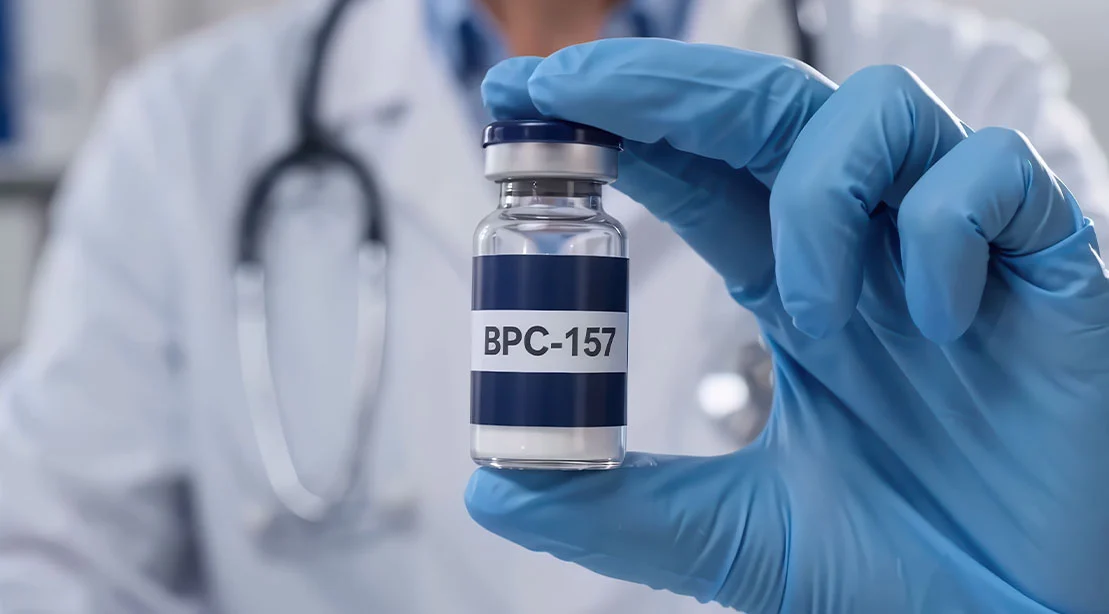
In the shadowy corners of the high-performance fitness world—from the chalk-dusted floors of CrossFit boxes to the hyper-masculine environments of bodybuilding gyms—a new legend has taken root. It is not a protein powder, nor is it a traditional performance-enhancing drug in the steroid sense. It is a peptide known as BPC-157, or Body Protective Compound 157.
Over the last several years, BPC-157 has achieved a near-mythical status. It is whispered about as a panacea for the modern athlete’s broken body: a "fix-all" for torn tendons, chronic inflammation, stubborn rotator cuff tears, and even debilitating gastrointestinal distress. Yet, despite its soaring popularity, BPC-157 exists in a precarious legal and medical limbo. It is a drug that has bypassed the traditional gatekeepers of pharmaceutical approval, moving from underground forums directly into the medicine cabinets of the mainstream.
The Rise of the "Wolverine Peptide"
The moniker "Wolverine peptide" was not bestowed by a clinical trial or a pharmaceutical marketing board; it was coined by the community itself, referencing the fictional comic book character whose hallmark is rapid, near-instantaneous tissue regeneration. When combined with other peptides like TB-500, it forms the "Wolverine Stack," a regimen that users claim can shave weeks or even months off of recovery times for connective tissue injuries.
For years, this compound was the exclusive domain of "biohackers"—the internet-savvy subculture that experiments with longevity and performance enhancement. However, the anecdotal evidence became too loud to ignore. If you frequent any online fitness community, you will inevitably find threads praising its efficacy. But while the fitness community treats BPC-157 as a proven tool, the scientific community remains far more cautious.
Chronology: From Lab Bench to Gym Bag
To understand the trajectory of BPC-157, one must look at its origins. The compound is a synthetic peptide consisting of 15 amino acids, derived from a protein found in human gastric juice. Early research conducted in the 1990s and early 2000s focused on its potential for healing ulcers and gastrointestinal damage in animal models.
- 1990s–2010s: Initial preclinical studies demonstrate that BPC-157 has potent healing properties in rodents, specifically regarding ligament repair, bone healing, and protection of the gut lining. These studies, however, were almost exclusively conducted on animals.
- 2015–2019: The compound begins to leak out of the laboratory and into the bodybuilding underground. It gains traction on forums like Reddit and specialized peptide boards as a "research chemical."
- 2020: The COVID-19 pandemic drives a surge in home-based health optimization. Interest in at-home recovery tools skyrockets, and BPC-157 becomes a staple in the DIY biohacking kit.
- 2024–2025: Regulatory scrutiny increases. The FDA begins to take notice of the widespread compounding and sale of unapproved peptides, leading to an advisory committee review.
Supporting Data: Peeling Back the Curtain
Until recently, the use of BPC-157 was entirely anecdotal. There were no statistics, no patient registries, and no official data to suggest how many people were actually injecting the substance. That changed with a recent, groundbreaking analysis by the health-data analytics firm nference.
By scrubbing more than 15 million de-identified medical records, researchers identified a cohort of 1,039 patients who had documented BPC-157 usage in their medical charts. The data revealed a startling trend: the number of newly documented users increased roughly 33-fold between 2020 and 2026.
While the study is preliminary and has not yet undergone the rigorous process of peer review, it provides the first empirical evidence that BPC-157 has successfully escaped the "peptide-geek" underground. The demographics of these users are also shifting. The data suggests that the typical user is becoming younger and overwhelmingly male, with reported justifications ranging from acute sports injuries and chronic pain management to elusive gastrointestinal complaints.
The Scientific Reality Check
It is critical to distinguish between biological plausibility and clinical proof. While the preclinical data on rats is compelling, it does not equate to a green light for human consumption. We currently lack adequately powered, randomized, double-blind, placebo-controlled human trials—the gold standard of medical evidence.
Without these trials, we are left with a "n-of-1" scenario. If an athlete experiences a reduction in shoulder pain while taking BPC-157, they attribute the success to the peptide. But in the absence of a control group, it is impossible to account for the "placebo effect," the benefits of physical therapy, the natural healing process of the body, or the simple cessation of the activity that caused the injury in the first place.
The medical community faces a dilemma: do we wait for years of clinical testing while patients continue to experiment with substances of unknown purity, or do we adapt our regulatory frameworks to the speed of modern information sharing?
Official Responses and Regulatory Turbulence
The regulatory status of BPC-157 is currently in a state of flux. The FDA has never approved the substance for any human use. However, the agency’s relationship with compounding pharmacies—which often serve as the legal bridge for such substances—is complex.
Earlier this summer, an FDA advisory committee voted to recommend allowing the compounding of BPC-157 under specific circumstances. It is vital to note that an advisory committee recommendation is not the same as FDA approval. It does not signify that the drug has been proven safe or effective, nor does it provide a blanket endorsement for its use. It merely opens a door for further discussion. As of now, the final regulatory decision remains pending, leaving the market in a state of legal ambiguity.
The Peril of the "Gray Market"
Beyond the question of whether BPC-157 works lies a more immediate, tangible danger: the issue of supply chain integrity.
Because BPC-157 is not FDA-approved, it cannot be bought at a standard pharmacy with a prescription. Users are forced to turn to online "research chemical" shops and gray-market peptide sellers. This is where the risks shift from hypothetical to hazardous.
Recent testing by outlets such as WIRED has revealed a terrifying truth: the labels on these bottles often bear no relation to the contents. In several instances, samples of BPC-157, NAD+, and other popular peptides were purchased and sent to independent laboratories for analysis. The results were alarming. The labs were unable to verify the presence of the active ingredients, and in some cases, the vials contained substances entirely different from what was advertised.
When you purchase a substance from an unregulated online source, you are not just gambling with your health; you are injecting substances of unknown purity, concentration, and origin into your body. Whether or not the molecule could work is irrelevant if the bottle contains heavy metals, fillers, or entirely different pharmaceutical agents.
Implications: A Culture Moving Faster Than Science
The story of BPC-157 is not merely a story about a specific chemical; it is a story about the changing nature of modern medicine. We live in an era where information—and misinformation—travels at the speed of light. Athletes and chronic pain sufferers are no longer content to wait a decade for the glacial pace of the FDA’s clinical trial process. When they see a potential solution, they act.
This creates a dangerous gap. Science is struggling to keep pace with the DIY culture of the fitness community. While some proponents argue that the "war on peptides" is an attempt to protect pharmaceutical profit margins, the reality is that the lack of regulation puts the consumer in a position of extreme vulnerability.
If BPC-157 is eventually proven effective, it could revolutionize sports medicine, turning what were once career-ending injuries into manageable setbacks. But until the science catches up to the hype, the current trend of widespread, unregulated use remains a high-stakes gamble.
The most important takeaway for any athlete considering the "Wolverine" path is simple: testimony is not science. Until there is rigorous data, transparency in the supply chain, and a clear understanding of the long-term side effects, the "Wolverine peptide" will remain a mystery wrapped in a vial—promising the world, but delivering only uncertainty.
 Nana Muazin
 Dwi Wanna
 Asro
Asro
