

By Olivia Tauber | Digital Culture Desk
The people dominating your social media feeds—delivering sharp stand-up comedy routines, modeling luxury streetwear, and dispensing lifestyle advice—often do not exist. Their skin is mathematically flawless, their schedules are impossibly glamorous, and their engagement metrics are through the roof. Yet behind every digitally rendered face lies a sprawling, highly automated commercial ecosystem. It is a world driven by artificial intelligence platforms, specialized talent agencies, and online courses promising overnight digital fame.
However, as the synthetic creator market surges toward mainstream viability, it is leaving a trail of real-world casualties in its wake. Human creators—particularly female comedians and performers—are discovering that their jokes, facial expressions, and stage outfits are being systematically harvested by anonymous operators to power monetized, hyper-sexualized AI avatars.

Main Facts: The Anatomy of the AI Influencer Business
The core premise of the artificial intelligence influencer business is deceptively simple: you do not need to be a model to secure lucrative brand partnerships, nor do you need to step onto a physical stage to amass millions of views with a stand-up comedy clip.
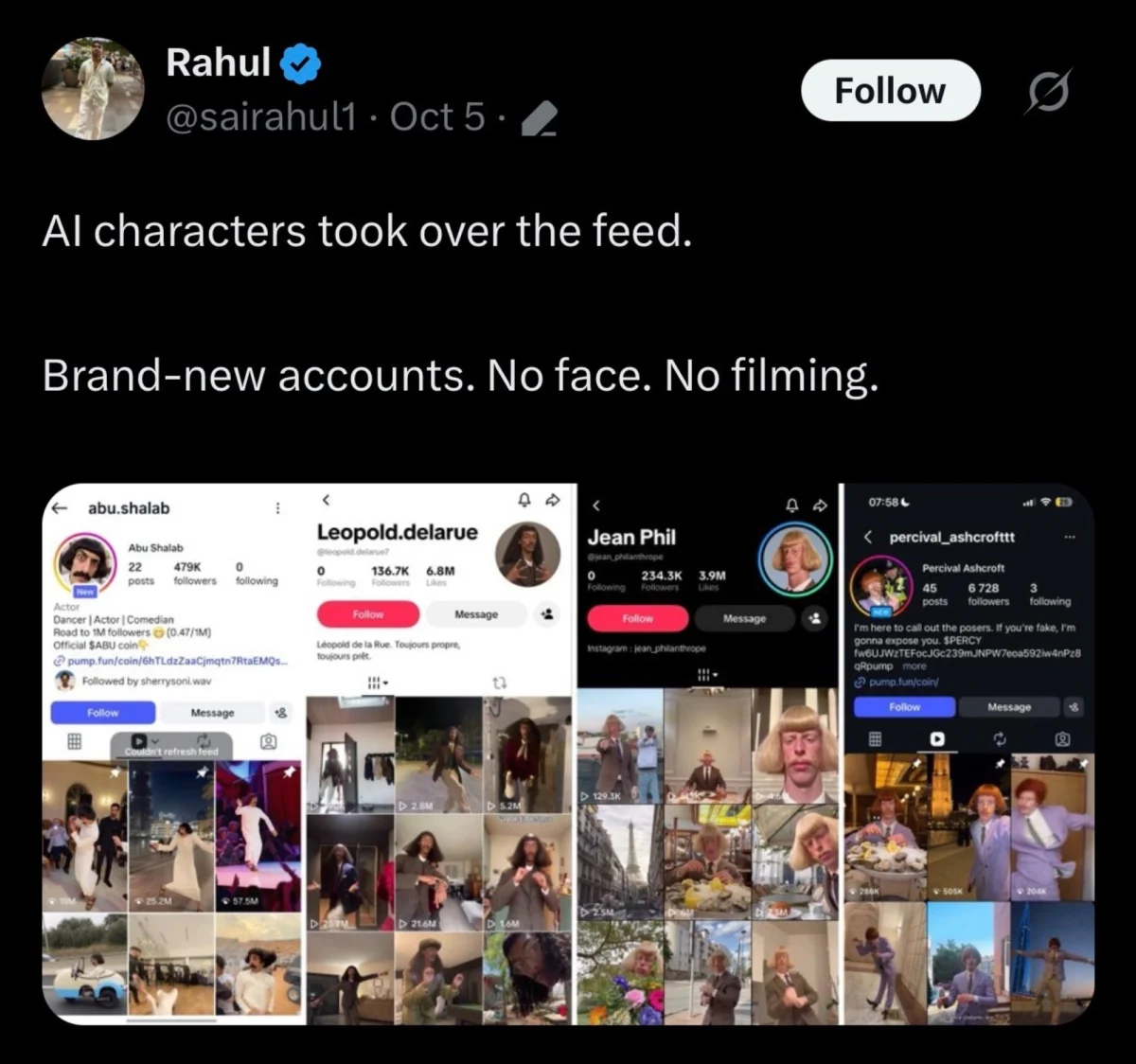
Using generative AI tools, operators can synthesize an entirely fictional persona—complete with a unique name, back-story, ethnicity, age, and hyper-stylized body proportions. These characters are then deployed across platforms like TikTok, Instagram, and YouTube. While some creators film themselves on a smartphone and use AI video-transfer software to swap their physical appearance for a digital avatar, others bypass filming entirely. They scrape viral videos created by real people, preserve the original motion, lighting, and camera framing, and digitally paste a synthetic face over the performer.
The financial upside driving this trend is immense. Social media growth hackers frequently boast about the ease of scaling these operations. "This is like ecomm in 2016," one viral post declared on X (formerly Twitter). "These AI characters have gotten 100M+ views in only the last couple of days. Making them is so easy it feels unfair."

While platforms like TikTok and Instagram rarely pay significant sums directly through baseline view counts, the real monetization strategy happens downstream. Many AI influencer profiles leverage their massive followings as funnels, directing curious users to subscription-based adult platforms like OnlyFans or Fanvue, or selling digital courses that teach others how to manufacture their own synthetic clones.
Chronology: The Rapid Rise of Synthetic Personalities
While virtual models like Lil Miquela and Shudu have existed for years—pioneering digital fashion campaigns for legacy brands like BMW and Balmain—the operational landscape shifted dramatically between 2024 and 2026.
- Late 2023 – Early 2024: Major social media platforms, including TikTok and YouTube, introduced foundational AI-labeling tools and deepfake disclosure requirements. Despite these guardrails, generative video models advanced rapidly, transitioning from static image generators to fluid, motion-stable video synthesis engines.
- Mid 2025: Platforms like YouTube updated their monetization guidelines, formally barring "repetitive or mass-produced AI content" from participating in the YouTube Partner Program. Concurrently, specialized AI video-transfer applications—such as Higgsfield’s Genjutsu and HeyGen—lowered the technical barrier to entry, allowing everyday users to swap human actors in viral clips with custom AI avatars in minutes.
- September 2026: A new wave of AI-generated accounts exploded across Instagram and TikTok, specifically targeting the sketch and stand-up comedy niches. Profiles featuring characters like "Tiffany Sloane" began amassing hundreds of thousands of followers within weeks of creation.
- October 2026: The friction between human creators and synthetic copycats reached a boiling point. Comedians publicly called out AI accounts for stealing original joke delivery, wardrobe choices, and physical mannerisms verbatim, triggering widespread scrutiny over intellectual property theft in the age of generative media.
Supporting Data: The Economics and Metrics of Fictional Fame
The architecture supporting the AI creator economy relies heavily on specialized software suites and incubation platforms.

- Production Stacks: Operators utilize tools like ChatGPT or Claude for character conception, Midjourney or stable diffusion models for reference "character sheets," and advanced video manipulation software to map synthetic faces onto existing motion capture data. ElevenLabs supplies hyper-realistic synthesized voices, completing the illusion of a living person.
- Audience Capture: Accounts utilizing these methods have demonstrated an uncanny ability to hyper-scale. For instance, luxury lifestyle AI accounts have reportedly gained over 280,000 followers in less than 48 hours by posting multiple times a day.
- Monetization Funnels: Fitness and lifestyle AI personality Aitana López—managed by the Spanish agency The Clueless—boasts over 400,000 Instagram followers and works with brands like L’Oréal and Amazon. Alongside brand deals, López’s profile directs users to The Clueless’s "AI Creator Aicademy" hosted on Skool.com, which charges a $9 monthly subscription fee to teach users how to build and monetize their own digital avatars.
- The Copyright Crisis: Data compiled from recent platform disputes highlights a predatory trend: emerging AI comedy accounts often amass tens of thousands of followers while directly mirroring human routines. One such account, associated with a Fanvue profile boasting nearly 5,000 likes, was found to have plagiarized material from real comedians including George Brett Olsen, Olivia Carter, Sarah Purdum, and Julia Jasunas.
Official Responses and Platform Policies
As intellectual property theft and deceptive marketing run rampant, technology companies and advocacy groups are scrambling to establish boundaries.
Major social platforms have implemented mandatory disclosure policies. Meta applies "AI info" labels to realistic synthetic media, while TikTok and YouTube require creators to disclose when digital alterations are used. Furthermore, TikTok prohibits unauthorized synthetic depictions of private adults and anyone under 18. In August 2026, TikTok representatives confirmed they were testing proactive tools—such as "AI Cast"—to help users protect their digital likenesses from unauthorized scraping.
However, creators argue that labeling is insufficient. A disclosure tag does not compensate a human artist whose original joke, timing, and emotional delivery were stolen.

Industry watchdogs are also sounding the alarm on the societal impacts of hyper-sexualized AI avatars. Sara Ziff, founder and executive director of the Model Alliance, warned in The New York Times that mass-producing idealized, physically exaggerated virtual models risks "narrowing our definition of beauty instead of broadening it."
Creators whose intellectual property has been expropriated express deep frustration. Comedian Sarah Purdum noted in an interview with Mashable that the phenomenon disproportionately impacts female performers whose routines are repurposed to draw male web traffic toward monetized adult platforms. "I feel annoyed that my work is being taken for the purpose of drawing in men," Purdum said.
Implications: Competing Against Your Own Digital Ghost
The rise of the AI creator business signals a profound identity crisis for the modern digital landscape. We have officially entered an era where authenticity can be easily faked, and originality can be instantly automated.

For brand marketers, the appeal is clear. Agencies like Inception Point AI—which maintains a roster of over 100 fictional characters hosting podcasts and cooking shows—tout synthetic talent as a "clean slate." Unlike human creators, AI avatars do not experience burnout, demand renegotiated contracts, or engage in real-world scandals that could alienate corporate sponsors.
Yet for the human artists building the culture from the ground up, the implications are chilling. Navigating an already hyper-competitive entertainment economy is difficult enough. When algorithms allow anonymous bad actors to slap a synthetic face onto a human performance, steal the punchline, and build a lucrative commercial enterprise off stolen labor, creators are forced into an impossible position. They are no longer just fighting for algorithmic visibility—they are being forced to compete against digital ghosts of their own making.
 Sagoh
Sagoh
 Nana
Nana
 Asro
Asro
