

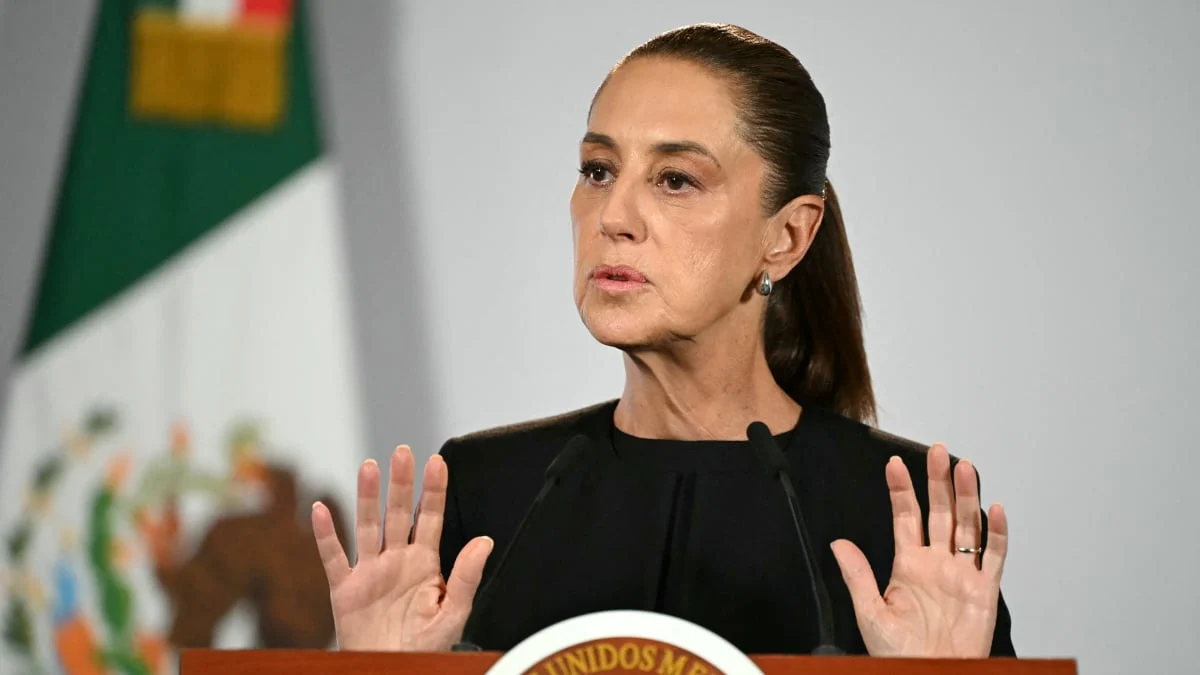
MEXICO CITY — In a sweeping policy pivot that places Mexico at the vanguard of global efforts to regulate Big Tech, Mexican President Claudia Sheinbaum signed a historic presidential decree today targeting social media and streaming platforms. The sweeping mandate explicitly bars digital giants from displaying, promoting, or algorithmically recommending violent, extremist, or otherwise harmful content to minors.
The directive arrives in the shadow of a profound national tragedy: earlier this month, two former students carried out a horrific attack at a secondary school in Torreón, Coahuila, murdering a vice principal and injuring several students. Subsequent investigations revealed that the perpetrators had been radicalized and heavily inspired by violent extremist material consumed online.
President Sheinbaum’s administration has given tech companies a strict, uncompromising deadline of just 30 days to bring their platforms into full compliance with the new regulations. Failure to do so, Sheinbaum warned, will trigger an aggressively fast-tracked legislative agenda outlining severe legal and financial penalties for non-compliant corporations.
As governments worldwide grapple with the corrosive effects of unchecked algorithms on youth mental health, Mexico’s radical regulatory stance signals a new era of state intervention in the digital public square—one that will test the boundaries of corporate compliance, international law, and the fundamental architecture of the modern internet.
1. Main Facts: The Anatomy of the Decree
The newly signed presidential order fundamentally alters the operational framework for social media platforms, search engines, and video-streaming services operating within Mexican jurisdiction.
Under the decree, digital platforms are legally prohibited from exposing minors—defined as anyone under the age of 18—to a wide swath of categorized harms. The mandate explicitly restricts content that generates, normalizes, or promotes:
- Hate speech and violent extremism
- Sexual exploitation and abuse
- Suicide and deliberate self-harm encouragement
- Promoted eating disorders and body-shaming communities
- Cyberbullying, targeted harassment, and doxxing
- Other forms of illegal conduct that endanger youth development
Crucially, the decree mirrors modern digital safety frameworks by moving beyond mere content moderation. It mandates that platforms implement robust, verifiable age-verification mechanisms to prevent minors from bypassing age gates, alongside mandatory, easy-to-use parental control tools that grant families oversight over minor accounts.
Major technology companies—including industry heavyweights like Meta (Facebook, Instagram, WhatsApp), TikTok, and Google (YouTube)—were privately briefed by Mexican government officials prior to the official announcement. According to reports from Reuters, none of the named corporations have yet issued formal statements responding to the decree.
2. Chronology: From Torreón to the Presidential Desk
The path toward today’s decree was forged through a rapid succession of security crises, educational policy shifts, and mounting public outrage over the unchecked power of algorithmic feeds.
- Early October 2026: A horrific tragedy unfolds at a secondary school in Torreón, Coahuila. Two former students execute a coordinated attack, killing a vice principal and injuring multiple students. Law enforcement and government investigators quickly determine that the young attackers were radicalized through exposure to violent, extremist subcultures online. The incident ignites an immediate national conversation regarding the radicalizing pipeline of social media.
- September 2026: Signaling her administration’s hardline stance on distractions and digital pollution in public spaces, President Sheinbaum announces comprehensive nationwide educational reforms. The policy institutes a strict bell-to-bell cellphone ban and rigid tablet restrictions across Mexico’s entire public education system, effectively cutting children off from constant screen interaction during school hours.
- Today (October 14, 2026): President Sheinbaum formalizes the anti-violence directive by signing the presidential decree. Giving tech companies a strict 30-day window to comply, she promises immediate legislative penalties if platforms fail to protect Mexican youth from violent and sexually explicit algorithms.
3. Supporting Data: A Global Wave of Digital Restrictions
Mexico’s legislative action does not happen in a vacuum; it is part of a broader, accelerating global backlash against the business models of surveillance capitalism and engagement-driven algorithms.
For years, lawmakers across the globe relied on voluntary compliance, corporate self-regulation, and toothless safety pledges. However, mounting peer-reviewed research linking high social media consumption to skyrocketing rates of adolescent anxiety, depression, body dysmorphia, and suicide has forced a dramatic policy reversal.
The Classroom Battleground
Mexico’s recent classroom cell phone ban places it alongside several municipal and state jurisdictions globally that have chosen to lock screens out of schools. While states like New York and school districts like Los Angeles have enacted localized bans, federal legislative efforts in the United States have repeatedly stalled due to intense lobbying and partisan gridlock. Mexico’s federal approach represents a top-down assertion of state authority that dwarfs localized American initiatives.
International Precedents: The Australian Blueprint
Globally, nations are moving past mere classroom restrictions toward wholesale structural bans. Australia made history by passing the world’s first complete ban on social media access for users under the age of 16, forcing platforms like Instagram, TikTok, and Facebook to lock out underage users entirely, regardless of parental consent.
Other nations across Europe and the Americas are closely monitoring Australia’s rollout to determine whether age-gating entire platforms is a viable public health strategy or an administrative impossibility. Mexico’s approach attempts a middle ground: keeping platforms accessible, but aggressively scrubbing them of toxic, extremist, and violent content while forcing verification architectures.
4. Official Responses and Stakeholder Perspectives
The rollout of Mexico’s decree has predictably divided child advocacy groups, tech industry lobbyists, legal scholars, and everyday parents.
Proponents: A Necessary Public Health Intervention
Child safety advocates and mental health organizations have overwhelmingly praised President Sheinbaum’s decisive action. Proponents argue that social media platforms function as public utilities weaponized by engagement algorithms that intentionally prioritize outrage, violence, and sexual content to maximize "dwell time."
"For too long, tech conglomerates have profited off the psychological distress and radicalization of our children," noted a prominent Latin American digital rights advocate speaking on condition of anonymity. "Self-regulation has failed. When platforms prioritize ad revenue over human lives—as tragically demonstrated in Torreón—governments have an absolute moral and legal obligation to intervene."
Critics: Technical Realities and Censorship Concerns
Conversely, civil liberties organizations, privacy advocates, and tech policy researchers have raised serious concerns regarding the feasibility and potential unintended consequences of the decree.
Chief among the criticisms is the efficacy of age-verification tools. Critics point out that mandatory age verification often requires users—including adults—to surrender sensitive biometric data (such as facial scans) or government-issued identification to tech companies, creating massive honeypots for data breaches and eroding digital privacy rights.
Furthermore, digital rights groups warn that vague statutory definitions of terms like "hate speech" or content that "promotes illegal conduct" can easily be abused by governments to suppress political dissent, grassroots activism, or controversial journalistic reporting.
Finally, tech analysts question whether a 30-day compliance window is technically realistic. Building, testing, and deploying specialized, region-locked filtering systems and identity-verification infrastructure at scale requires engineering feats that smaller platforms simply cannot achieve within a single month.
5. Implications: What Lies Ahead for Mexico and Big Tech
The signing of President Sheinbaum’s decree marks a pivotal crossroads for digital governance in Latin America. The implications of this policy will ripple far beyond the borders of Mexico.
The Compliance Crunch
Over the next 30 days, tech giants face an unenviable dilemma. Complying with Mexico’s mandates means potentially altering their global core algorithms—or, alternatively, building a dedicated, highly restrictive Mexican firewall similar to national internet governance models seen in other sovereign states. Given the sheer size of Mexico’s Spanish-speaking digital market, total withdrawal is unlikely, but foot-dragging or superficial compliance could invite immediate legislative retaliation.
A Precedent for Latin America
If Sheinbaum successfully forces Silicon Valley to bend to Mexican child-safety laws without buckling under legal challenges, neighboring Latin American nations are almost certain to follow suit. Brazil, Colombia, and Argentina have all expressed growing legislative anxiety over algorithmic harms and youth radicalization. A successful Mexican enforcement model could serve as the legislative blueprint for the entire hemisphere.
The Ultimate Test
Ultimately, the decree will be judged not by the political rhetoric surrounding its signing, but by its execution. Whether Mexico can successfully insulate its youth from the darker, more predatory corners of the internet without plunging into authoritarian censorship or breaking the technical architecture of the web remains the ultimate test for the Sheinbaum administration. For now, the clock is ticking down its final days for Big Tech.
 Sagoh
Sagoh
 Asro
Asro
 Iffa Jayyana
