

PARIS — While the sun-baked boulevards of Biarritz and the glittering superyacht marinas of St. Tropez have long served as the default summer playgrounds for international elites, a quieter, more discerning migration is quietly shifting France’s luxury tourism paradigm. As rising temperatures reshape travel patterns across Southern Europe, affluent travelers and discerning Parisians are looking northward.
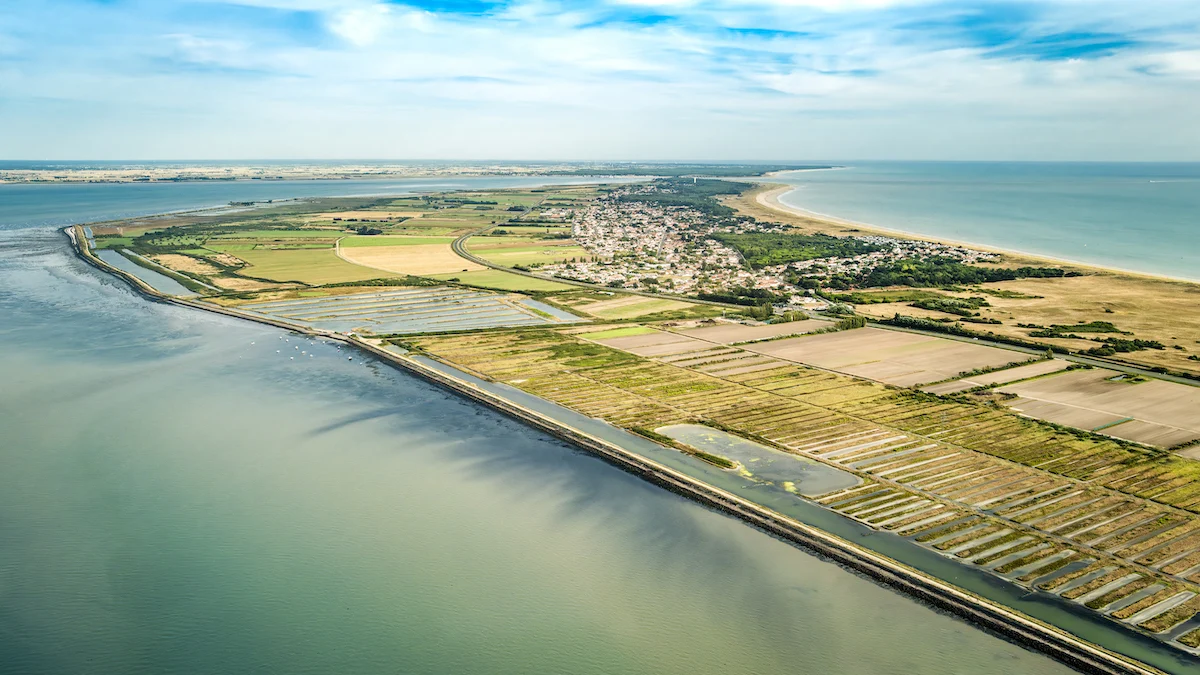
Their destination? The windswept, sun-drenched coast of Vendée and its crown jewel: the secluded island of Noirmoutier.
Far from the paparazzi lenses of the Riviera, this untamed Atlantic enclave offers a rare brand of modern exclusivity. It is a place where high-end coastal real estate sits behind protected pine forests, Michelin-starred gastronomy relies on hyper-local hyper-seasonal bounty, and the ultimate status symbol is not a designer label, but a pair of bare, surf-weathered feet.
Main Facts: The Geography of an Atlantic Sanctuary
Measuring less than half the square mileage of Nantucket, Noirmoutier-en-l’Île is an idyll deeply familiar to the French upper crust, yet frequently overlooked by American tourists fixated on traditional luxury hubs. The island’s dramatic introduction sets the tone for its distinct character: twice a day, dictated entirely by the Atlantic tide, a 2.5-mile submersible road known as le Passage du Gois emerges from the sea, serving as a natural gateway connecting the western coast of France to the island.
This oceanic bouncer ensures that access to Noirmoutier is strictly governed by nature.

Once across, visitors find a landscape that merges elements of Northern European ruggedness with a distinctly laid-back Californian ethos. Pine forests cascade into sweeping sand dunes, historic salt marshes yield world-renowned hand-harvested sea salt, and a thriving surf culture defines the local rhythm of life.
Yet, Noirmoutier is just the anchor of a broader regional renaissance. To its south lies the department of Vendée—hailed as the Côte de Lumière (Coast of Light) due to its impressive annual hours of sunshine—boasting roughly 155 miles of pristine coastline, vibrant inland waterways, and culinary traditions that have quietly earned international acclaim.
Chronology: From Belle Époque Aristocracy to Modern Eco-Luxury
Understanding the modern appeal of Vendée and Noirmoutier requires looking back at how these coastal communities evolved from working-class maritime hubs and royal retreats into sanctuaries of sustainable luxury.
- Late 19th Century: French aristocrats and bourgeois industrialists "discover" Noirmoutier’s northeastern coast, specifically the protected pine forest of Bois de la Chaise. They begin constructing grand Belle Époque villas, establishing a legacy of multi-generational summer estates.
- Mid-20th Century: The region solidifies its maritime identity. Small-scale oyster farming in communes like La Guérinière and sardine fishing out of ports like St. Gilles Croix de Vie become economic and cultural cornerstones of the Vendée coastline.
- 1989: The inception of the Vendée Globe race in Les Sables d’Olonne alters the maritime landscape. The event grows into the world’s most grueling, nonstop, single-handed, round-the-world sailing race, putting the department on the global sporting map every four years.
- The 2000s–Present: As global tourism overruns traditional Mediterranean hotspots, climate shifts and a growing appetite for authentic, low-impact luxury drive wealthy travelers northward. Noirmoutier and the broader Vendée coast transform into quiet epicurean destinations, championed by sustainable culinary leaders like three-Michelin-starred chef Alexandre Couillon.
Supporting Data: The Economics of Understated Extravagance
The luxury found in Vendée is not measured in marble facades or neon-lit beach clubs, but in terroir, craftsmanship, and exclusivity.
- Multimillion-Euro Real Estate: In the Bois de la Chaise, protected zoning laws prevent overdevelopment. Multimillion-euro estates, surrounded by ancient oaks and providing private access to secluded shores like Plage des Dames, remain fiercely coveted second homes for elite families from Paris and Nantes.
- Gastronomic Excellence: At La Marine, chef Alexandre Couillon delivers three-Michelin-starred dining utilizing hyper-local ingredients sourced directly from the fish auction across the street and his organic kitchen garden. Demand is so high that reservations for the upcoming seasons book out months in advance.
- The World’s Most Expensive Potato: In May, Noirmoutier plays host to the brief harvest of “La Bonnotte” potato. Grown in mineral-rich, iodine-laden soil for just three months, these delicate, lemon-and-salty-noted tubers have fetched upwards of $600 to $860 per kilo at specialized agricultural auctions.
- A Tapestry of Culture: Vendée’s agricultural and maritime wealth is celebrated through an exhaustive calendar of festivals, including dedicated chocolate, flower, astronomy, and historic food celebrations. St. Gilles Croix de Vie—officially recognized as a Site Remarquable du Goût—hosts vibrant spring sardine celebrations, anchored by a 1.5-mile walking trail dedicated to the town’s storied fishing heritage.
Official Responses and Perspectives
Tourism boards and cultural authorities across the Pays de la Loire region have noticed the steady demographic shift toward the North. Rather than leaning into mass tourism, local leaders are doubling down on preservation.

"Our strength lies in our restraint," notes a regional tourism official familiar with the Vendée coast. "While other coastal destinations across Europe have sacrificed their natural character for commercial expansion, our mandate is protection. The ocean regulates our roads; our farmers protect our soil; and our culinary artisans respect the sea. That is the true definition of modern luxury."
Culinary pioneers on the ground echo this sentiment. Mathieu and Aurélien Gendron—brothers who transformed a historic marshland oyster hut into the seasonal tasting cabin Le Bouclard alongside their father, Alain—emphasize the importance of hyper-local heritage.
"People come here looking to unplug," says Mathieu Gendron. "They don’t want white tablecloths and synthetic experiences. They want to sit by the marshes where the oysters were pulled from the water ten minutes ago, shared with family, stripped of pretense."
Implications: The Future of Northern European Coastal Travel
The ascent of Noirmoutier and Vendée carries broader implications for the global luxury travel sector.
- The Climate Migration Effect: As extreme summer heatwaves increasingly plague traditional Mediterranean destinations like the French Riviera, Amalfi, and Costa del Sol, northern latitudes with temperate oceanic climates are poised to capture high-end travel spend.
- The Evolution of "Quiet Luxury": High-net-worth travelers are pivoting away from conspicuous consumption toward experiential authenticity. Destinations that offer ecological preservation, rich agricultural heritage, and strict anti-paparazzi privacy are commanding higher market valuations.
- Infrastructure Realities: As word spreads—slowly, reluctantly—about the treasures of the Côte de Lumière, local authorities face the delicate balancing act of improving transport and hospitality infrastructure without diluting the raw, untamed charm that makes the region a sanctuary in the first place.
For now, the tide continues to roll in and out twice a day at le Passage du Gois. The bouncer stands watch, the oyster shells pile high in La Guérinière, and the flat-bottomed yoles glide silently through the weeping-willow-shaded canals of Green Venice—a place that feels, all at once, like a touch of Italy, a slice of California, and unmistakably, exquisitely, the best-kept secret in France.
 Evan Lee Salim
 Nana Wu
 Muslim
