

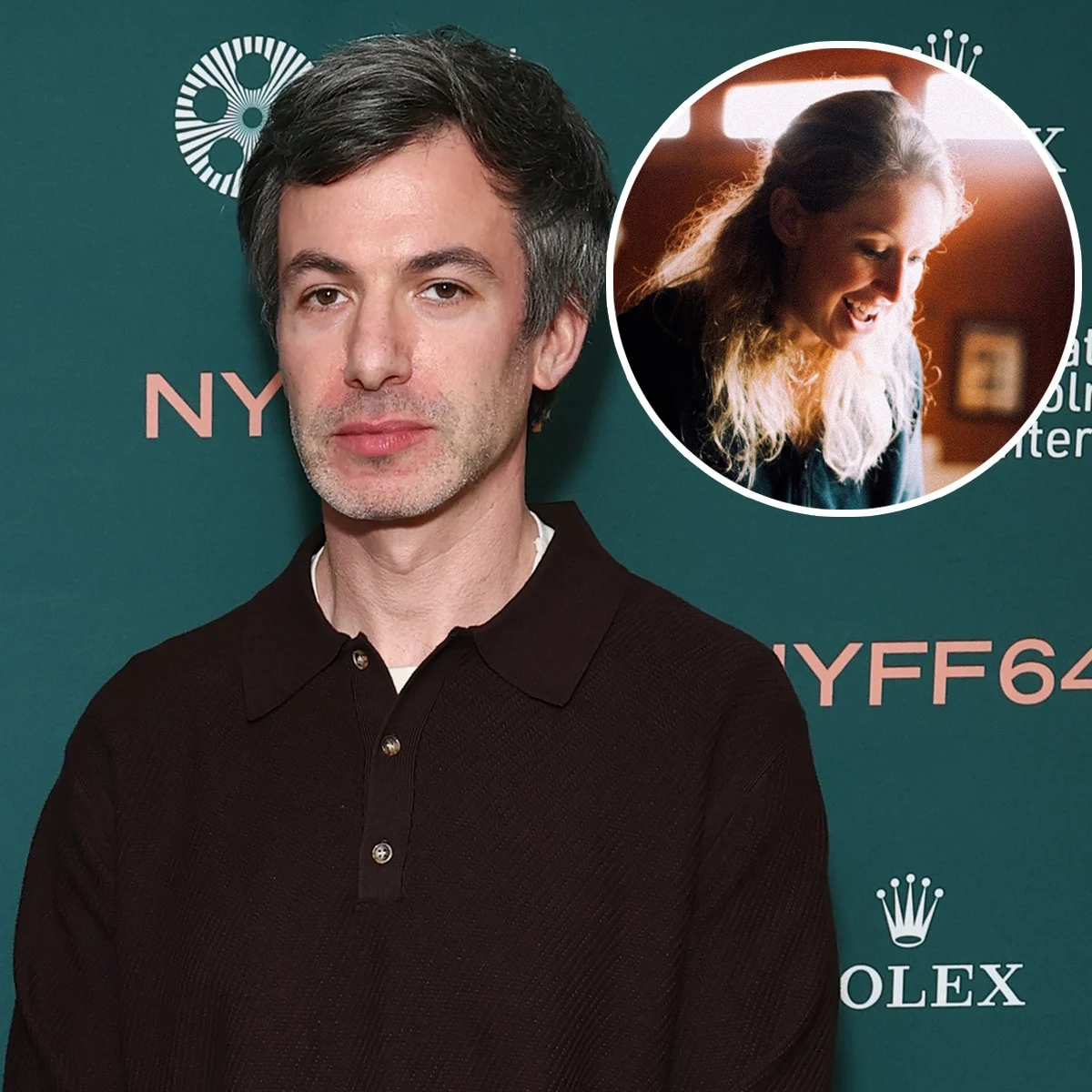
In the landscape of modern documentary filmmaking, few projects have arrived with as much atmospheric tension or logistical impossibility as You Can See Everything. The film, a collaboration between master of social discomfort Nathan Fielder and director Lance Oppenheim, offers an unprecedented look at the final days of freedom for Elizabeth Holmes, the disgraced founder of Theranos.
For 34 days in 2023, just weeks before Holmes began serving an 11-year prison sentence for fraud, the crew embedded themselves in the San Diego home she shared with partner Billy Evans and their two young children. The result is not merely a chronicle of a fallen CEO; it is a profound exploration of cognitive dissonance, deception, and the blurred lines between reality and performance.
The Genesis of an Improbable Access
Nathan Fielder, known for his masterful manipulation of social awkwardness in The Rehearsal and Nathan for You, is an unlikely biographer for the woman who once convinced the world she was the next Steve Jobs. Yet, when Holmes—maintaining her innocence despite a federal conviction—invited him into her home, Fielder accepted.
The documentary, which premiered as a shock addition to the Telluride Film Festival on September 6, 2026, was kept under a shroud of extreme secrecy. A24, the production house behind the project, described the three-year undertaking as a "mind-bending journey into the abyss." According to Oppenheim, the project relied on a skeleton crew of no more than eight people. "Keeping it under wraps was very important because we never wanted to get in front of what we were capturing," Oppenheim told Variety. "It was always about letting life unfold."
The decision to film was fraught with uncertainty. Fielder, who had read John Carreyrou’s definitive exposé Bad Blood, admitted to experiencing a recurring mental tug-of-war. "I remember having this weird experience where she seems so genuine at times," Fielder reflected during a post-screening Q&A. "But then I’m like, ‘No,’ and clocking and tracking my thoughts and being like, ‘Okay, I know she’s a liar.’"
Chronology: From Silicon Valley Darling to Inmate
The timeline of the Theranos collapse remains one of the most significant corporate cautionary tales of the 21st century.
- 2003–2014: Elizabeth Holmes founds Theranos, promising revolutionary blood-testing technology. She raises hundreds of millions from high-profile investors, reaching a peak valuation of $9 billion.
- 2015: The Wall Street Journal publishes John Carreyrou’s investigative reports, revealing the technology does not function as claimed.
- 2018: Theranos officially dissolves. Holmes and COO Ramesh "Sunny" Balwani are indicted on federal wire fraud charges.
- 2022: Following a lengthy trial, Holmes is convicted of one count of conspiracy to defraud investors and three counts of wire fraud.
- May 30, 2023: After filming You Can See Everything, Holmes surrenders to Federal Prison Camp, Bryan, to begin her 11-year sentence.
- October 16, 2026: You Can See Everything is released to the public, documenting the quiet, surreal period immediately preceding her incarceration.
The Architecture of the Documentary
The aesthetic choices in You Can See Everything reflect the disorienting nature of the subject matter. Cinematographer David Bolen utilized a wide-lens approach, capturing entire domestic scenes to allow the viewer to observe the environment in its entirety. This "fly-on-the-wall" perspective was intended to strip away the artifice of traditional documentary editing, forcing the audience to sit with the same discomfort that Fielder and his crew felt on set.
"I really am struggling to this day to understand exactly what I experienced," Fielder admitted at the New York Film Festival. "And one of the things I’m genuinely excited about is for this movie to come out and for people to help me understand what I experienced."
This sense of confusion was a collective experience for the crew. They were not merely observers; they were participants in a domestic tableau that felt, at times, like a performance of normalcy. As Fielder famously asks in the film, "Why would I deceive you?"—a question that encapsulates the bizarre, meta-level of the interaction.
Official Responses and the Legal Landscape
Elizabeth Holmes has maintained a defiant, if isolated, stance since her conviction. In a rare message posted to social media in late 2026, she wrote, "I was silenced for a long time. And then imprisoned. I am fighting to prove my innocence and come home to my babies and the love of my life."
Legal experts, however, point to the overwhelming evidence presented during her trial. The prosecution successfully argued that Holmes knowingly misled investors and endangered patient health by deploying unproven technology. Her partner, Sunny Balwani, received an even longer sentence—12 years and 11 months—after being convicted on 12 counts of fraud and conspiracy. His appeals, reaching all the way to the Supreme Court, were ultimately denied in October 2026.
Implications for Corporate Ethics
The Theranos scandal serves as a permanent stain on the culture of "fake it till you make it" that once permeated Silicon Valley. The subsequent fallout has reshaped how investors and regulators view health-tech startups.
Key whistleblowers like Tyler Shultz and Erika Cheung have become the moral pillars of this narrative. Shultz, the grandson of former Secretary of State George Shultz, was instrumental in exposing the company’s internal failures. His journey from an intern to a whistleblower served as a necessary corrective to the toxic culture Holmes fostered.
Similarly, Erika Cheung, who now runs the nonprofit Ethics in Entrepreneurship, emphasizes that the primary casualty of the Theranos scandal was patient safety. "It wasn’t that we were trying to be alarmist," Cheung told the Los Angeles Times. "We were all motivated by the fact that you can’t endanger the life of patients. This is healthcare."
The "Couture History" and The Culture of Silence
The documentary also highlights the peripheral figures who helped construct the mythos of Elizabeth Holmes. Figures like Ana Arriola, who was poached from Apple to design the "Edison" device, or Avie Tevanian, who served on the board, offer a glimpse into how even industry veterans were momentarily swayed by Holmes’ charisma. Arriola famously advised Holmes on her signature black turtleneck aesthetic, a detail that now feels like a tragic footnote in the startup’s history.
Tragically, some of the voices from the past have been silenced by time. Dr. Phyllis Gardner, the Stanford professor who famously told a 19-year-old Holmes that her idea was scientifically impossible, passed away in 2025. Her legacy, however, remains one of scientific integrity—a direct contrast to the dishonesty that defined the company she refused to join.
Conclusion: A Mirror to the Audience
You Can See Everything does not provide a definitive answer as to who Elizabeth Holmes is. Instead, it provides the viewer with the tools to witness the same manipulation that fooled investors, board members, and, briefly, a film crew.
By refusing to cast judgment through a traditional narrative lens, Fielder and Oppenheim have created a document that is as frustrating as it is fascinating. It forces the audience to reconcile the image of a mother, a partner, and a convicted criminal, all coexisting in the same frame. As the film moves into its public release phase, it serves as a haunting reminder of the dangers of unchecked ambition and the enduring, complex nature of the truth.
Whether Holmes is a master manipulator or a woman lost in her own delusion remains the central, unresolved question of the project. In the words of Fielder, perhaps the most honest thing the film can do is leave that question open, allowing the audience to gaze into the abyss and decide for themselves what, if anything, is staring back.
 Siti Muinah
 Lina Irawan
 Nila Kartika Wati
