

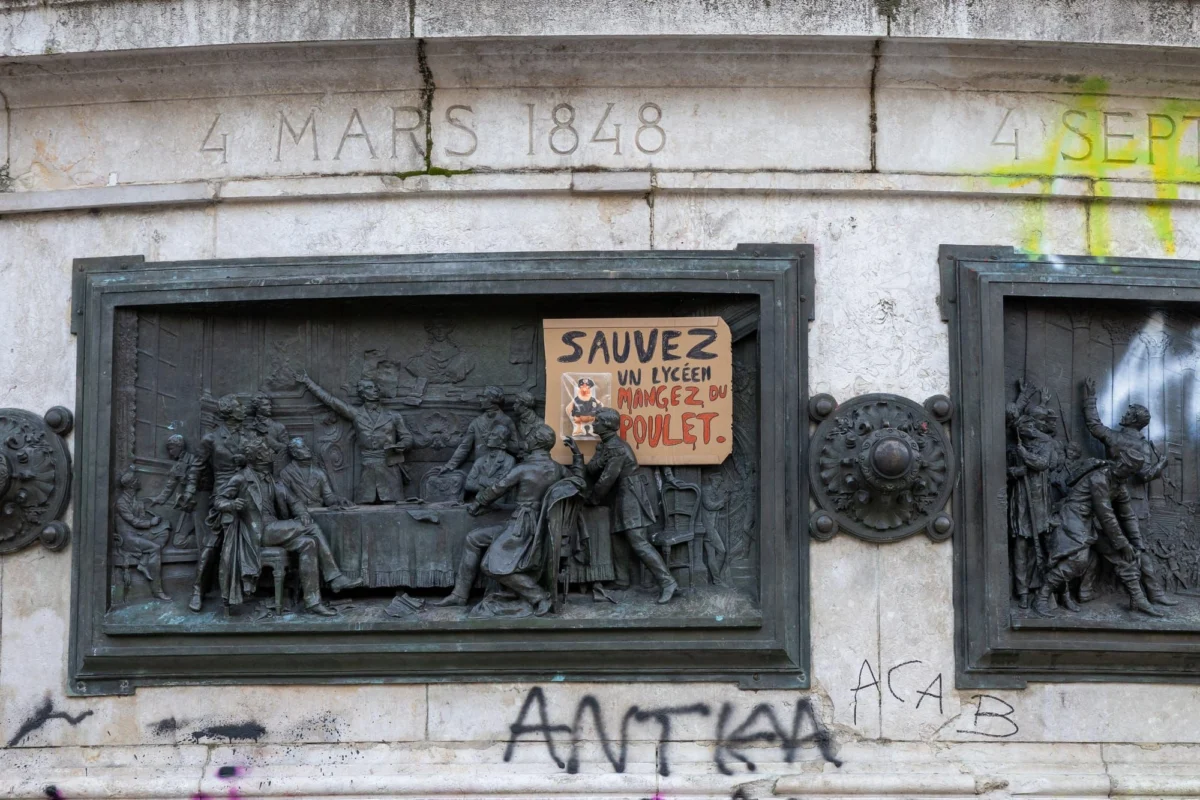
PARIS — Across France, a new wave of youth-led mobilization has transformed the country’s urban landscapes into open-air canvases of dissent. Channeling the historic energy of the May 1968 student uprisings, modern demonstrators are upending public landmarks, draping national monuments in symbolic garments, and clashing with authorities over systemic educational neglect, police violence, and an escalating cost-of-living crisis.
As strikes and blockades paralyze parts of the country, the intersection of protest art, historical memory, and civil disobedience has once again thrust France’s youth to the forefront of national political discourse.
Main Facts: A Nation on Edge
The current wave of demonstrations is driven by high school and university students demanding immediate reforms to an education system they argue has abandoned the younger generation. Protesters point to chronic staff shortages, deteriorating school infrastructure, grueling daily hours, and diminished prospects for social mobility amidst a worsening economic climate.
Rather than confining their demonstrations to standard marches, activists have weaponized France’s cultural heritage, subverting public monuments and state architecture to visually broadcast their grievances. Key incidents defining the movement include:

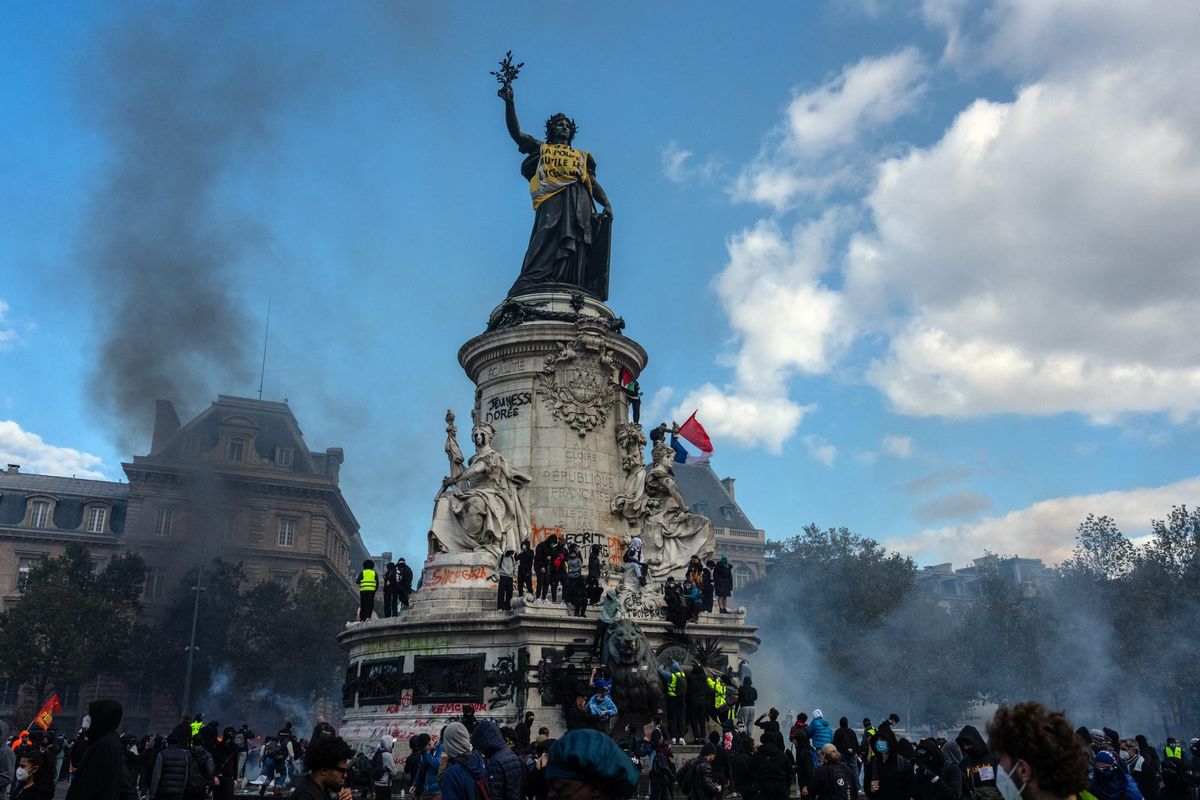
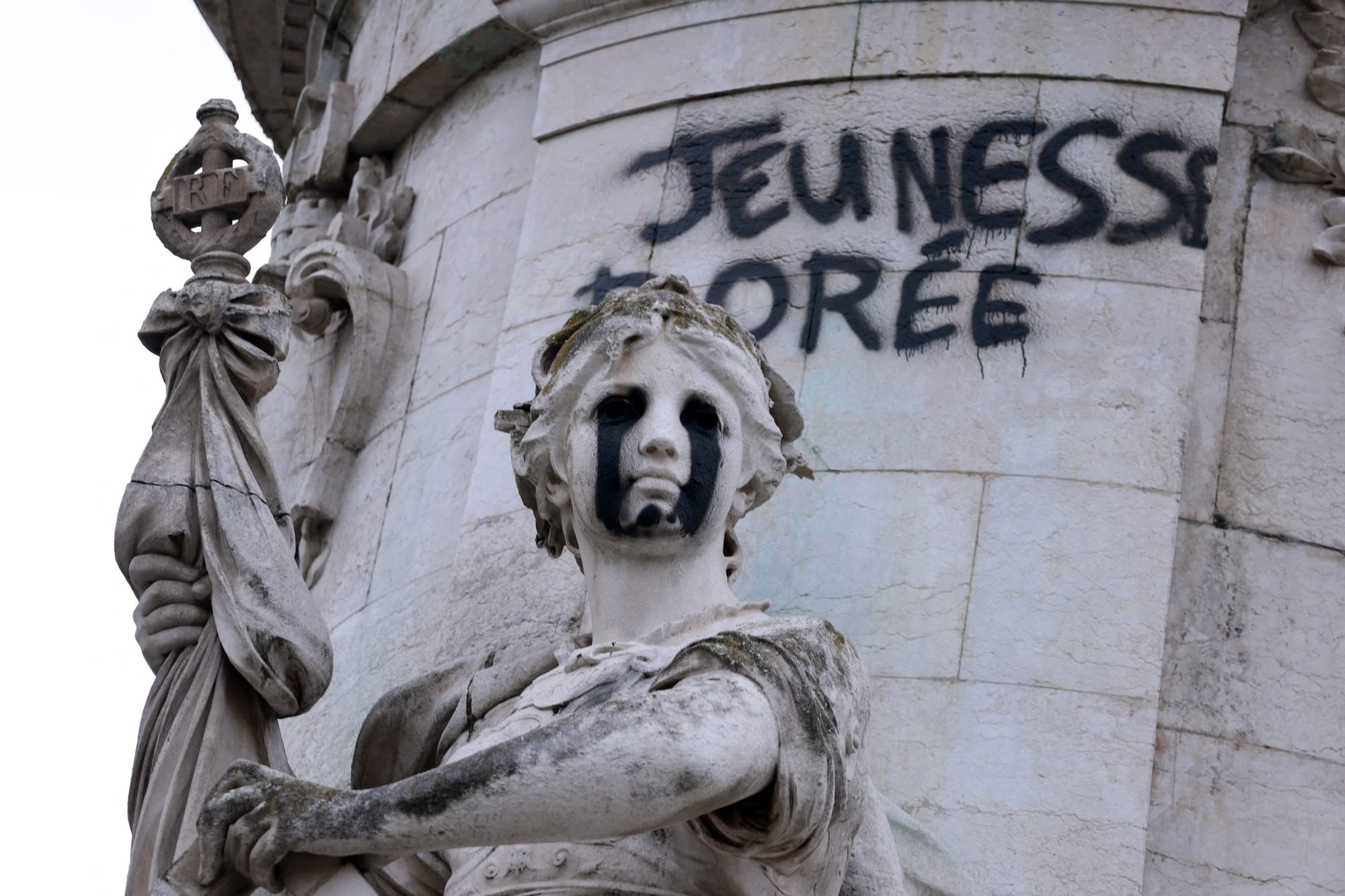
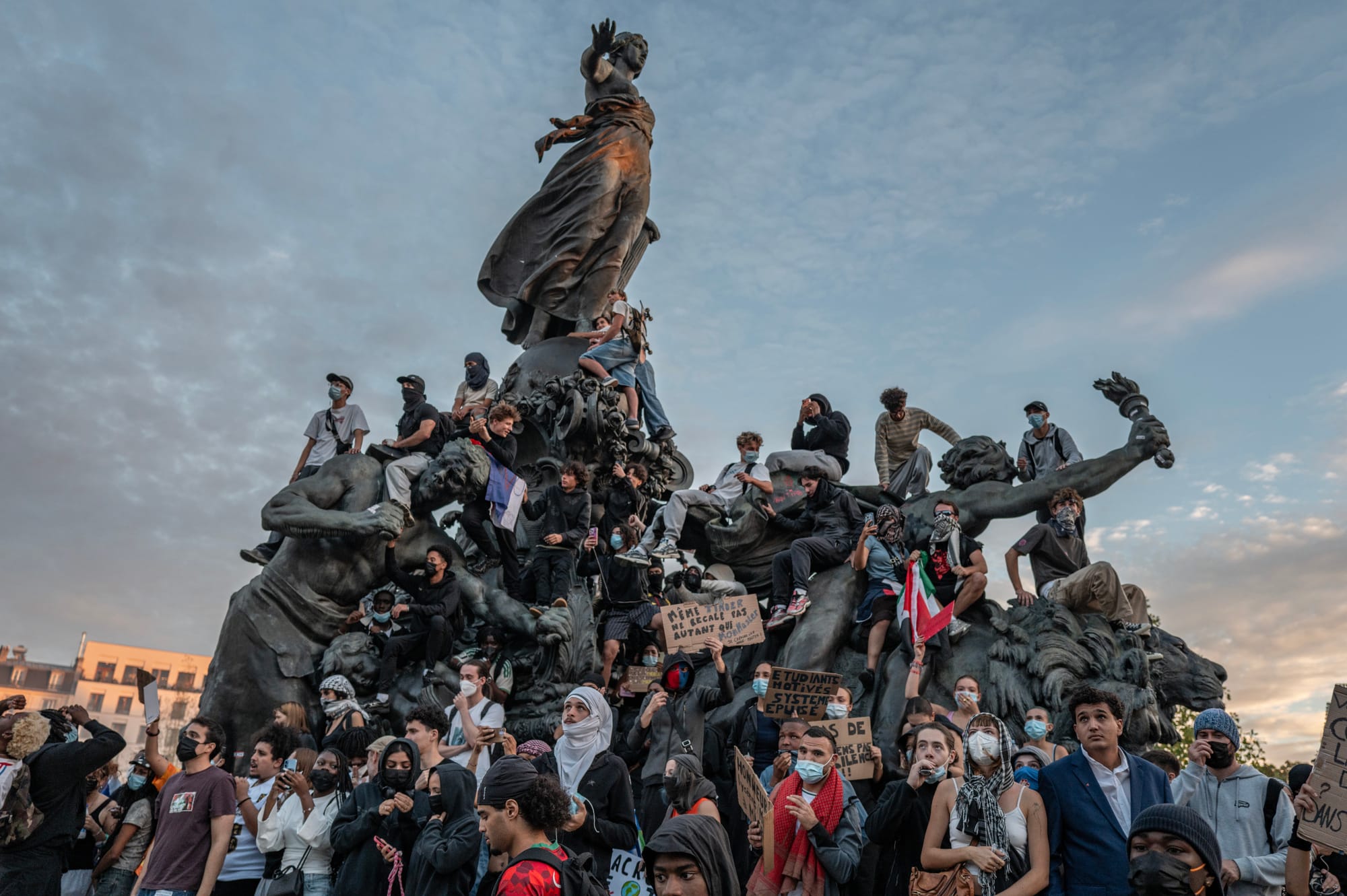
- The Monument à la République: The iconic statue of Marianne—the personification of the French Republic—in Paris has repeatedly served as a focal point. Protesters have draped the monument in white banners bearing slogans like "Neglected high schools, youth sacrificed," adorned it with yellow vests, and streaked the allegorical figures of Liberty, Equality, and Fraternity with "black tears."
- The Louvre Museum: On October 19, dozens of students from the École du Louvre blocked the primary entrance to the world-renowned museum located within the Louvre Palace, forcing temporary closures and drawing international attention.
- Marseille City Hall: Demonstrating the decentralized and raw nature of the anger, a separate group of protesters in Marseille broke into the city hall, physically toppling a bust of Marianne to the floor.
- Intersection with Global Movements: In Toulouse, demonstrators placed a Palestinian flag and a yellow vest atop a statue of Joan of Arc, framing their domestic struggles within a broader network of international human rights and anti-colonial solidarity.
Chronology: From Historic Precedent to Present Upheaval
To understand the tactical playbook of today’s French youth, historians look back more than half a century, tracing a direct lineage to the events that nearly toppled the government of Charles de Gaulle.
May 1968: The Blueprint of Monumental Dissent
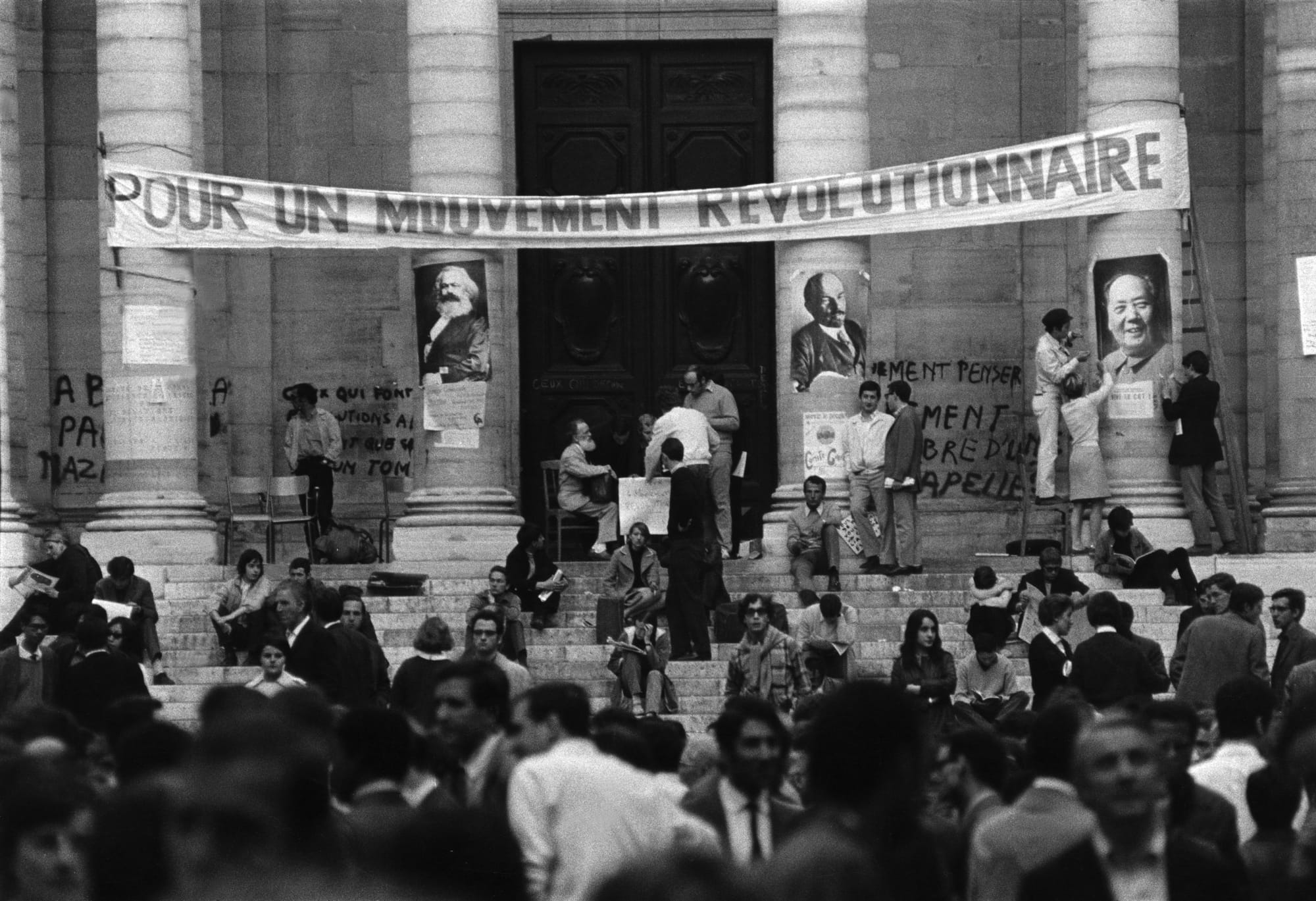
In the spring of 1968, a student movement sparked by anti-imperialist protests at Paris Nanterre University quickly ballooned into a nationwide general strike involving millions of workers. Students occupied the Sorbonne, hanging portraits of revolutionary icons like Karl Marx, Vladimir Lenin, and Chairman Mao Zedong from the university’s 17th-century facade. They planted red flags directly into public monuments dedicated to luminaries like scientist Louis Pasteur and writer Victor Hugo. On May 13, 1968, demonstrators climbed Léopold Morice’s Monument à la République, transforming the public sculpture into a command post and a gathering hub. The visual language of that era—epitomized by photojournalist Jean-Pierre Rey’s image of Caroline de Bendern holding a Viet Cong flag—cemented the idea that France’s public art could, and should, be co-opted by the revolutionary public.

October 2026: The Resurgence
Fast forward to October 2026, and the ghosts of 1968 have returned with a Gen-Z twist. Banners brandishing slogans like "Generation 67 brings you May 68" and direct warnings to the state—"If you screw us over, we will give you a May 68"—have flooded city streets.
- October 4, 2026: Protesters scale the Monument à la République in Paris, signaling a coordinated campaign to occupy state-sanctioned spaces.
- October 8, 2026: Youth activists climb the Column of July monument in Paris, unfurling banners that read "Revolte International Gen-Z."
- October 17, 2026: Organizers dress the Marianne statue in a high-visibility yellow vest bearing the message: "2026: The police mutilates high schoolers." This direct nod to the gilets jaunes (yellow vests) movement of 2018–2020 bridges the gap between working-class economic anxiety and student-led outrage.
- October 19, 2026: École du Louvre students shut down museum access, matching escalating street blockades with institutional disruptions.
Supporting Data: The Human and Social Toll
The friction between student activists and the French state has manifested in stark figures, particularly concerning law enforcement responses and systemic economic pressure.
- Arrests and Injuries: According to reports tracking the civil unrest, more than 6,100 individuals have been arrested since the demonstrations began, a disproportionate number of whom are minors. Hundreds of students have sustained injuries during street confrontations.
- Police Tactics Under Scrutiny: French rights groups, legal associations, and international observers have sharply criticized law enforcement for employing what they describe as "war-like injuries" against teenagers. Incidents documented by outlets like The New York Times and The Guardian include a 14-year-old boy in a Parisian suburb who was permanently maimed by a police tear gas grenade, alongside numerous reports of baton beatings during school blockades.
- Economic Pressures: The protests occur against a backdrop of stubborn inflation, soaring energy and housing costs, and stagnant youth employment prospects. Young French citizens face an economic reality where entry-level wages fail to match the baseline cost of living in urban centers like Paris and Marseille, compounding the sense of a "sacrificed generation."
Official Responses: Condemnation, Debate, and Defense
The French government and conservative political factions have responded to the wave of protests with a mixture of heavy-grained security measures and moral outrage over the treatment of national symbols.
Interior Ministry officials and municipal leaders have strongly condemned the property damage and the subversion of public monuments, characterizing acts such as the vandalism of the Marianne busts and the blocking of the Louvre as unacceptable violations of public order and national heritage. Law enforcement agencies have defended their tactical deployments, asserting that aggressive crowd-control measures are necessary to maintain public safety amid volatile street blockades and sporadic rioting.
Meanwhile, the placement of international symbols—such as the Palestinian flag on the Joan of Arc statue in Toulouse—has triggered fierce cultural and political debates. Conservative commentators have framed these interventions as direct assaults on French national identity and secularism (laïcité). Conversely, progressive defenders argue that these gestures serve as vital democratic expressions linking local educational and economic distress to global struggles for justice, asserting that public monuments belong to the citizenry rather than the state.
Implications: What the Protests Reveal About Modern Democracy
The ongoing mobilization in France transcends simple teenage angst or isolated labor disputes; it speaks to deeper structural anxieties regarding the health of modern democratic institutions.
1. The Weaponization of Cultural Heritage
By co-opting statues of Marianne, Louis Pasteur, and historical columns, students are directly challenging the state’s monopoly on national narrative. Statues are traditionally erected to foster civic pride and historical continuity. By dressing them in yellow vests, painting them with black tears, or adorning them with revolutionary flags, protesters force these silent guardians of stone and bronze to bear witness to contemporary suffering. This tactical iconoclasm echoes global movements, from the Black Lives Matter-driven removal of colonial statues in the United States and Bristol to the reclamation of Confederate monuments in Virginia.
2. The Widening Chasm Between Youth and the State
The heavy-handed police response to teenage protesters risks creating an irreversible generational alienation. When 14-year-olds sustain severe facial and limb injuries from crowd-control munitions outside their high schools, the social contract binding the young to the Republic is severely strained. The invocation of May ’68 is not merely nostalgic roleplay; it is an urgent warning that systemic state indifference met with institutional violence historically precedes deep political instability.
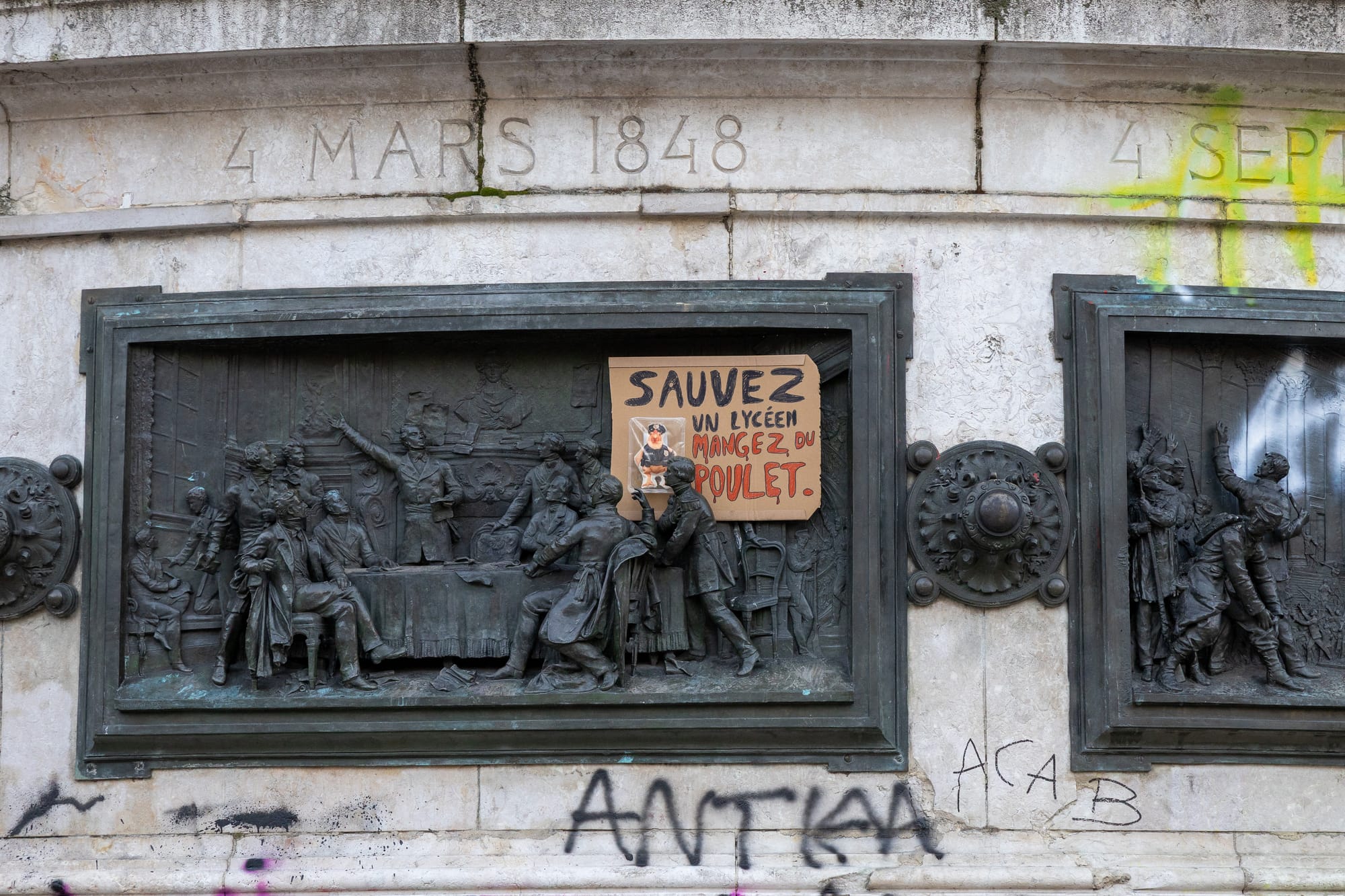
As autumn progresses, the resolve of France’s student movement shows no sign of abating. Whether through the blockade of world-famous cultural institutions or the silent, tear-streaked face of Marianne in the Place de la République, the message from France’s youth remains unmistakably clear: a society that mortgages its future will inevitably find its past repurposed for revolution.
 Muslim
 Jia Lissa
 Iffa Jayyana
