

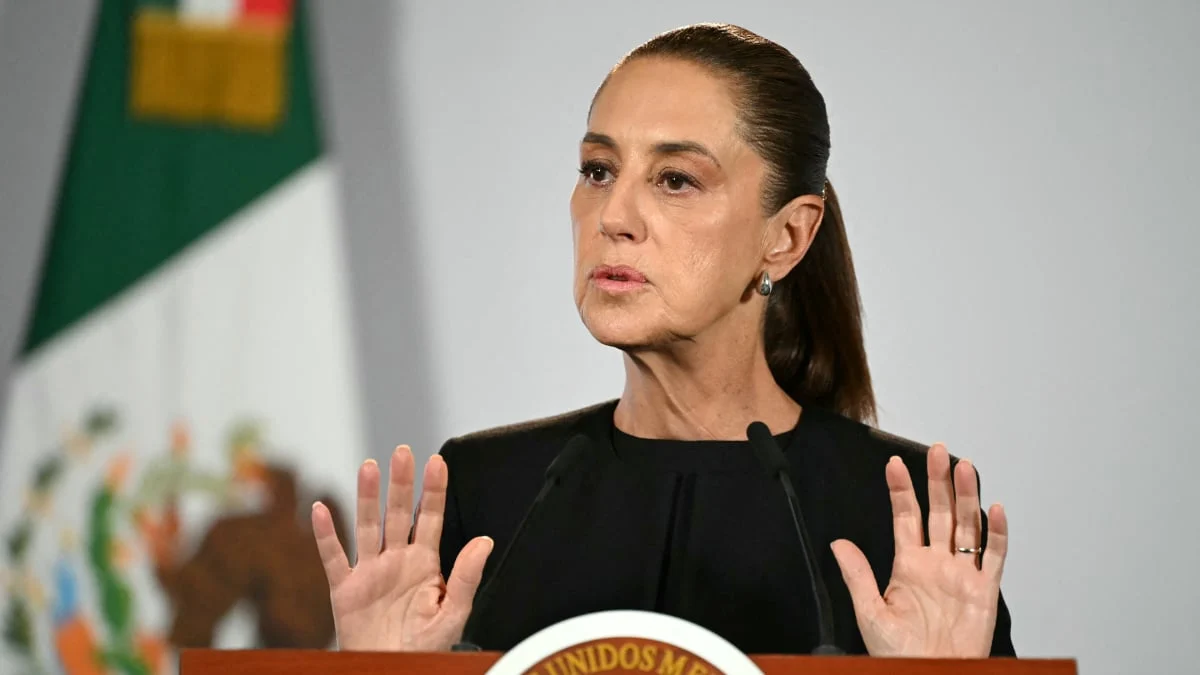
MEXICO CITY — In a decisive move that places digital platforms directly in the crosshairs of government regulation, Mexican President Claudia Sheinbaum signed a sweeping presidential decree on October 14, barring social media networks and streaming services from displaying, promoting, or recommending violent, extremist, and harmful content to minors.
The emergency legislative action follows a devastating tragedy earlier this month at a secondary school in Torreón, Coahuila, where two former students murdered a vice principal and injured several others. According to law enforcement and federal investigators, the young perpetrators were heavily influenced by violent and extremist content harvested from online platforms.
The decree is part of a broader, aggressive campaign by the Sheinbaum administration to safeguard Mexican youth from the darker corners of the internet. It introduces stringent mandates for tech giants—including mandatory age verification, robust parental controls, and a strict 30-day compliance window. Should major digital conglomerates fail to fall in line, President Sheinbaum has warned that her administration is prepared to fast-track secondary legislation carrying severe legal and financial penalties.
Main Facts: What the Decree Entails
The executive order issued by President Sheinbaum fundamentally changes the legal landscape for tech companies operating within Mexico. Rather than treating online safety as an optional corporate policy, the decree establishes state-enforced boundaries for content moderation concerning minors.
Key Pillars of the Executive Order:
- Prohibition of Harmful Content: Digital and streaming platforms are legally barred from displaying, generating, or recommending content that promotes or normalizes hate speech, violent extremism, sexual exploitation, suicide, self-harm, eating disorders, and cyberbullying.
- Mandatory Age Verification: Platforms must implement foolproof systems to verify the ages of their users, ensuring that minor accounts are shielded from algorithmic rabbit holes that lead to dangerous content.
- Enhanced Parental Controls: Tech companies are required to provide accessible, effective tools that empower parents to monitor and restrict their children’s digital consumption.
- The Compliance Clock: Corporations have been given a strict 30-day deadline from the date of the signing to overhaul their algorithms, moderation practices, and safety features to meet Mexican regulatory standards.
- Enforcement Threat: President Sheinbaum made it clear that failure to comply will not be tolerated, promising immediate legislative action to introduce criminal and financial penalties for non-compliant platforms.
Chronology of Crisis and Policy Response
The road to the October 14 decree was paved by a succession of mounting public safety concerns, escalating youth mental health crises, and a specific, localized tragedy that forced the federal government’s hand.
September 2026: The Classroom Phone Ban
The federal government’s focus on the digital lives of children began crystallizing in mid-September, when President Sheinbaum announced nationwide education rules prohibiting cellphones and restricting tablet use "bell-to-bell" across Mexico’s public education system. Designed to curb classroom distractions and combat the rising tide of cyberbullying, the policy set a precedent for federal intervention in youth technology habits.
Early October 2026: The Torreón Tragedy
The urgency of state intervention escalated dramatically earlier this month. Two former students launched a horrific attack at a secondary school in Torreón, Coahuila, murdering a vice principal and injuring multiple students. Subsequent investigations by Mexican authorities revealed that the attackers had been radicalized and inspired by violent, extremist content readily available on mainstream digital platforms. The incident sparked national outrage and transformed the debate over online safety from an abstract policy discussion into an urgent national security imperative.
October 14, 2026: The Presidential Decree
Following closed-door consultations with representatives from major tech firms—including Meta, TikTok, and Google—President Sheinbaum formally signed the executive order. The decree established the 30-day countdown for tech companies to restructure their platforms or face punitive legislative action.
Supporting Data: The Global War on Youth Screen Time
Mexico’s new decree does not exist in a vacuum. It is part of a surging global legislative wave aimed at curbing the unchecked power of social media algorithms over developing minds. Governments worldwide are grappling with mounting scientific research linking excessive social media use, algorithmic radicalization, and cyberbullying to an unprecedented mental health crisis among adolescents.
International Approaches to Youth Tech Regulation:
- Australia’s Total Ban: Australia made history by passing the world’s first complete ban on social media access for children under the age of 16, barring them from platforms like Instagram, TikTok, and Facebook regardless of parental consent.
- United States State-Level Actions: While the U.S. federal government has yet to pass comprehensive, nationwide restrictions on youth device or social media use, individual states and school districts have taken matters into their own hands. Major districts, including Los Angeles Unified, and entire states like New York, have instituted strict classroom phone bans, mirroring Mexico’s domestic education policies.
- The Research Consensus: Recent psychological and sociological studies emphasize that recommendation algorithms designed to maximize "engagement" often prioritize outrage, self-harm, and violence. This has led lawmakers to argue that self-regulation by tech companies has failed, necessitating direct government intervention.
Official Responses and Industry Silence
The Mexican government’s aggressive posture has drawn sharp reactions from across the political and social spectrum, while the targeted technology corporations have responded with conspicuous silence.
Government and Advocacy Stance
Child safety advocates and public health officials in Mexico have largely praised Sheinbaum’s decisive action. Proponents argue that government intervention is a necessary stop-gap to protect children from predatory algorithms that profit off human misery and radicalization. For years, activists have pointed out that voluntary industry guidelines have proven wholly inadequate in stopping the spread of self-harm tutorials, cyberbullying campaigns, and extremist recruitment videos.
However, civil liberties groups and tech policy analysts have raised critical questions regarding implementation. Specifically, experts have questioned the technological efficacy and privacy implications of mandatory age-verification tools. Critics point out that robust age-verification systems often require users—including adults—to submit sensitive personal identification data, raising significant privacy and data security concerns. Furthermore, tech-savvy minors frequently find workarounds, such as Virtual Private Networks (VPNs) and alternative accounts, to bypass platform restrictions.
Big Tech’s Reaction
Prior to the signing of the decree, Mexican government officials held high-stakes meetings with representatives from major digital conglomerates, including Meta, TikTok, and Google, to outline the impending regulations. Despite these consultations, none of the named tech giants have issued a formal public comment regarding the decree, according to reports by Reuters.
Industry insiders suggest that legal teams within these multinational corporations are currently scrambling to assess whether their existing moderation systems can be adapted to meet Mexico’s 30-day compliance window, or if they will mount a legal challenge against the executive order’s constitutionality and extraterritorial enforcement capacity.
Implications: What Comes Next for Mexico and Global Tech
The implementation of President Sheinbaum’s decree carries profound implications not only for Mexico, but for the global digital economy.
1. A Precedent for Latin America
If Mexico successfully enforces this decree—forcing global tech giants to alter their core algorithmic delivery systems for underage users within a strict 30-day window—it could serve as a blueprint for other Latin American nations grappling with similar spikes in youth violence and online radicalization.
2. The Fragmentation of the Internet
The rise of localized regulations—from Australia’s under-16 ban to Mexico’s content-specific platform restrictions—signals the gradual fragmentation of the global internet. Tech companies may soon be forced to create "geofenced" versions of their applications specifically tailored to comply with the legal frameworks of individual countries, complicating user experiences and increasing operational costs.
3. The Showdown Over Free Speech and Safety
As the 30-day compliance clock ticks down, Mexico is bracing for a high-stakes showdown. If Meta, TikTok, and Google fail to meet the government’s demands, President Sheinbaum is expected to fulfill her promise of fast-tracking secondary legislation. This looming confrontation will test the limits of executive power against corporate resistance, setting the stage for a defining legal battle over who truly controls the digital public square—and who bears responsibility when the digital world spills over into real-world tragedy.
 Reynand Wu
 Layla Zulfa
 Ali Ikhwan
