

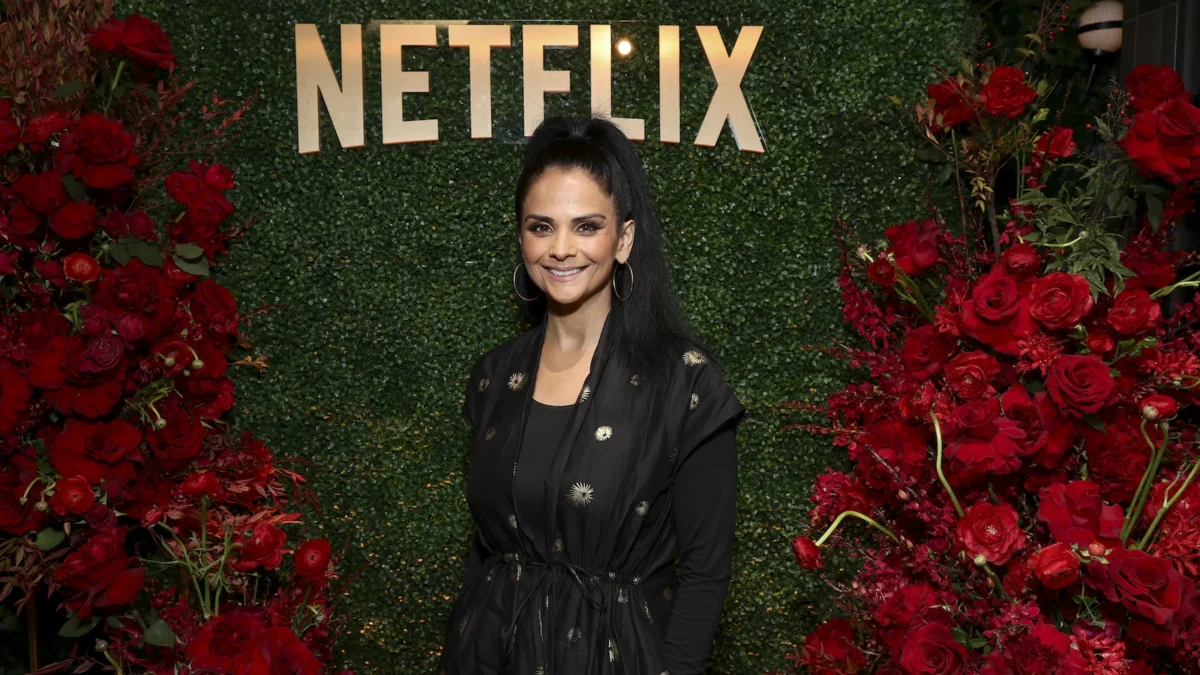
In a seismic shift that marks the end of a pivotal decade, Netflix announced on Thursday that Bela Bajaria, its long-serving Chief Content Officer and a central architect of the streamer’s global dominance, is stepping down from her role. Her departure, effective immediately, serves as the most significant executive shakeup in the company’s history, occurring amidst a period of extreme internal turbulence and broader industry volatility.
Stepping into the role is Peter Rice, a seasoned media veteran with a pedigree spanning 21st Century Fox and the Walt Disney Company. Rice, who will officially assume his duties on October 26, inherits a content machine that is currently undergoing a painful contraction, underscored by a massive workforce reduction that saw 1,000 employees—roughly 6 percent of the total headcount—laid off just one day prior.
A Legacy of Global Expansion
Bela Bajaria’s tenure at Netflix, which began in 2016, is inextricably linked to the platform’s transformation from a U.S.-centric library service into the world’s most potent purveyor of global entertainment. Bajaria rose through the ranks with remarkable speed, first heading the company’s unscripted division before taking the reins of global content operations in 2020 following the departure of Cindy Holland. By 2023, she had been named Chief Content Officer.
Under her stewardship, the platform moved beyond standard licensing to produce cultural phenomena that transcended borders. From the breakout hit Stranger Things to the international sensation Squid Game, Bridgerton, and Wednesday, Bajaria’s strategy centered on the concept that local stories, when properly supported by global marketing, could become worldwide blockbusters.
Beyond scripted drama, she was the primary driver behind the company’s aggressive, and sometimes controversial, pivot into live event programming. This included the securing of high-profile Christmas NFL games, WWE matches, and high-engagement spectacles like the boxing match between Jake Paul and Mike Tyson. As she departs, her legacy is defined by a shift toward a "diversified content portfolio," a strategy that sought to marry prestige television with broad-reach, high-volume live entertainment.
The Arrival of Peter Rice: A Shift in Strategy?
The appointment of Peter Rice signals a potential pivot for the streamer. Rice is widely regarded in Hollywood as a "blue-chip" executive, known as much for his financial rigor as his creative intuition. His career is characterized by his time as president and CEO of Fox Networks Group and later as Chairman of Walt Disney Television and General Entertainment.

Rice’s trajectory has not been without drama. In 2022, he was unceremoniously fired by then-Disney CEO Bob Chapek, a move that sent shockwaves through the industry and led to his replacement by Dana Walden. Since that exit, Rice has pivoted to independent production, focusing on high-profile projects such as 28 Years Later, Saturday Night, and the highly anticipated, ambitious production of the opening and closing ceremonies for the LA28 Olympic Games.
Netflix Co-CEO Ted Sarandos, who spearheaded the recruitment of Rice, touted his new hire’s operational prowess. "Peter is one of the most effective at-scale operators in the entertainment industry," Sarandos stated. "His business acumen is sharp, his talent relationships are exceptionally strong, and his experience across TV and film is deep and broad."
For his part, Rice expressed a commitment to the "Netflix way" while acknowledging the monumental task ahead. "Netflix has fundamentally changed the way stories are made, shared, and experienced around the world," Rice said in a statement. "They’ve shown again and again that they’re willing to take chances on distinctive voices and fresh ideas, and I’m excited to work with the team to help bring even more great stories to members everywhere."
The Context of Contraction: A Year of Profound Change
The timing of this executive transition is notable, occurring as Netflix navigates its most difficult fiscal year in recent memory. The company’s stock value has plummeted by roughly 28 percent since the tail end of last year, when rumors—and subsequent failed plans—to acquire Warner Bros. Discovery sent investors into a panic. When the deal ultimately collapsed in favor of a larger bid from Paramount-Skydance, Netflix found itself in a precarious market position, with its stock price failing to regain its previous momentum.
The layoff of 1,000 employees is the most tangible symptom of this instability. The company is currently struggling to reconcile its massive spending habits with a cooling subscriber growth environment. To combat this, the streamer has begun "tinkering" with its core business model. This includes a newfound interest in theatrical windows—signaled by the recent decision to report box office figures for its awards-contender La Bola Negra—and an aggressive expansion into gaming and podcasting to squeeze more engagement out of a saturated user base.
The Talent Exodus
Compounding the leadership change and layoffs is an emerging "brain drain" of top-tier creative talent. Netflix, which for years served as the industry’s "spending juggernaut," is seeing its most successful showrunners and filmmakers look elsewhere.

The Duffer Brothers, the creative forces behind Stranger Things, have signed a deal with Paramount. Shawn Levy, who produced some of the streamer’s biggest hits, has moved to Disney. Perhaps most tellingly, prestige filmmaker Noah Baumbach has shifted his output to Warner Bros.’ Clockwork, and even the visionary director David Fincher—long a staple of the Netflix ecosystem—has opted against renewing his exclusive deal.
This exodus suggests that the "Netflix Model"—which once offered total creative freedom and massive upfront payouts—is losing its luster as the company attempts to exert tighter control over budgets and return-on-investment metrics.
Implications for the Future
What does this mean for the average subscriber? In the short term, the transition to Peter Rice likely signals a "back to basics" approach. While Bajaria was instrumental in the explosive growth phase of the company, Rice is a master of the traditional studio system—someone who knows how to operate in a high-pressure environment where fiscal discipline is as important as creative vision.
However, the challenges remain daunting. Netflix is attempting to transform itself into a "live event" destination at the exact moment that traditional linear television is dying, while simultaneously trying to prove that it can play the theatrical box office game better than the legacy studios.
The departure of Bela Bajaria marks the end of the "Growth at All Costs" era of streaming. The arrival of Peter Rice signals the beginning of the "Optimization and Scale" era. Whether this new leadership can stabilize the stock, retain the talent that built the platform, and navigate the increasingly treacherous waters of the global streaming landscape remains the central question of the 2026 media cycle.
As the industry watches, the transition from Bajaria to Rice will be scrutinized not just as a change of personnel, but as a potential change in the very philosophy of what a global streamer is, and who it is trying to become. For now, the message from the top is one of continuity, but the reality on the ground—defined by layoffs, falling stock prices, and a departing creative guard—suggests that Netflix is preparing for a much harder, and perhaps much more conventional, future.
 Jia Lissa
 Iffa Jayyana
 Evan Lee Salim
