

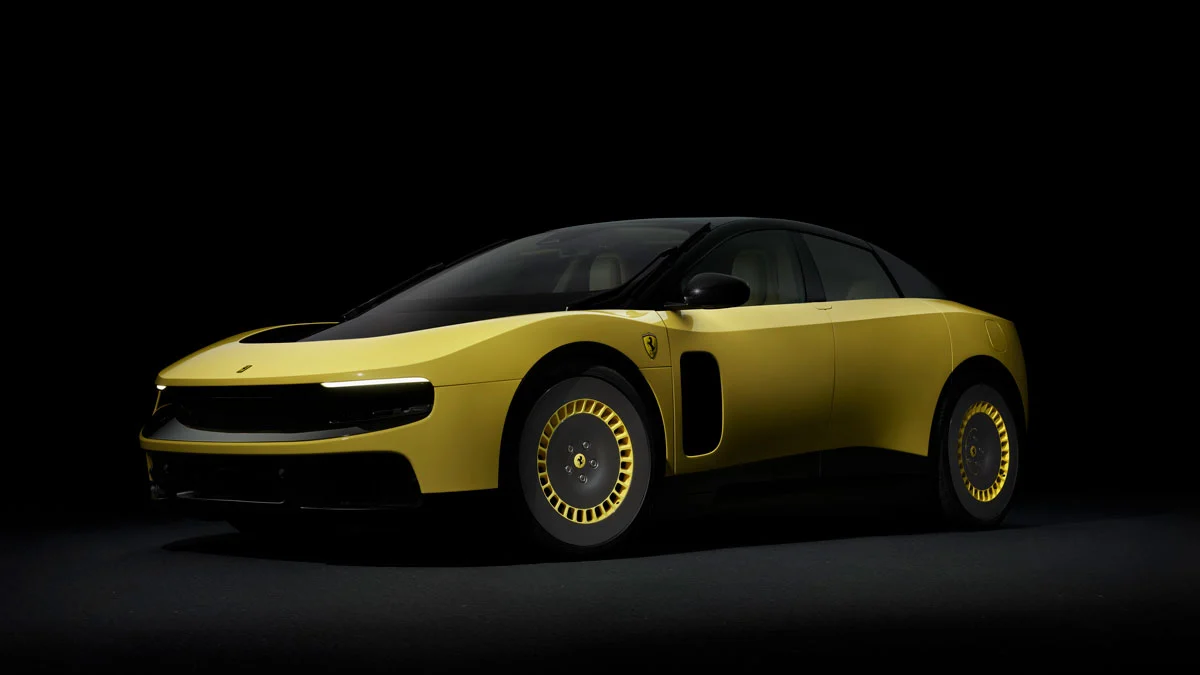
The automotive world was sent into a state of high-octane speculation this week as Ferrari announced a significant leadership transition at its Maranello headquarters. Just one month after the high-stakes debut of the “Luce”—the brand’s first-ever fully electric vehicle—the Italian supercar manufacturer confirmed that Enrico Galliera, its long-serving Chief Marketing and Commercial Officer, is stepping down from his post.
The departure of a key executive so soon after a major product launch is rarely coincidental in the world of high-performance automotive manufacturing. As Ferrari pivots toward an electrified future, the appointment of Massimiliano Di Silvestre to succeed Galliera signals a strategic recalibration for a brand historically defined by the mechanical symphony of internal combustion engines.
The Core Facts: A New Direction for Marketing
The announcement, released by the Maranello office earlier this week, confirmed that Enrico Galliera will conclude his tenure as the head of marketing and commercial operations on July 1. Galliera has been a fixture at Ferrari since 2010, overseeing a decade of unprecedented growth and product expansion.
His successor, Massimiliano Di Silvestre, brings a wealth of experience to the role. Having previously served as the president and CEO of Ferrari’s regional operations, Di Silvestre is well-versed in the intricate demands of the brand’s global client base. He will report directly to CEO Benedetto Vigna, further centralizing the strategic vision of the company as it navigates the transition from fossil fuels to battery power.

According to official company statements, Galliera’s departure was a voluntary decision that had been in the works for several months. While the timing aligns closely with the market reception of the Luce, the company maintains that the move is part of a planned transition in professional leadership.
Chronology of a High-Stakes Launch
To understand the gravity of this leadership shuffle, one must look at the timeline of the last six months at Ferrari:
- Early 2026: Enrico Galliera reportedly informs Ferrari’s leadership of his intention to step down, initiating the search for his successor.
- Late March 2026: Ferrari unveils the "Luce," its first battery-electric vehicle (BEV). The unveiling is met with immediate, intense scrutiny from the automotive press and purists alike.
- April–May 2026: Initial public reaction to the Luce turns negative, with critics focusing on the unorthodox aesthetic design and the loss of the brand’s signature auditory experience.
- Late May 2026: Market analysts note a brief dip in Ferrari’s stock price immediately following the public’s unfavorable reception of the design.
- June 23, 2026: Official announcement of Galliera’s departure and the appointment of Massimiliano Di Silvestre.
- July 1, 2026: Effective start date for the new leadership structure.
Supporting Data: The Growth and the "Luce" Effect
Enrico Galliera’s tenure has been objectively successful by almost every financial metric. Since 2010, the brand has witnessed a dramatic increase in global deliveries and revenue. Galliera was instrumental in the successful rollout of the brand’s hybrid models, most notably the LaFerrari, which effectively bridged the gap between traditional combustion and the electrified era.
However, the Luce represents a different, more existential challenge. With a price point of approximately 550,000 euros, the Luce is not merely a car; it is a statement of intent. Data from the last month, however, suggests the market is conflicted. While Ferrari’s stock price initially wobbled, it has since staged a recovery, climbing more than 11 percent in the four weeks following the launch. This dichotomy—strong investor confidence in the business model versus intense public criticism of the product—highlights the complex balancing act that the incoming marketing chief must now manage.

Official Responses: A Gracious Exit
In a move to project internal stability, CEO Benedetto Vigna issued a formal statement praising Galliera’s contributions. “I would like to thank Enrico for the extraordinary contribution he has made to Ferrari throughout his long career,” Vigna noted. “With passion and expertise, he has played a significant role in the company’s growth and in strengthening the Ferrari brand worldwide.”
Vigna’s rhetoric emphasizes a "thank you" for the past, while the shift to Di Silvestre clearly points toward a focus on the future. There is no public hint of friction; rather, the company is leaning into the narrative of a “new chapter,” a common corporate trope used to mask the pressures of shifting market demands.
The "Luce" Controversy: A Design Crisis?
The primary source of tension within the brand—and the likely catalyst for a re-evaluation of marketing strategy—is the reception of the Luce’s design. Created in collaboration with Jony Ive’s LoveFrom design studio, the car is a radical departure from the aggressive, aerodynamic styling of Ferrari’s history.
Critics have been merciless. The minimalist, fluid lines of the Luce have led some pundits to unfavorably compare the half-million-euro machine to mass-market electric hatchbacks like the Nissan Leaf. For a brand that trades on prestige, performance, and aggressive beauty, being compared to a budget-friendly commuter vehicle is a branding nightmare.

The backlash has even spilled over into the competition. Stephan Winkelmann, CEO of Lamborghini, used the public discourse surrounding the Luce to highlight his own company’s more cautious, iterative approach to electrification. While he did not mention Ferrari by name, the implication was clear: Lamborghini believes the market is not yet ready for a radical departure from the "supercar aesthetic."
Implications: The Road Ahead
The appointment of Massimiliano Di Silvestre is more than a simple human resources update; it is a tactical pivot. Di Silvestre must now navigate a three-front battle:
- Reclaiming the Narrative: The marketing department must convince the "Tifosi"—the brand’s most loyal and vocal enthusiasts—that the Luce is a true Ferrari, regardless of its lack of a V12 engine or its unconventional silhouette.
- Maintaining Exclusivity: As Ferrari pushes further into the EV space, the brand must ensure that its high price point remains justified in the eyes of ultra-high-net-worth collectors who prioritize status and heritage.
- The EV Transition: With the Luce now in the public eye, Ferrari is committed to a path of full electrification. The new marketing leadership must ensure that the brand’s "Prancing Horse" identity remains intact even as the mechanics of the vehicles evolve.
A New Era for the Prancing Horse
The departure of Enrico Galliera marks the end of an era that saw Ferrari evolve from a niche Italian sports car manufacturer into a global luxury juggernaut. As the company moves forward, the success of the Luce will likely define the early years of the new leadership team.
While the stock market remains bullish, the "court of public opinion" is a much harsher judge. For Ferrari, the challenge is no longer about just making cars that perform; it is about proving that a brand built on the emotion of sound and fire can survive, and thrive, in a world of silent, digital efficiency. The incoming marketing team has their work cut out for them, and the entire automotive industry will be watching to see if they can turn the tide on the most polarizing vehicle in the brand’s history.
 Evan Lee Salim
 Asep Darmawan
 Laily UPN
