

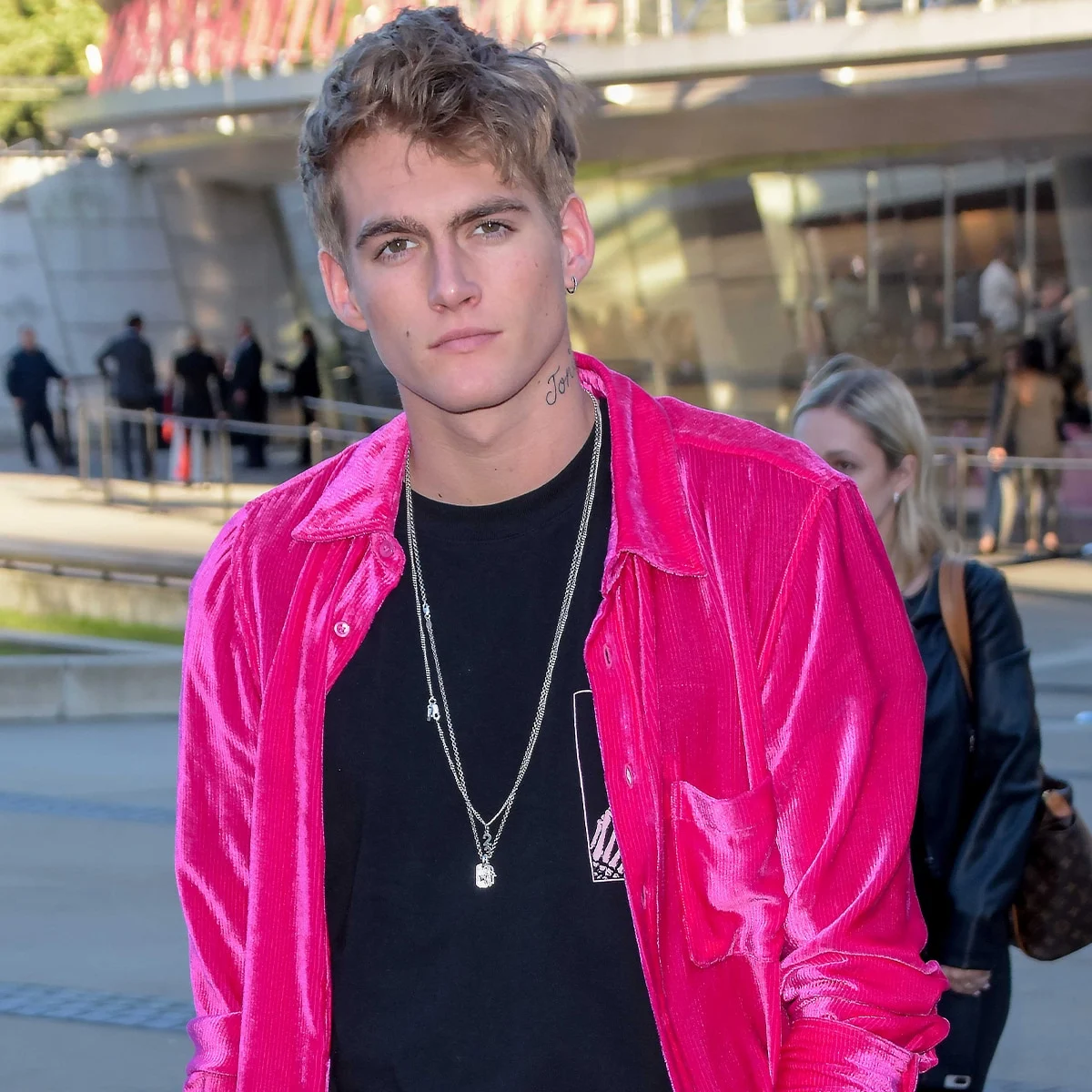
The entertainment world is in mourning following the tragic news that Presley Gerber, the son of iconic supermodel Cindy Crawford and businessman Rande Gerber, has passed away at the age of 27. The news, confirmed by the Los Angeles Medical Examiner, has sent shockwaves through Hollywood, marking an unthinkable loss for one of the industry’s most prominent and close-knit families.
The Tragic News
Presley Gerber, who had carved out his own path as a model and creative, passed away on September 20, 2026, while staying at a rehabilitation facility. The Los Angeles Medical Examiner’s office officially logged the case, though a definitive cause of death remains under investigation. Pending toxicology results and further forensic analysis, the circumstances surrounding his passing remain undisclosed.
A representative for the Crawford-Gerber family issued a brief but poignant statement to the media, requesting that the public respect their privacy during this period of "unimaginable pain and profound grief." The family, known for their tight-knit bond and public displays of support for one another, is currently sequestered as they process the sudden loss of their eldest child.
A Life in the Public Eye: A Chronology
Born into the spotlight, Presley Gerber’s life was documented from infancy, but it was his emergence as a young adult that defined his public persona.
- 1999–2010: Presley grew up in the serene, private environment of Malibu, shielded as much as possible from the paparazzi that followed his mother’s every move. His childhood was marked by high-profile family events and a close relationship with his younger sister, Kaia Gerber.
- 2015–2018: As he transitioned into adulthood, Presley entered the fashion industry. He graced the runways for major luxury houses and appeared in high-fashion editorials. During this period, he became a recognizable face in his own right, often seen at red-carpet events alongside his famous parents.
- 2020–2024: These years marked a shift in Presley’s public focus. He became increasingly vocal about his struggles with identity, the pressures of growing up in Hollywood, and his personal battle with mental health.
- December 2025: In a candid and vulnerable Instagram video, Presley spoke directly to his followers about the "loss in many different forms" that he had been experiencing. He admitted to navigating a difficult path, citing a lack of professional direction regarding his mental health treatment.
- August 2026: In a Vogue cover story, his sister Kaia reflected on the family’s journey, praising Presley for his bravery in being "human" and vocal about his internal challenges.
- September 2026: The tragic conclusion to his journey at the age of 27.
Mental Health Advocacy and the Struggle for Direction
In the months leading up to his death, Presley Gerber had become an unlikely, yet powerful, advocate for mental health transparency. His discourse was characterized by a raw, unfiltered honesty that stood in stark contrast to the often-curated nature of celebrity social media.
In his December 2025 message, Presley described the exhausting cycle of medical management he had endured. He spoke of seeing roughly 15 different psychiatrists, each offering a revolving door of prescriptions. "They’re all like, ‘Here’s 20 medications. Take this if you feel like this, take this as needed,’" he recalled in the video. "And I’m like, ‘No, don’t give me that much leeway. I need some direction.’"
This frustration resonated with many in his audience. Presley’s struggle highlighted a common, yet frequently overlooked, failure in the mental health care system: the reliance on pharmacological solutions without adequate clinical oversight or personalized, long-term therapeutic guidance. He spoke of the isolation that accompanied his condition, stating, "I’m hoping this reaches people in many ways so you feel like you’re not alone, because that is how I feel most of the time."
The Family Dynamic and Kaia’s Perspective
The bond between siblings is often tested by the pressures of fame, but for Presley and Kaia Gerber, it was a source of mutual strength. In her recent Vogue interview, Kaia discussed the emotional toll that watching a sibling struggle takes on a family.
"When something like that happens in a family, it kind of levels everyone," Kaia noted. She confessed that she had often assumed the role of the "easy one" to avoid adding to her parents’ burden. "I never wanted to ask for help because it felt like too much to have two children who were needing."
Kaia’s words now serve as a testament to her brother’s character. She characterized him as an "absolute teacher" who defied the family’s historical tendency toward extreme privacy. By choosing to be "very human," Presley had begun to dismantle the walls that so many celebrity families feel compelled to build around their personal lives. Kaia’s observation—that "trying to put a lid on something just makes the person feel like you’re ashamed of them"—underscores the importance of the open dialogue Presley championed in his final year.
Implications: The Hollywood Mental Health Crisis
The death of Presley Gerber has reignited a critical conversation regarding the mental health infrastructure available to young people in the entertainment industry. For many, growing up in "Hollywood" is not just a geographical location but a psychological landscape defined by constant scrutiny, high expectations, and the difficulty of forming authentic connections.
The "Inner Circle" Dilemma
Presley had spoken extensively about his need to recalibrate his social life to preserve his mental health. "I’ve grown up in Hollywood, and there’s a lot of people around that I love to death, but right now, I try not to be around them," he said. This acknowledgment of needing to distance oneself from even well-meaning social circles is a complex facet of recovery that is rarely discussed. It highlights the tension between maintaining personal relationships and prioritizing one’s psychological safety.
The Call for Systemic Reform
Experts in the field of psychiatry suggest that Presley’s experience with "15 psychiatrists" is not unique to the wealthy or famous. It points to a fragmented system where patients are often "medicated" rather than "treated." His public plea for "direction" rather than "leeway" serves as a poignant reminder that mental health recovery is not a passive process of taking a pill; it requires a coordinated, multi-disciplinary approach that emphasizes consistent, compassionate care over convenience.
A Lasting Legacy
While his career as a model was substantial, Presley Gerber’s legacy will likely be defined by his courage to speak his truth in a world that often demands silence. He wanted to be a beacon for those who felt alone, and by sharing his struggles—from the confusion of his medication regimens to the loneliness of his public life—he provided a sense of solidarity to thousands of others facing similar battles.
As the entertainment community reflects on this loss, the focus remains on the humanity that Presley fought so hard to project. He was more than a child of fame; he was a young man seeking clarity, a brother seeking understanding, and an advocate seeking a better way to live.
The Crawford-Gerber family is currently receiving an outpouring of support from fans, colleagues, and friends across the globe. As they mourn, the legacy of their son—a young man who dared to be "human" in an inhumane world—will undoubtedly continue to influence the ongoing conversation surrounding mental health, the pressures of fame, and the vital importance of seeking help with the right guidance.
For now, the world remembers a life that was cut far too short, but one that left an indelible mark on those who listened to his story. In the quiet aftermath of his passing, the message he left behind remains clear: no one should have to navigate the darkness alone.
 Sagoh
Sagoh
 Siti Muinah
 Nana
Nana
