

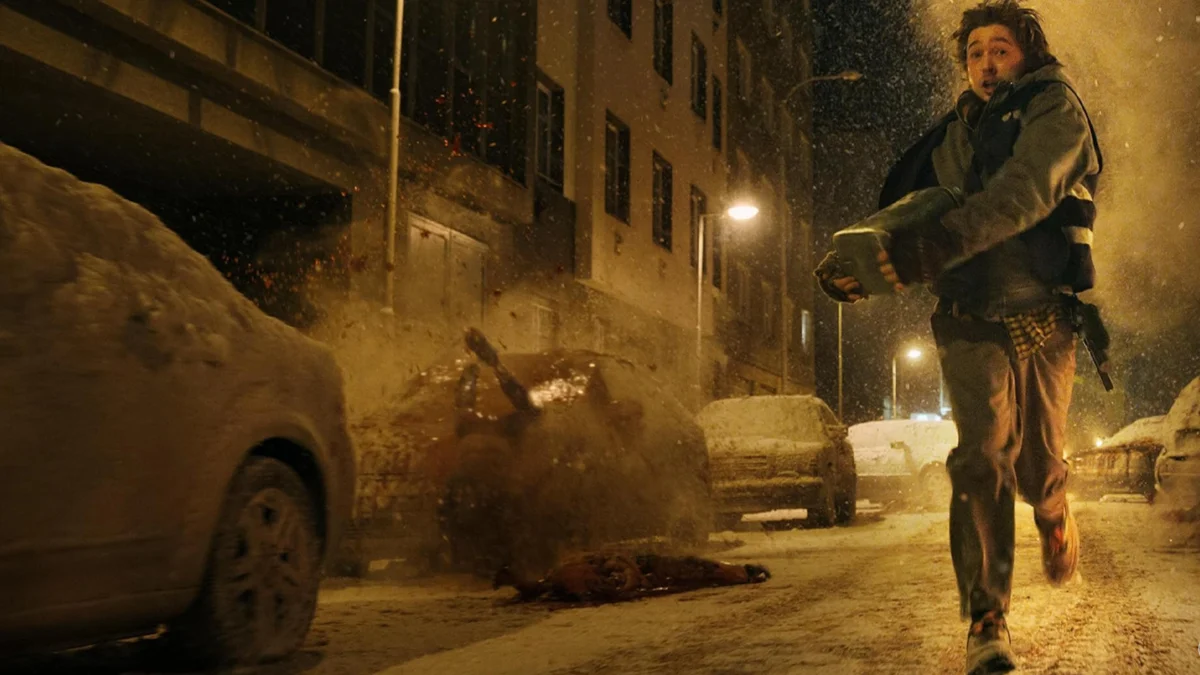
Main Facts: A Weekend of Records
The weekend of September 18–20, 2026, will be etched into the annals of cinematic history. Sony Pictures’ latest iteration of the Resident Evil franchise has done more than just open; it has redefined the commercial potential of one of the longest-running horror properties in modern film. Raking in an explosive $60 million domestically during its opening three days, the film has obliterated the previous franchise record—a bar that had remained stationary for 16 years—while simultaneously marking a career-high debut for director Zach Cregger.
The momentum did not stop at the domestic border. The reboot commanded an additional $48.3 million from international markets, culminating in a robust $108.3 million global haul. Beyond the raw numbers, the film secured a B+ CinemaScore, the highest audience approval rating ever awarded to a Resident Evil entry, signaling a significant shift in how audiences are engaging with the long-running series.
Chronology: The Road to a Monster Opening
The narrative of this success began well before the first ticket was scanned on Friday morning. In the weeks leading up to the release, the box office had been experiencing a localized slump. Practical Magic 2, the highly anticipated Warner Bros. sequel, had underperformed with a lackluster $30 million opening, leaving exhibitors desperate for a high-octane draw to kick off the autumn season.
The Pre-Release Buzz (Sept. 17, 2026)
As of Thursday, September 17, industry analysts were cautiously optimistic. Tracking data suggested a strong performance, with estimates hovering in the $40–$50 million range. Even the most conservative projections indicated that the film would surpass the $26.7 million opening of Resident Evil: Afterlife, which had stood as the series benchmark since 2010. Analysts were particularly intrigued by the critical reception; with a 96% "Certified Fresh" rating on Rotten Tomatoes, the film was positioning itself as the most critically acclaimed installment in the 24-year history of the brand.
The Opening Weekend (Sept. 18–20, 2026)
By the time the final tallies were compiled on Sunday, September 20, the industry was stunned. The film’s $60 million performance was not merely a franchise record—it was a statement. The film’s success served as a testament to the "Cregger Effect." Having already established himself with the critical and commercial success of Weapons ($43.5 million debut), Cregger’s involvement turned a known IP into an "event" film. The $60 million figure for the opening weekend is nearly equal to the entire domestic run of Resident Evil: Afterlife ($60.1 million), highlighting the sheer velocity at which this reboot is traveling.

Supporting Data: The Competitive Landscape
While Resident Evil dominated the conversation, the rest of the top five provided a fascinating look at the current health of the theatrical ecosystem.
- Resident Evil (Sony): $60 million (Opening)
- Practical Magic 2 (Warner Bros.): $12 million (Second week)
- The Odyssey (Universal): $5 million (Tenth week)
- Spider-Man: Brand New Day (Sony/Marvel): $4.9 million
- The Transformers: The Movie (Fathom/Hasbro): $3.8 million
The data reveals a stark contrast in market performance. Practical Magic 2, despite the star power of Sandra Bullock and Nicole Kidman, suffered a precipitous 60% drop from its debut, plagued by poor word-of-mouth and critical drubbing. In contrast, Christopher Nolan’s The Odyssey continues to defy gravity. In its tenth week, the epic remains a staple in IMAX theaters, pushing its global gross to an staggering $1.68 billion—cementing its place as the highest-grossing release in Universal’s history.
Meanwhile, Spider-Man: Brand New Day continues to bask in its status as the highest-grossing film in domestic history, having recently eclipsed Star Wars: The Force Awakens with a cumulative domestic gross of $936.77 million. The inclusion of the 1986 animated Transformers cult classic in the top five, bolstered by a 40th-anniversary 4K re-release, proves that nostalgia, when presented with fresh incentives like a new post-credits scene, remains a potent force at the box office.
Official Responses and Creative Direction
Sony Pictures and the creative team behind Resident Evil have maintained a focus on the film’s "grounded horror" approach. Director Zach Cregger’s vision was to pivot away from the high-octane action focus of the previous Paul W.S. Anderson-led films and move toward a more atmospheric, tension-driven narrative.
The plot, which follows a courier tasked with delivering a package to a remote hospital only to find himself in the center of a biological outbreak, has resonated with viewers who felt the 2021 reboot, Welcome to Raccoon City, missed the mark with its $5.3 million debut.

Industry critics have lauded the film’s pacing and practical effects. "Cregger has managed to do what many thought impossible: make a video game adaptation that prioritizes character stakes alongside the spectacle," noted one industry observer. The critical consensus, reflected in the 79/100 Metacritic score and the 96% Rotten Tomatoes score, suggests that Sony has found a winning formula that balances fan expectations with broad, mainstream appeal.
Implications: A New Era for Horror
The ripple effects of this weekend are profound. For the horror genre, the success of Resident Evil proves that audiences are not suffering from "reboot fatigue" as long as the creative vision is distinct and the quality is high.
1. The "Cregger" Premium
Zach Cregger has solidified his status as a marquee director. By exceeding the performance of his own award-winning hit Weapons (which won Amy Madigan an Oscar for Best Supporting Actress), Cregger has proven that he can handle high-budget studio intellectual property without sacrificing the sensibilities that made his earlier work successful. Studios are likely to grant him significant creative autonomy for future projects.
2. Intellectual Property Management
Sony’s previous attempt to reboot Resident Evil in 2021 was a cautionary tale in misaligned marketing and tonal inconsistency. This latest success highlights the importance of matching the director’s voice with the brand’s core identity. By leaning into the "horror-first" aesthetic, Sony has successfully revitalized a 24-year-old property, potentially clearing the path for a new cinematic universe of Resident Evil films.
3. Theatrical Health
The disparity between the success of Resident Evil and the failure of Practical Magic 2 underscores an increasingly polarized theatrical market. Audiences are showing a clear preference for films that provide a distinct, high-quality experience. Mid-budget films that rely solely on star power without a compelling narrative hook are finding it increasingly difficult to compete in a crowded digital landscape.

4. Niche and Legacy Content
The continued strength of The Odyssey and the successful, if smaller, performance of the Transformers 4K re-release show that theaters are becoming hubs for "eventized" viewing. Whether it is a massive, long-tail epic or a curated, limited-time fan experience, the box office is increasingly rewarding films that offer a reason to leave the house that cannot be replicated on a home television.
Looking Forward
As the industry turns its attention to the final quarter of 2026, the success of Resident Evil serves as a crucial bridge. With other upcoming projects like Shaun the Sheep: The Beast of Mossy Bottom and the gritty crime thriller The Weight (starring Ethan Hawke and Russell Crowe) hitting theaters, the diversity of the lineup suggests a healthy, competitive autumn.
However, all eyes remain on the long-term legs of Resident Evil. If the film can maintain its momentum and avoid the standard second-week drop-off, it will likely conclude its run as one of the most profitable horror films of the decade. For now, Sony, Zach Cregger, and the fans of the franchise have every reason to celebrate—the infection has spread, and the box office has never looked healthier.
 Ammar Sabilarrohman
 Siti Muinah
 Iffa Jayyana
