

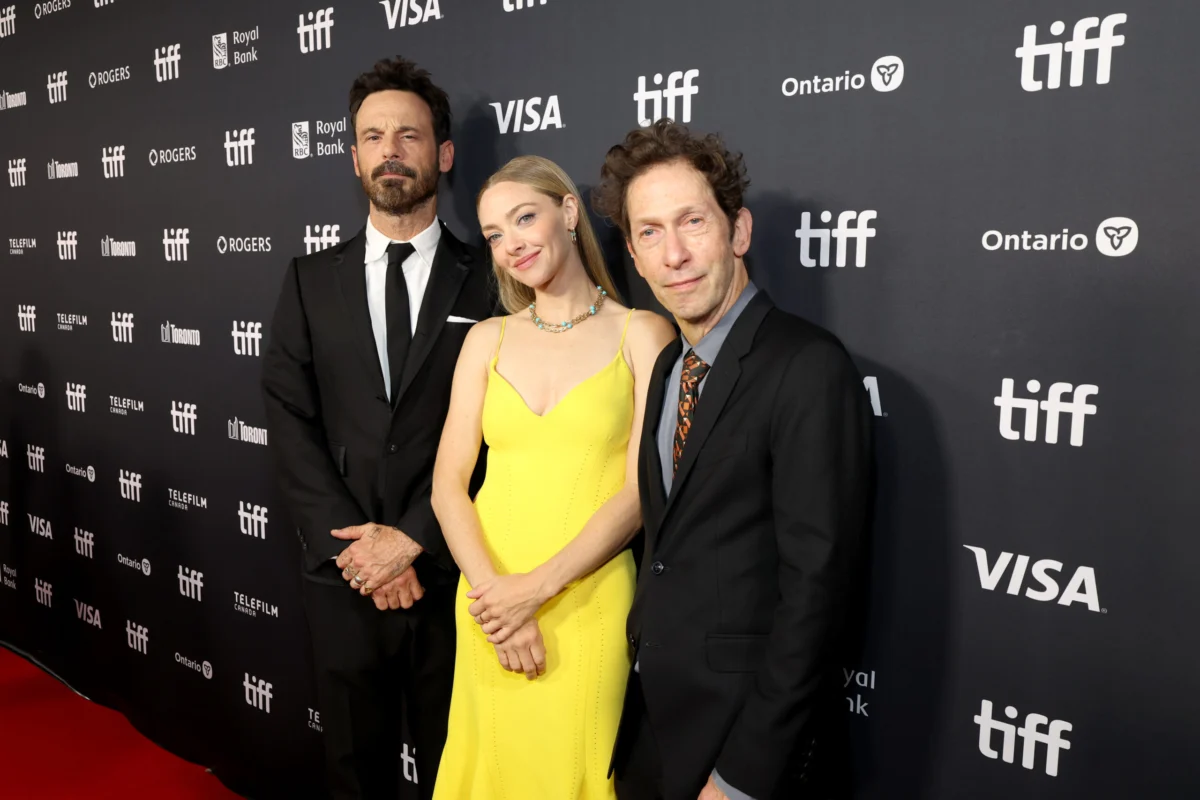
This is the final entry in an exclusive Gold Derby series chronicling the journey of "The Life and Deaths of Wilson Shedd" through the 2026 Toronto International Film Festival.
The morning after the world premiere of The Life and Deaths of Wilson Shedd, Tim Blake Nelson’s phone became a barometer for the state of modern independent cinema. Following a marathon Q&A session at Roy Thomson Hall that stretched well past midnight, and a subsequent private celebration featuring stars Amanda Seyfried and Scoot McNairy, the filmmaker-actor was visibly drained. Yet, the persistent buzzing of his device signaled something far more critical than mere industry buzz: the future of his sixth directorial feature was currently being negotiated in real-time.
For any independent filmmaker, the period immediately following a festival premiere is a volatile mix of exhaustion and high-stakes commerce. As the dust settles on the 2026 Toronto International Film Festival (TIFF), Nelson finds himself in the enviable position of fielding interest from multiple quarters, a testament to the film’s visceral impact on its debut audience.
The Anatomy of an Acquisition: Beyond the Red Carpet
The world premiere of The Life and Deaths of Wilson Shedd was not merely a celebration for the cast and crew; it was a high-stakes screening for the industry’s power players. Among the 2,600 attendees at Roy Thomson Hall were representatives from the world’s most prominent domestic and international distribution houses. These buyers, tasked with scouting the next big indie success story, were not merely watching a movie; they were evaluating its marketability, its demographic appeal, and its potential for an awards-season trajectory.

By the time the sun rose over Toronto, the critical reception had solidified. Reviews were largely glowing, highlighting the film’s thematic bravery and the raw, transformative performances of Seyfried and McNairy. This confluence of public adulation and critical consensus turned the "buy" signals into a symphony of phone calls.
"The calls ranged from ‘We’re really interested and are going to continue discussing this’ to ‘We’re really interested,’" Nelson tells Gold Derby. "I am no longer worried that this movie is not going to have a home. It’s just a question of when and what manner of home that is."
Chronology: A Career Defined by Evolution
To understand the weight of these negotiations, one must look at Nelson’s history within the shifting sands of the film industry. Entering the business in the mid-1990s, Nelson cut his teeth during an era defined by robust studio specialty labels—entities that could comfortably fund or acquire ambitious, mid-budget dramas with the expectation of a profitable theatrical run.
His directorial debut, 1997’s Eye of God, was shepherded by the now-defunct Castle Hill Productions. His subsequent projects navigated the traditional theatrical-to-home-video pipeline via companies like Lionsgate, Millennium Films, and IFC. However, the mid-2010s arrival of the streaming revolution fundamentally upended this model.

In the current landscape, a theatrical release is no longer a given. It is a strategic choice, often requiring a "make-or-break" ultimatum from the filmmaker. When asked if he has leveraged such a demand, Nelson is pragmatic. "I’m not in a moral position to make that kind of ultimatum," he admits. Instead, he focuses on finding a partner whose distribution strategy aligns with his vision for the film’s longevity.
Supporting Data: The Festival Circuit as a Barometer
The current festival climate serves as a crucial data point for distributors. Nelson’s film has already been tapped for the Hamptons International Film Festival and the Woodstock Film Festival, with more dates expected to follow. These bookings provide tangible evidence of the film’s draw.
"Pretty much wherever we applied, we got accepted," Nelson notes. "Over the past decade, film festivals have carried the torch for these kinds of movies. I’ll go to a festival in Nashville, Chicago, or Oklahoma City, and there will be a packed house. These festivals have been blowing on the embers that are now catching fire again in terms of people going back to movie theaters."
The data supports his optimism. While the broader industry remains cautious about mid-budget adult dramas, the success of "bold, daring films" at regional festivals suggests that audiences are starving for content that challenges them—a sentiment that resonates strongly with distributors looking to mitigate the risk of high-cost blockbusters.

The Oscar Gambit: A Calculated Risk
If The Life and Deaths of Wilson Shedd lands with a distributor intent on a theatrical release, the question of timing becomes paramount. The shadow of the Academy Awards looms large over every decision made in the weeks following TIFF.
Nelson and Seyfried are acutely aware of the pitfalls of a rushed awards campaign. Both were involved in 2025’s The Testament of Ann Lee, a period drama acquired by Searchlight Pictures out of TIFF. Despite a strong reception, the film was pushed into an aggressive, accelerated awards campaign that ultimately failed to secure any Academy nominations. The lesson was clear: a late-in-the-year scramble often fails to build the necessary momentum among Academy voters, who are frequently overwhelmed by the year-end deluge of content.
Conversely, the "wait-and-see" approach also carries risks. The 2024 success of The Life of Chuck—which won the TIFF People’s Choice Award but was held by Neon until the following summer—resulted in a cooling of buzz, demonstrating that momentum is a fragile, perishable commodity.
Nelson is open to the guidance of the experts. "It honestly depends on how a distributor perceives the movie and what strategy will get it in front of the most people," he says. "If that means putting it out this year, I see no reason why it shouldn’t come out this year given the responses we’ve had. But if a distributor were to determine that the field is too crowded… then we’re going to listen to them. These are intelligent people who do this for a living."

Implications for Independent Cinema
The broader implications of the Wilson Shedd sale extend beyond a single film. As the festival wraps, the market remains cautious. While high-profile sales like the $10 million acquisition of the slasher film River by Universal and Blumhouse indicate that horror and genre films remain safe bets, the market for auteur-driven, thematic drama remains a tighter, more deliberate ecosystem.
Nelson remains remarkably grounded as he navigates the closing hours of TIFF. "I’m not the only decision maker, but I’m certainly patient for the right offer," he asserts. "And I’m not at all impatient for just any offer, because there are encouraging discussions happening."
The rise of the new film market at TIFF—designed to bring a wider, more diverse swath of the global industry to Toronto—has clearly paid dividends. For Nelson, the ultimate goal is not just a sale, but a vindication of the medium.
"It’s hard to sell these movies now," he concedes. "But that also forces the filmmakers who make these movies to take chances and do something that maybe others have been afraid to do. Unless you do that, you’re probably going to be consigned to coming and going as a day-and-date streaming title."

As he prepares to depart Toronto, Nelson carries with him a renewed sense of purpose. The long lines at the box office, the engaged Q&A audiences, and the persistent inquiries from strangers on the street have reinforced his faith in the project.
"I will leave Toronto with more hope for independent cinema than I’ve had in over a decade," he reflects. "The audience is ready to embrace bold, daring films like the one my collaborators and I set out to make."
Whether The Life and Deaths of Wilson Shedd finds its home in a multiplex this winter or via a prestige streaming window next year, one thing is certain: the conversation surrounding this film has only just begun. For Tim Blake Nelson, the "deaths" of his protagonist may be fictional, but the life of his film is just beginning to take shape.
 Ammar Sabilarrohman
 Siti Muinah
 Iffa Jayyana
