

By Editorial Staff
The coastal city of Santa Cruz de Tenerife, Spain, once again transformed into the heartbeat of global animation this past Friday, as the 9th Ibero-American Animation Quirino Awards concluded with a ceremony that underscored the rapidly maturing landscape of regional storytelling. In a year defined by both technical audacity and profound thematic exploration, the awards highlighted the unique ability of Ibero-American creators to bridge the gap between niche artistic expression and mainstream critical acclaim.
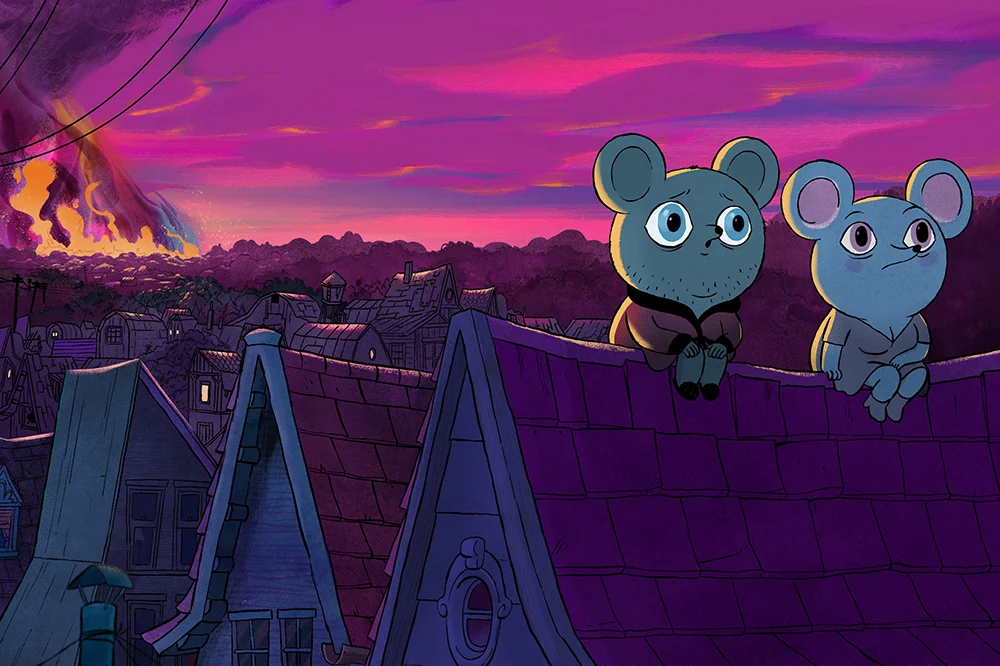
Leading the charge was Galician auteur Alberto Vázquez, whose latest feature, Decorado, cemented his status as a titan of the medium. The film, a bruising, atmospheric meditation on the artifice of human identity, took home the coveted Best Feature Film award, marking yet another milestone in a career defined by relentless innovation.
The Main Event: Alberto Vázquez’s Continued Dominance
For those familiar with the trajectory of contemporary Spanish animation, Vázquez’s win was less of a surprise and more of an inevitability. Decorado—a haunting examination of how society prizes the surface over the soul—has been on a steady march of critical success since its debut. This victory at the Quirino Awards marks Vázquez’s third career win at the festival, following previous accolades for his 2018 short film of the same name and his 2021 masterpiece, Homeless Home.
The feature is a massive collaborative undertaking, serving as a co-production between Spain’s María y Arnold AIE, Abano Producións, UniKo, and Glow Animation, alongside Portugal’s Sardinha em Lata. Beyond the Quirino trophy, the film’s pedigree is well-established; it famously secured the animated feature Goya Award this past February, solidifying its position as the preeminent Spanish animated work of the year.
Vázquez’s work is characterized by a stark, often visceral visual language that challenges the audience’s perception of reality. By focusing on the "decorado" (the set or scenery) of life, he probes the fragility of the self in a world obsessed with appearances. His win serves as a bellwether for the industry, suggesting that the market is increasingly hungry for adult-oriented, conceptually challenging animation that eschews traditional commercial tropes.
Chronology of the Quirino Awards: A Weekend of Artistic Exchange
The 9th edition of the Quirino Awards was not merely an awards ceremony; it was the culmination of an intensive period of industry evaluation. The jury, chaired by renowned Brazilian producer and 2022 winner Cesar Cabral, faced the daunting task of sifting through 265 submissions from across the Ibero-American landscape.
The Selection Process
The process began months prior, with submissions pouring in from across the Iberian Peninsula and Latin America. The organizers maintained a rigorous selection criterion, focusing on originality, technical craftsmanship, and narrative depth. By the time the nominees were announced, it was clear that the competition was fierce.
The Ceremony
The event in Santa Cruz de Tenerife acted as a nexus for producers, directors, and artists. Following the announcement of the feature film winner, the momentum continued throughout the evening, with a diverse array of projects from five different countries receiving recognition. The geographic distribution of the awards—a balanced five-five split between the Iberian Peninsula and Latin America—demonstrated the growing parity in production quality across the Atlantic.
Supporting Data: A Landscape of Regional Excellence
The 2024 Quirino Awards provided a clear snapshot of the current state of the industry. While Spain dominated with three major wins, the true narrative of the event was the "punching above its weight" performance of smaller markets and emerging hubs.
The Rise of Regional Powerhouses
- Colombia’s Creative Surge: Bogotá-based Careloko Producciones achieved a notable victory in the Series category for There Is Something Behind You. Written and directed by Julián Gómez Reyes and supported by the Abrecámara public fund, the show highlights the growing sophistication of Colombian children’s programming, which manages to balance suspense and accessibility.
- Portugal’s Artistic Depth: Marta Reis Andrade’s Dog Alone captured the Best Short Film award. A 2D fable exploring the intersections of loneliness and family, the short has been a darling on the festival circuit, including high-profile stops at AFI Fest and the Valladolid International Film Festival.
- Brazil’s Technical Prowess: Brazil solidified its reputation as a powerhouse for technical design. Rosana Urbes (Planta Filmes) secured Best Visual Development for Safo, while Zombie Studio took home the Best Commissioned Film award for the poignant 18 Months.
Full Winners Roster
The diversity of the winners list illustrates a healthy ecosystem:
- Best School Short Film: Ballad of Fishes and Birds (Colombia-Spain) by Anny Uribe and Juan José Arévalo.
- Best Music Video: Paulinha (Portugal) by Ana Marta Mendes.
- Best Video Game Animation: Stars in the Trash (Spain) by José Ginés Picón López.
- Best Animation Design: My Gut Friend (Argentina-Mexico).
- Best Sound Design and Original Music: The Quinta’s Ghost (Spain).
Official Responses and Jury Insights
The international jury, which included Ireland’s Moe Honan (Moetion Films), the Philippines’ Marilyn Montano (PlayLab), Colombian-American producer Martha Sepúlveda (CAKE Entertainment), and Croatia’s Krešimir Zubčić, emphasized the difficulty of their task.
"The quality of the entries this year reflects a sector that is no longer ’emerging’ but is instead fully matured," noted Jury Chair Cesar Cabral. "We were not looking for technical perfection alone—we were looking for a pulse. We were looking for works that, regardless of their budget or the size of the team, felt essential to the cultural conversation."
The inclusion of international industry heavyweights on the jury underscores the Quirino Awards’ commitment to global integration. By bringing in perspectives from Ireland, Croatia, and the Philippines, the organizers ensured that the works selected would be judged by standards that transcend regional boundaries, preparing them for potential distribution in global markets.
Implications: Where Does Ibero-American Animation Go From Here?
The outcomes of this year’s Quirino Awards carry significant implications for the future of the animation industry in the Spanish and Portuguese-speaking world.
1. The Shift Toward "Adult" Animation
The success of Alberto Vázquez and other creators in the short film and music video categories points to a broader trend: the de-stigmatization of animation as a medium strictly for children. The thematic depth of the winning films—exploring identity, loneliness, and existential dread—suggests that studios are increasingly willing to invest in mature, auteur-driven narratives.
2. Cross-Border Co-production as the New Standard
Nearly every major winner at this year’s ceremony was a co-production between two or more countries (e.g., Spain-Portugal, Argentina-Mexico, Colombia-Spain). This is a vital development. The inherent costs of animation make solitary production difficult; the success of these collaborative models at the Quirinos proves that regional cooperation is the most effective way to secure funding and talent for ambitious projects.
3. Strengthening the Pipeline
The category for "School Short Film" is perhaps the most important for the long-term health of the industry. By recognizing the work of young creators like Anny Uribe and Juan José Arévalo, the Quirino Awards are building a bridge between academic institutions and the professional industry. This ensures that the next generation of animators has a platform to showcase their work before they even enter the commercial market.
4. Cultural Export Potential
The recognition of works like The Quinta’s Ghost—which reached the Oscars shortlist—indicates that Ibero-American animation is increasingly being viewed as a formidable contender on the world stage. As these films continue to travel to festivals like AFI Fest and beyond, they act as cultural ambassadors, shifting the global perception of what Ibero-American cinema can achieve.
Conclusion
As the 9th Quirino Awards come to a close, the narrative is one of profound resilience and creative explosion. From the haunting, introspective halls of Alberto Vázquez’s Decorado to the suspenseful corridors of Colombian series production, the animation coming out of the Ibero-American region is distinct, bold, and unapologetically artistic.
The industry is clearly in the midst of a golden age. With a robust infrastructure of co-productions, a growing network of international distribution, and a commitment to nurturing new talent, the Quirino Awards have proven that this corner of the world is not just participating in the global animation conversation—it is leading it. As the industry looks toward the 10th anniversary edition next year, the standard has been set: excellence is no longer a goal; it is the baseline.
 Ali Ikhwan
 Iffa Jayyana
 Siti Muinah
