

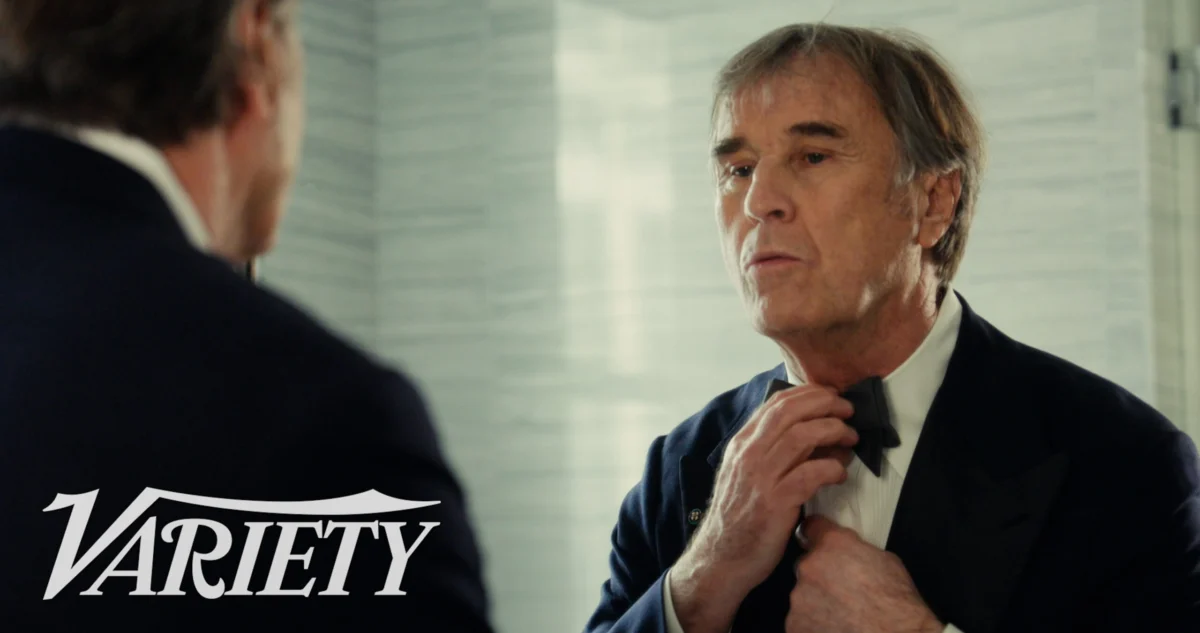
At the quiet hour of dusk, as the Italian landscape transitions into the cool blue of evening, Brunello Cucinelli is often found walking through his vineyards. In the opening scenes of the new documentary Brunello: The Gracious Visionary, he moves with a purposeful grace among his vines, which are protected from the encroaching frost by dozens of small, flickering fires. It is a cinematic tableau that perfectly encapsulates the man: a septuagenarian who moves through the world he has painstakingly crafted, curated, and restored with the ease of a master artisan.
Last Tuesday, however, that pastoral silence was replaced by the flashbulbs and vibrant energy of New York City. The fashion mogul, flanked by his family, graced the red carpet at a gala screening of the film, an exclusive event held in anticipation of the documentary’s North American distribution by Blue Fox Entertainment. For Cucinelli, the gala was not merely a promotional stop; it was a rare opportunity to share the philosophy that has defined his life and his company for over four decades.
The Genesis of a Humanistic Empire
To understand the man, one must look beyond the ubiquity of his signature cashmere pullovers, which have dominated the luxury market since he founded his company in 1978. While the garments are renowned for their quality, Cucinelli’s true product is a radical approach to business known as "humanistic capitalism."
The documentary, directed by the acclaimed Giuseppe Tornatore, masterfully weaves together documentary footage and cinematic reenactments to chart the unlikely trajectory of Cucinelli’s life. Born into a poor, rural farming family in Umbria, Italy, his early life was defined by the harsh realities of agricultural labor. The turning point in his life occurred when he was a young man, overhearing his father recount the indignities he suffered at a factory job. The bitterness and humiliation in his father’s voice struck a chord, sparking a lifelong commitment to the principle that work should be a source of dignity, not a vehicle for exploitation.
"I wanted Giuseppe to undertake this project because he is a poet, and I believe that poets are the greatest human beings on earth," Cucinelli explained to Variety. "Ultimately, my dream was for this film to serve as a testament to what my life, what our life, has been: a legacy to leave behind for our children, our grandchildren, and all those who will come after us."
A Chronology of Vision and Restoration
The narrative arc of the film moves from the humble farmhouse in Umbria to the global stage of high fashion. A pivotal moment in his journey was meeting his wife, Federica, when they were teenagers. Federica became his partner in every sense, providing the emotional and practical foundation that allowed him to evolve into the "King of Cashmere."
The Solomeo Project
As the business flourished, Cucinelli turned his attention to his adopted home, the hamlet of Solomeo. If the fashion house provided the capital, Solomeo provided the soul. Over the past few decades, he has poured vast portions of his personal wealth into the preservation of the village. The crown jewel of this effort is the restoration of an earthquake-damaged castle, which now serves as the company’s headquarters. Beyond the office walls, he has developed public parks, renovated the local church, constructed a theater, and built a library housing over 500,000 titles, aiming to preserve the collective knowledge of humanity.
Federica, reflecting on their 54-year journey, describes it as a "true fairytale." She admits, "This was intended to be, in a sense, our own personal monument to life. I never would have imagined that we would one day see the story of our lives turned into a film."
The Architecture of a Creative Hive
The documentary offers a rare, intimate look at the daily operations of Brunello Cucinelli S.p.A., which operates less like a traditional factory and more like a "creative hive." In these workshops, workers are not treated as cogs in a machine; they are treated as artisans. They work in natural light, earn significantly higher-than-average wages, and participate in communal, healthy meals that echo the family-style dining of rural Italy.
For Cucinelli, the business model was never solely about the balance sheet. It was about creating a livable, breathable environment where his theories on human sustainability could be tested. He posits that if a worker is happy, the product will inevitably possess a higher quality—a tangible manifestation of the "human touch."
Family Stewardship and Succession
The transition of the Cucinelli brand to the next generation is a core theme of the film. The business is now a multi-generational endeavor. While Federica manages the Brunello and Federica Cucinelli Foundation, their daughters, Carolina and Camilla, serve as vice presidents, actively interpreting their father’s vision for a modern, digital-native audience.
At the New York gala, the sisters demonstrated how they are weaving their own style into the company’s legacy. Carolina, appearing in a sophisticated, feminine dress paired with a non-biker jacket, and Camilla, in a color-blocked tuxedo, exemplified the brand’s ability to evolve without losing its core identity.
"We feel a profound sense of responsibility toward the company and the people who work alongside us every day," Carolina noted. "We were instilled with the concept of work as a noble pursuit: one free of coercion yet driven by a great passion. We have embraced this philosophy and are now weaving it into our daily work."
Implications of a Humanistic Philosophy
Cucinelli’s impact reaches far beyond the fashion industry. In 2021, he addressed the G20 Summit, urging world leaders to see themselves as "temporary guardians of Creation." His insistence that commerce must be tethered to ethics has earned him a place in the global discourse, moving from the runways of Milan to the halls of international diplomacy.
The film serves as both a retrospective and a call to action. It challenges the viewer to reconsider the relationship between profit and people. As the patriarch himself admits, "One may inherit ownership, but never the actual capacity for entrepreneurship." His hope is that the documentary will inspire the next generation to stay the course, maintaining the balance between economic growth and human dignity.
The Global Reach of the Solomeo Dream
The North American theatrical release, set for July 24, represents a significant milestone for the project. When the film debuted in Italy on December 9, it was a resounding success, grossing over $1 million during a limited seven-day run—a rare feat for a documentary.
The choice of New York City for the gala was intentional, honoring the city where the family opened their first U.S. store in 2006. "New York is a city that gives us so much energy and inspiration," Carolina said. "Every time we visit, we truly take so much back home with us."
Conclusion: A Message of Hope
As Brunello: The Gracious Visionary prepares for its wide release, Cucinelli remains focused on the message he hopes the film imparts. In an era often defined by cynicism and technological disconnection, his words are a refreshing call to return to the human element.
"Replace fear with hope," he urged in his concluding thoughts to the audience. "Have a dream. Look up at the sky. The stars will be your source of inspiration. Do not feel pressured to make everything work perfectly right away. Pursue your dream throughout your life. That is what I would love most of all. Hold fast to this ideal and strive to live as if you were the pro tempore custodians of humanity. Yes, yes we can do it."
Through the lens of Giuseppe Tornatore, the world will soon get a glimpse into the life of a man who has managed to build an empire without sacrificing his soul. Whether or not the audience is interested in high fashion, the story of Brunello Cucinelli is a testament to the idea that business, at its best, can be a noble pursuit—a bridge between the past and the future, held together by the thread of human dignity.
 Nana
Nana
 Ali Ikhwan
 Iffa Jayyana
