

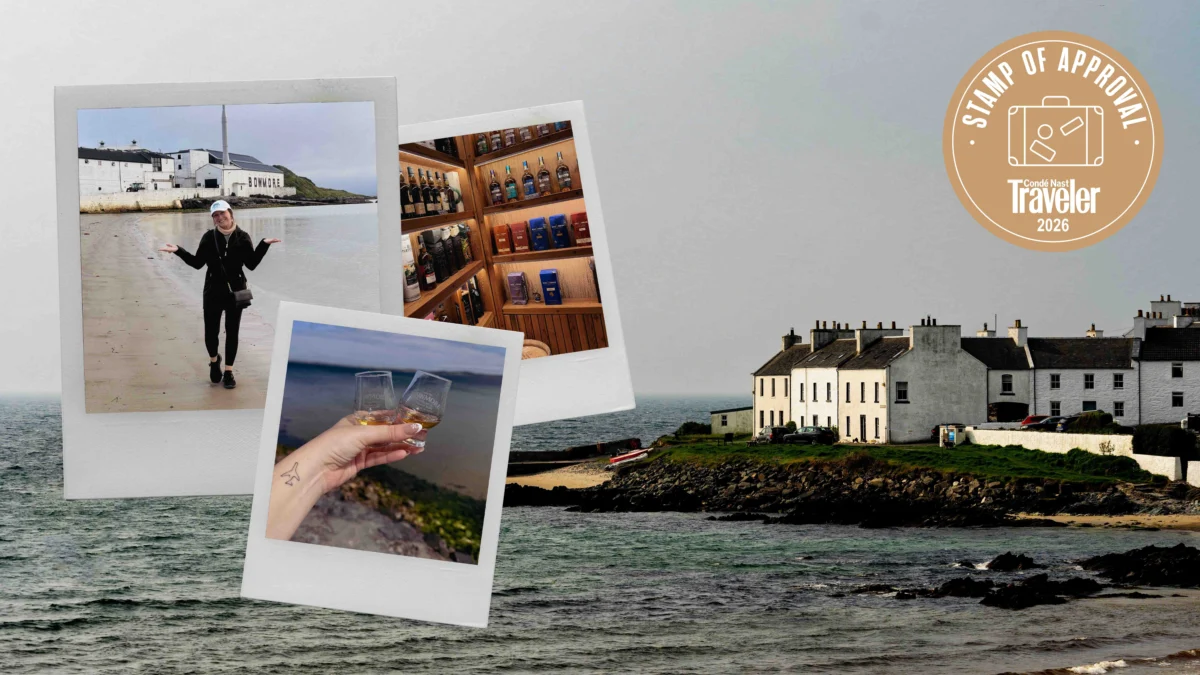
For the true whisky aficionado, there is no landscape on earth quite like the Isle of Islay. Situated in the southernmost reaches of the Inner Hebrides, this 240-square-mile island is less a geographical location and more a spiritual home for those who revere the smoky, medicinal, and complex profiles of peated single malt. When my father approached his 60th birthday, the choice of destination was never in doubt. As a connoisseur with a sharp nose and a collection of over 200 bottles, he had long harbored a dream of standing on the rugged shores of the "Queen of the Hebrides" to witness the source of his favorite drams.
Navigating the logistics of a Scottish island tour can be daunting for the uninitiated. Between coordinating ferry schedules, securing distillery bookings, and managing the winding, narrow roads of the Highlands, the planning process often risks eclipsing the joy of the journey itself. Seeking a solution that balanced freedom with expert guidance, we opted for Rabbie’s four-day Islay and Whisky Coast tour. Departing from Edinburgh, the itinerary promised a curated blend of folklore, breathtaking landscapes, and deep-dives into the world’s most iconic distilleries, all within a small-group setting of no more than 16 people.
Main Facts: The Islay Whisky Experience
The allure of Islay lies in its paradox: it is fiercely remote yet globally significant. Its whiskies, defined by the heavy use of peat—a compressed, partially decomposed organic matter used to fire the kilns—produce a flavor profile characterized by smoke, sea salt, and iodine.

The Rabbie’s tour acts as an accessible gateway to this specialized world. Priced starting at approximately $609 per adult for the base tour (excluding accommodations and specific distillery entry fees), or around $1,464 for an all-inclusive experience, the trip removes the friction of travel. The tour provides a dedicated local guide, luxury mini-coach transport, and logistical oversight of the complex ferry crossings. It is designed for those who want the immersion of a local expert without the stress of independent planning.
Chronology of the Journey: From the Lowlands to the Coast
Day 1: The Gateway to the Isles
Our adventure began in the heart of Scotland’s capital, Edinburgh. After a day spent acclimating to the local time, we met our fellow travelers at the bus station. The journey felt immediate as our guide, Peter McShane, a native of Glasgow, set the tone with a soundtrack of traditional Celtic music.
Our first landmark was the town of Falkirk, home to the monumental "Kelpies"—the world’s largest equine sculptures. It was a stark introduction to Scotland’s blend of industrial history and artistic ambition. From there, we traveled through the dramatic terrain of Loch Lomond and the Trossachs National Park. The destination was Oban, often referred to as the "Gateway to the Isles." Here, we enjoyed a quintessential coastal experience: fresh seafood by the harbor followed by a visit to the Oban Distillery. This served as an essential "warm-up" before we tackled the heavier, peat-forward spirits awaiting us on Islay.

Day 2: The Crossing and the Arrival
The transit to Islay is an experience in itself. Driving to Kennacraig, we boarded the ferry for a two-hour crossing of the Sound of Jura. As the ferry cut through the glass-like water, the Paps of Jura—three iconic, cone-shaped mountains—emerged from the mist.
Upon arrival, we settled into the town of Bowmore. Our accommodation, the Bowmore Distillery Cottages, offered a communal living experience that fostered immediate camaraderie. Sharing a kitchen and living space with other members of the group transformed us from strangers into a cohesive band of travelers. That evening, a walk to the historic Bowmore Distillery—the island’s oldest, dating back over 240 years—offered a masterclass in the intersection of history and production. We sampled drams straight from the cask in the darkness of the cellar, a stark contrast to the light, airy tasting room upstairs where we enjoyed whisky paired with local chocolate.
Day 3: The Southern Coast Pilgrimage
If Day 2 was about settling in, Day 3 was about the legendary Southern Coast. We visited the "holy trinity" of Islay whisky: Ardbeg, Lagavulin, and Laphroaig. While the itinerary was flexible due to the island’s limited capacity, our guide ensured we experienced the unique character of each facility.

At Ardbeg, despite it being a Saturday, we were granted access to the production floor before settling into a five-dram tasting in the sunshine. This moment—laughing with new friends while savoring some of the most expensive and rare spirits in the world—was the emotional highlight of the trip. The day concluded with a visit to Laphroaig, where we explored the traditional peat kilns and warehouses, cementing the sensory connection between the island’s boggy soil and the liquid in our glasses.
Day 4: Reflection and Return
The final day was a bittersweet journey back. We traversed the rugged Arrochar Alps and stopped at the "Rest and Be Thankful" pass for one last look at the breathtaking Scottish terrain. A final stop in the village of Luss provided a chance to reflect on the journey. By the time we arrived back in Edinburgh, the bonds formed with our group and the depth of knowledge gained had far exceeded our expectations.
Supporting Data: Why Small-Group Tours Work
The success of this tour hinges on several key logistical factors:

- Group Dynamics: Limiting the group to 16 participants ensures that the experience remains personal. Unlike massive coach tours, this format allows for genuine conversation and spontaneous interaction with the guide.
- Logistical Efficiency: Traveling to Islay requires precise timing for ferries. By outsourcing this to an experienced operator, travelers avoid the risk of missing connections—a common pitfall for independent tourists in the Hebrides.
- Economic Value: While some distillery tours are "a la carte," the base cost covers the high overhead of transport and expert guiding. For the level of access provided—including behind-the-scenes glimpses at world-renowned distilleries—the price point is highly competitive compared to booking individual private tours.
Official Responses and Perspectives
The tour operators, Rabbie’s, emphasize that their mission is to provide an "authentic" experience. Their guide, Peter McShane, noted that the key to a successful Islay tour is not just the whisky, but the "Celtic soul" of the island—the folklore, the geography, and the slow, deliberate pace of life.
My father, who possesses a critical eye and a palate refined by decades of sampling, summarized the experience concisely: "It was well worth the money." His perspective is particularly telling; for someone who already owns 200 bottles of whisky, the value was not in the acquisition of more spirits, but in the educational depth of the visit. Understanding the specific peat bogs from which his favorite brands draw their smoke provided a context that no retail purchase could replicate.
Implications for Future Travelers
For those planning a similar pilgrimage, there are three primary takeaways:

- Embrace Flexibility: Islay is a small island with limited resources. Distilleries may change their operating hours, and weather conditions can occasionally impact ferry schedules. A "roll with the punches" attitude is essential for enjoying the trip.
- Plan Your Meals: While the tour handles transportation and distilleries, lunches and dinners are generally independent. Making reservations at local restaurants in towns like Bowmore or Port Ellen is highly recommended, especially during the peak summer months.
- Prioritize the Social Aspect: The best part of the trip was not just the whisky, but the company. Be open to meeting people from around the world. The shared experience of a smoky dram is a universal language that breaks down barriers quickly.
Ultimately, the Rabbie’s Islay tour is more than a vacation; it is an immersion into a culture that has perfected the art of turning earth, water, and time into liquid gold. For my father and me, it was the perfect way to mark a milestone birthday, leaving us with not just bottles for his collection, but memories that will last a lifetime.
 Sagoh
Sagoh
 Asro
Asro
