

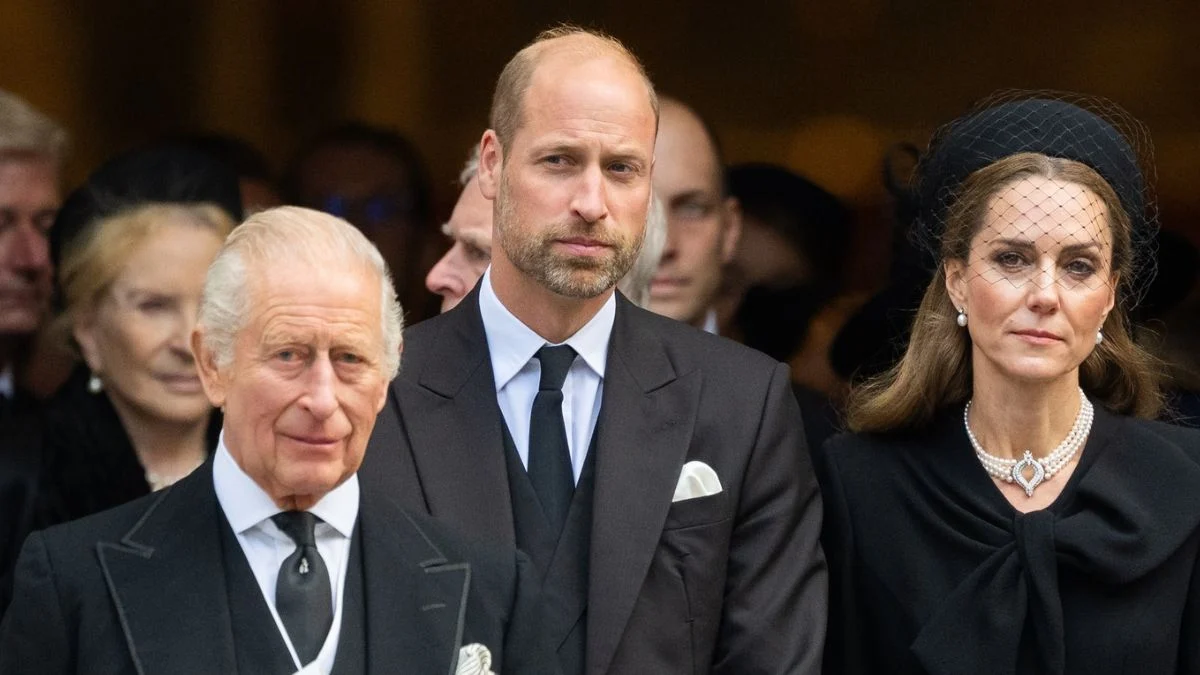
In the modern monarchy, the glare of the global spotlight is as much a test of a royal marriage as it is a measure of public service. As the Prince and Princess of Wales, William and Catherine have ascended to a position of unprecedented public adoration. Yet, as their popularity continues to soar, royal commentators are increasingly focused not just on the couple’s external success, but on the internal foundation that allows it to flourish. Specifically, experts are highlighting a profound shift in how Prince William manages the public’s fascination with his wife—a dynamic that stands in stark, intentional contrast to the fractured relationship of his parents, King Charles III and the late Princess Diana.
The Evolution of a Royal Partnership: Main Facts
Prince William and Kate Middleton have become the undisputed faces of the British royal family. Their appearances—whether at high-stakes diplomatic events, charitable engagements, or community gatherings—consistently result in record-breaking crowds and intense media coverage. However, observers note that unlike previous generations, this attention does not serve as a point of contention within the household.
Royal experts, speaking to Fox News Digital and other outlets, suggest that the Prince of Wales has adopted a strategy of active encouragement rather than competitive posturing. This is not merely a matter of temperament; it is a calculated commitment to the institution of the monarchy. By allowing the Princess of Wales to take the lead in many public spheres, William has fostered a "team-first" mentality that has solidified their brand as a modern, unified, and relatable power couple.
A Historical Comparison: The Shadow of the Past
To understand the significance of William’s approach, one must look at the historical precedent. The relationship between King Charles III and Princess Diana remains the most famous, and most tragic, case study in royal power dynamics.
During the 1980s and 1990s, the "War of the Waleses" was defined by a palpable friction whenever Diana drew larger crowds or garnered more media attention than her then-husband. Biographers have long documented that Charles felt overshadowed by the "People’s Princess," leading to deep-seated resentment that eventually contributed to the erosion of their marriage.
Christopher Andersen, author of Kate!, emphasizes that William learned the most vital lesson from his father’s mistakes. "Rather than be jealous of his wife the way King Charles was jealous of Diana’s popularity, William is more than content to let Kate shine," Andersen explains. "In fact, there are times when he is perfectly happy to bask in her reflected glory."
This contrast is echoed by former BBC royal correspondent Jennie Bond, who noted that the psychological burden of being the "second lead" to a spouse is something William has seemingly sidestepped entirely. "Luckily, William doesn’t seem to suffer the same jealousy that his father did when Diana was the darling of the crowds," Bond remarked to The Mirror.
Chronology: From Courtship to Crown Influence
The Early Years (2001–2011)
The public’s infatuation with Catherine began long before she entered the royal family, but the scrutiny intensified exponentially following their 2011 wedding. During this decade, William was highly protective of her, carefully managing her entry into the public eye to ensure she wasn’t overwhelmed by the same media machine that pursued his mother.
The Mid-Career Pivot (2012–2020)
As the couple began their own family, the focus of their work shifted toward mental health, early childhood development, and environmentalism. During this period, the media began to notice that the couple acted as a unit. William began to frequently defer to Kate during speeches and public interactions, allowing her to lead on specific initiatives while he played a supportive, often secondary role.
The Modern Era (2021–Present)
Following the passing of Queen Elizabeth II and the subsequent ascension of Charles to the throne, the Prince and Princess of Wales have taken on significantly more weight within the Firm. Recent reports suggest that their popularity has, at times, eclipsed that of the King, yet the dynamic remains one of cooperation. Observers note that the Prince is now comfortable with the "star power" of his wife being the primary draw for royal tourism and public engagement, viewing it as a vital asset to the monarchy’s survival.
Supporting Data: Why Their Dynamic Works
The "Kate Effect"—the phenomenon where anything the Princess wears or endorses sells out instantly—has become a cornerstone of the royal brand. According to various retail and public relations metrics, Catherine’s influence on the British economy and the global perception of the Commonwealth is quantifiable in the millions of pounds.
Psychologists and body language experts have also analyzed the couple’s public interactions. British broadcaster and photographer Helena Chard notes that the Prince’s reactions are consistently supportive. "Prince William is not only proud, but he is smitten," Chard observes. "He watches Princess Catherine and lights up. After more than a decade of marriage and three children, he is still completely enchanted by her."
This public displays of affection and respect provide a stark contrast to the formal, stiff, and often distant portrayals of previous royal couples. By humanizing their relationship, William and Kate have created a blueprint for a successful royal marriage that prioritizes mutual respect over the rigid, hierarchical structures of the past.
Official Responses and Expert Analysis
The consensus among royal observers is that William’s lack of jealousy is a tactical advantage for the monarchy. Hilary Fordwich, a prominent British royal expert, points out that William’s admiration is "palpable."
"Rather than Prince William being jealous, his delight regarding her success is palpable," Fordwich told Fox News Digital. She notes that his body language—his adoring glances and his general ease when Kate is the center of attention—signals to the public that they are a team. This is a critical departure from the "competitive" marriage model of the late 20th century.
Furthermore, insiders suggest that the King is aware of this dynamic. While some reports have speculated on the King’s reaction to the rising popularity of the Prince and Princess of Wales, the official line remains that the monarchy as a whole benefits from the couple’s resonance with the public.
The Implications: A New Era for the Monarchy
The implications of this shift are profound for the future of the British monarchy. By successfully navigating the pressures of fame without succumbing to the toxic dynamics of previous generations, William and Catherine have secured the relevance of the crown for a new generation.
1. The Death of the "Royal Ego"
William’s willingness to let Kate take center stage signals the end of the ego-driven era of the monarchy. If the Prince of Wales, as the future King, is comfortable with his wife holding the global spotlight, it sets a precedent that the institution is more important than the individual.
2. The Power of Partnership
In an age of skepticism toward inherited power, the "team" approach of the Prince and Princess of Wales serves as a vital public relations tool. It makes the monarchy seem less like an ancient, patriarchal relic and more like a modern, collaborative partnership.
3. Stability for the Future
The stability of the Prince and Princess of Wales’ marriage is perhaps their greatest contribution to the stability of the institution itself. In previous centuries, royal instability was a driver of political crises. Today, a harmonious partnership serves as a grounding force, allowing the couple to focus on their charitable work and constitutional duties without the distraction of domestic infighting.
Conclusion
The transformation of the Prince of Wales from a young man who witnessed the heartbreak of his parents’ marriage into a husband who empowers his wife is perhaps his most significant achievement to date. As Prince William continues to navigate the complexities of his role, his refusal to repeat the mistakes of the past is clear.
By fostering a relationship built on admiration, shared goals, and a mutual commitment to the crown, Prince William and Kate Middleton are not just surviving the spotlight—they are harnessing it. In doing so, they are proving that the most effective way to lead is by standing together, ensuring that the light shining on the Princess of Wales serves to illuminate, rather than overshadow, the future of the British monarchy. As they continue their journey toward the throne, their partnership stands as a testament to the idea that true strength lies in the ability to share the stage, a lesson that has redefined the modern royal narrative.
 Azzam Bilal Chamdy
 Nana
Nana
