

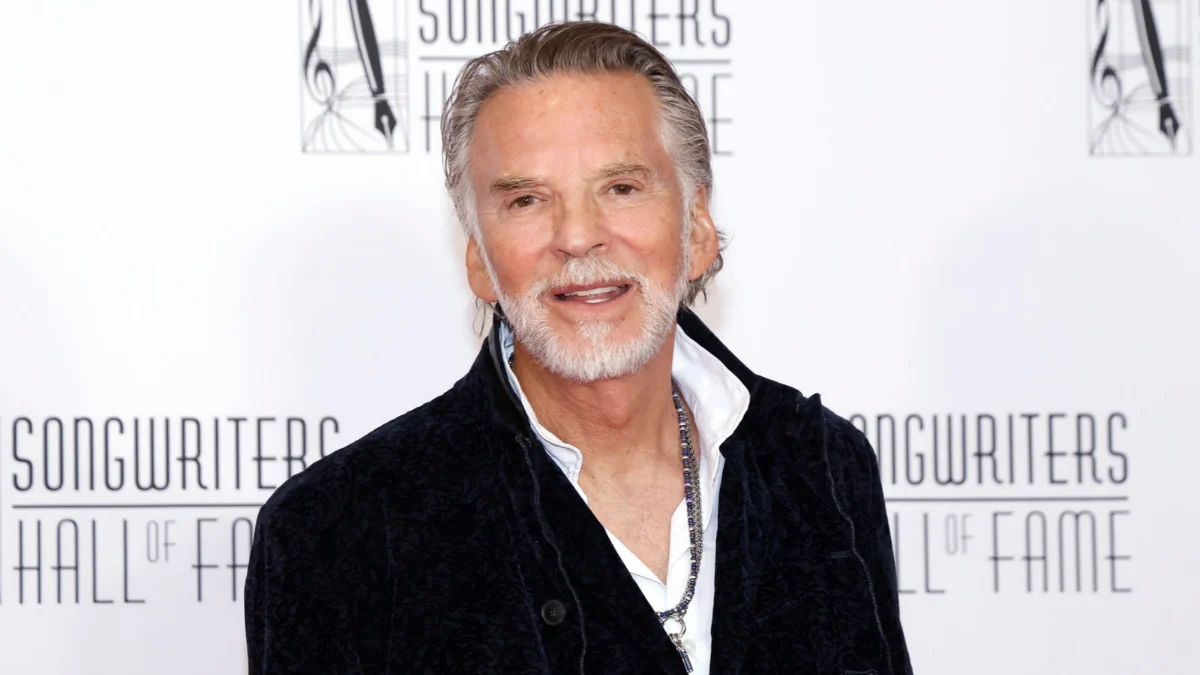
For over five decades, Kenny Loggins has been the soundtrack to the American experience. From the soft-rock introspection of his early years with Loggins and Messina to the high-octane, neon-soaked anthems that defined the 1980s blockbuster era, his voice has resonated across generations. Yet, as the legendary singer-songwriter shifts his focus from the stage to the archives, he has found himself contemplating a legacy that transcends chart positions and platinum records. In a recent, candid reflection on his life and career, Loggins revealed the four simple words he wants etched into his headstone: "He told the truth."
The Core of the Conversation: A Quest for Authenticity
The revelation came during a screening of his upcoming documentary, Kenny Loggins: Conviction of the Heart, held at the Grammy Museum on September 17. Addressing a captivated audience, the singer opened up about the philosophy that has guided his creative output since he first picked up a guitar.
For Loggins, music was never merely about crafting a catchy hook or a radio-friendly melody; it was an exercise in emotional excavation. "What stuck in my mind from that meeting was that if I ever do a documentary, it’s got to be true," Loggins explained to the crowd. "I strove my whole career to write what I thought was the truth. Even if it was a make-believe relationship, it had to have some thread of honesty in it."
This commitment to the "truth"—whether in the soaring crescendos of "Danger Zone" or the poignant lyricism of "Danny’s Song"—has been the singular thread connecting his disparate musical phases. When asked by an interviewer years ago what he envisioned for his final resting place, his answer was immediate and devoid of ego: "He told the truth." It is a striking epitaph for a man whose work is often categorized by its polish and commercial success, yet it underscores the vulnerability he insists was present in every note.
Chronology: From Troubadour to Icon
To understand the weight of that four-word epitaph, one must look at the trajectory of Loggins’ career, which has been anything but static.
The Early Years: The Folk-Rock Foundation
Emerging from the vibrant California music scene of the early 1970s, Loggins first gained prominence as a songwriter for artists like Nitty Gritty Dirt Band before forming the duo Loggins and Messina. During this period, his writing was characterized by a raw, acoustic intimacy. Songs like "Danny’s Song" were not just hits; they were honest reflections on the anxieties of early adulthood and the necessity of faith in personal relationships.
The Solo Ascent: Redefining the 80s
By the 1980s, Loggins had pivoted into his role as the "King of the Movie Soundtrack." While critics might have dismissed these tracks as purely commercial, Loggins maintained that the adrenaline-fueled tracks like "Footloose" and "Danger Zone" were honest expressions of the specific energy required by the films they accompanied. His ability to distill a movie’s essence into a three-minute song became his trademark, masking the deep technical craftsmanship required to sustain such a high level of output.
The Documentary Shift: A Retrospective Lens
In recent years, Loggins has transitioned from active touring to active preservation. The upcoming documentary, Kenny Loggins: Conviction of the Heart, serves as the capstone of this transition. It traces his journey from a young songwriter struggling to find his voice to an elder statesman of pop, forcing him to confront the duality of his public image versus his private reality.
Supporting Data: The Impact of "Conviction"
The title of his documentary, Conviction of the Heart, is drawn from his 1991 song, which remains one of the most socially conscious pieces in his catalog. The track, which focused on environmentalism and the need for global empathy, serves as a metaphor for his entire career: the act of singing with conviction.
According to industry metrics, Loggins has sold over 25 million albums worldwide. However, the data points that matter most to him—as evidenced by his recent comments—are the qualitative ones. During the Grammy Museum event, it was revealed that Loggins was initially resistant to the idea of a documentary. He felt that his life was private and that the "truth" was already embedded in his music. It took the intervention of director Dori Berinstein to convince him that his story offered a unique perspective on the evolution of the modern music industry.
The Director’s Perspective: A Pivot in Narrative
The process of creating this documentary was as fluid as Loggins’ career. Dori Berinstein, a decorated Broadway producer and director, originally approached Loggins with a vision for a Broadway musical based on his life.
"And then the pandemic hit," Berinstein recounted at the Grammy Museum. The global lockdown forced a creative pivot. With theaters closed and in-person collaboration impossible, Berinstein shifted to an interview-based format. "I suggested we, even though there’s a pandemic going on, that we get some foundation and do an interview with you remotely."
What started as a digital meeting became a profound discovery. As Berinstein conducted these remote sessions, she realized that the nuances of Loggins’ narrative—the doubts, the creative blocks, and the personal epiphanies—required the visual intimacy of the big screen rather than the theatrical artifice of the stage. The resulting documentary, scheduled for an April 2027 release, promises to be a stark departure from the typical "rock star" biopic, focusing instead on the emotional honesty that Loggins has prioritized for over half a century.
Implications: The Legacy of Truth
What does it mean for an artist of Loggins’ stature to define his life by "truth" rather than "success"? The implications are significant for how we perceive pop music history.
Redefining Commercial Success
Often, the music industry equates "truth" with "indie" or "underground" artists. By asserting that his highly successful, mainstream hits were also driven by a search for truth, Loggins challenges the elitism that often separates popular music from "serious" art. He suggests that one can be both a household name and a genuine human being.
The Changing Nature of Biography
The decision to wait until 2027 for the documentary’s release indicates a deliberate, slow-burn approach to legacy building. Loggins is not rushing to capitalize on nostalgia; he is curating his own narrative. In an era where social media demands constant, performative transparency, Loggins’ desire for his epitaph to read "He told the truth" serves as a counter-cultural statement. It suggests that truth is not found in the constant noise of the present, but in the enduring sincerity of one’s body of work.
An Invitation to Re-listen
For his fans, this revelation serves as an invitation to revisit the Loggins catalog with a new set of ears. When listening to the soaring synths of "Danger Zone" or the gentle acoustic strumming of his early work, the audience is now encouraged to look for the "thread of honesty" he speaks of. It transforms the listening experience from passive consumption to an active search for the man behind the microphone.
Conclusion: The Final Note
As the industry prepares for the 2027 premiere of Kenny Loggins: Conviction of the Heart, the conversation surrounding the singer has shifted from his past accolades to his future legacy. By distilling his life into four words, Loggins has provided a framework for his audience to understand his journey.
He acknowledges that his career was not without its "make-believe" elements—the stage lights, the cinematic soundtracks, the carefully curated public image—but he insists that beneath the surface, there was an unwavering commitment to sincerity. Whether that truth was found in a song about a fleeting romance or a song about the survival of the planet, he stands by the conviction that he was always, in his own way, telling the truth.
As he moves toward the final chapters of his storied life, Kenny Loggins isn’t just looking back at a collection of hits; he is looking at the integrity of a lifetime. If his wish is granted, the stone that marks his final resting place will not list his awards, his Grammy wins, or his chart-topping singles. It will simply state a fact that he spent over 50 years working to establish. He told the truth. And in the ephemeral world of popular music, perhaps that is the greatest legacy an artist can leave behind.
 Neng Nana
 Azzam Bilal Chamdy
 Nana
Nana
