

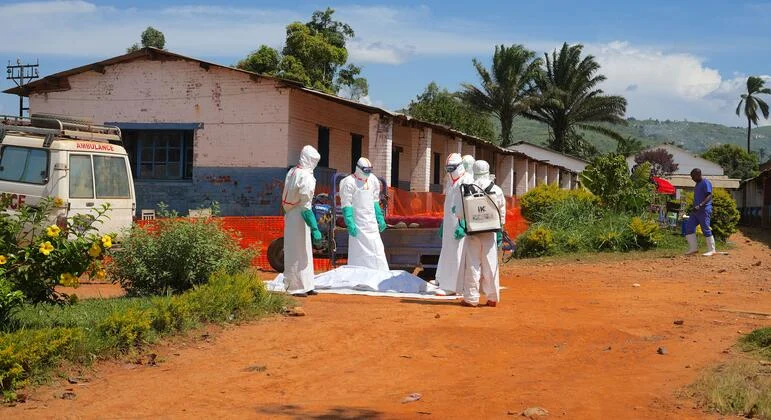
GENEVA/BUNIA — As the Democratic Republic of the Congo (DRC) grapples with a persistent and volatile Ebola outbreak, the international medical community is coming to a sobering realization: the greatest obstacle to ending the epidemic is not a lack of technology or medical supplies, but a profound, systemic deficit of trust.
Since the outbreak was officially declared on May 15, health authorities have made significant strides in diagnostic capabilities. However, as the virus continues to circulate in the conflict-ridden provinces of Ituri, North Kivu, and South Kivu, humanitarian agencies are warning that medical interventions alone will fail if they are not paired with a deep, culturally sensitive engagement with the local population.
The State of the Response: Clinical Progress and Hidden Blind Spots
From a clinical standpoint, the response has seen notable improvements. According to Tarik Jašarević, spokesperson for the World Health Organization (WHO), testing infrastructure has been expanded significantly. Bundibugyo virus testing is now available in six strategic locations across the DRC, including Bunia and Mongbwalu in Ituri, Bukavu and Lwiro in South Kivu, Goma in North Kivu, and the capital, Kinshasa.
The impact of the outbreak has also spilled across borders. Uganda, having received imported cases from the DRC, has activated four laboratories to manage its own containment efforts, reporting 19 confirmed cases and one probable case to date.
Yet, despite this logistical success, the "blind spots" remain dangerous. "We have blind spots where we get a low number of alerts," Jašarević told reporters in Geneva. "There may be transmission chains that are not being detected. There are still people who risk infecting other people, and we need to get them."
These gaps in surveillance are the primary drivers of the ongoing transmission. When the health system cannot see the virus, it cannot isolate it, and when it cannot isolate the virus, the chain of infection remains unbroken.
A Chronology of the Crisis: From Outbreak to Escalation
- Mid-May: The Ebola outbreak is officially declared in the DRC, triggering a rapid mobilization of international health agencies.
- Late May: Early reports emerge of severe community resistance, including the torching of two treatment centers in the eastern region, a hotbed of long-standing conflict.
- Early June: Humanitarian agencies, including the IFRC and OCHA, report that misinformation campaigns on social media are fueling public hostility toward medical workers.
- Mid-June: The UN Office for the Coordination of Humanitarian Affairs (OCHA) releases data indicating that total cases have climbed to 808.
- Current Status: Ongoing displacement—now exceeding 100,000 people—complicates efforts to track contacts and isolate patients, turning the conflict-scarred east into a high-risk zone for viral spread.
The Human Cost: Misinformation and Stigma
The logistical challenge of fighting a virus is compounded by the psychological and sociological landscape of the DRC. Bruno Michon, Operations Manager for the Ebola outbreak at the International Federation of the Red Cross and Red Crescent Societies (IFRC), is currently on the ground in Bunia, the epicenter of the crisis. He paints a harrowing picture of a community gripped by fear, skepticism, and, in some cases, outright denial.
"Some people still question whether the disease is real," Michon explained. In a region that has suffered decades of political instability and exploitation, many residents view the sudden influx of foreign aid and medical personnel with deep suspicion. For some, the narrative has shifted to the idea that the outbreak was "invented" to attract international funding or to exert control over local populations.
This skepticism is exacerbated by the trauma of ongoing violence. In a region where families have been displaced by civil war, the arrival of masked health workers in white hazmat suits can feel more like an invasion than a relief mission.
Furthermore, the stigma attached to an Ebola diagnosis is profound. "When people are afraid, they may not report symptoms," Michon noted. "They may avoid treatment centers for fear of contamination and prefer to stay at home when they have a fever, ashamed to tell the family that they are sick."
This cycle of silence leads to traditional burials—often performed without the necessary protective equipment—which are high-risk events for transmission. While health workers view "safe and dignified burials" as a critical life-saving protocol, many locals perceive these interventions as an attack on their cultural traditions and a desecration of their loved ones.
The Pivot to "Respectful Engagement"
Recognizing that brute-force medical interventions are failing to win the "hearts and minds" necessary for containment, the IFRC and its partners have shifted to a strategy defined by transparency and respect.
"Trust is not a secondary activity in the Ebola response. Trust is central," Michon emphasized. "Without trust, we cannot detect cases early. We cannot ensure safe and dignified burials. We cannot even protect families and we cannot stop the transmission."
This new approach is tangible. When communities expressed concern that chlorine, used for disinfection, was actually a poison intended to harm them, the response was not to argue or dismiss, but to demonstrate. Humanitarian teams began showing exactly how disinfectants are prepared, demystifying the process and inviting community participation.
In another move to honor local customs, the IFRC introduced body bags with a clear plastic window. This allows families to see the face of their deceased loved ones, facilitating the essential grieving process while still maintaining the physical barriers required to prevent the spread of the virus. By addressing the "cultural friction" of the response, these agencies are slowly, albeit with great difficulty, rebuilding the broken bridge between medical authority and the community.
Implications: The Intersection of Conflict and Contagion
The broader implications of this outbreak are inextricably linked to the geopolitical state of the eastern DRC. OCHA has issued stark warnings that the escalating violence is the greatest constraint on aid operations.
"Ongoing clashes and resulting displacement are increasing the risk of transmission of Ebola, particularly as people move to and from affected provinces," OCHA reported. When a population is in constant motion, fleeing gunfire or burning villages, traditional contact tracing becomes nearly impossible.
The displacement of over 100,000 people acts as a catalyst for the virus, moving it from isolated rural areas into more densely populated transit hubs. This creates a volatile feedback loop: the violence causes displacement, the displacement spreads the virus, and the fear of the virus—combined with the fear of the combatants—drives people further into the shadows, away from the very medical help that could save them.
Looking Ahead: The Need for Sustained Investment
As of mid-June, with 808 cases recorded, the crisis is far from reaching a plateau. The path forward requires a dual-track strategy.
First, the medical infrastructure must remain robust. The strengthening of laboratories and the maintenance of patient care facilities remain non-negotiable. Without the physical tools to treat and diagnose, the containment efforts would collapse entirely.
Second, there must be a permanent, institutionalized commitment to "risk communication" and community engagement. This is not merely a public relations exercise; it is a clinical necessity. The experience in the DRC underscores that in the face of a high-mortality disease, information is as important as immunization.
The battle against Ebola in the DRC is a litmus test for global health responses in unstable regions. It is a reminder that medical science, no matter how advanced, is limited by its human context. To win, the global community must learn to listen to the fears of those they are trying to save. Only when the community views the health worker as an ally rather than an antagonist will the chain of transmission truly be broken.
"It is time-consuming and it is difficult," Michon concluded from the frontlines. "But in this outbreak, it is not optional. It is lifesaving."
 Lina Hope
 Layla Zulfa
