

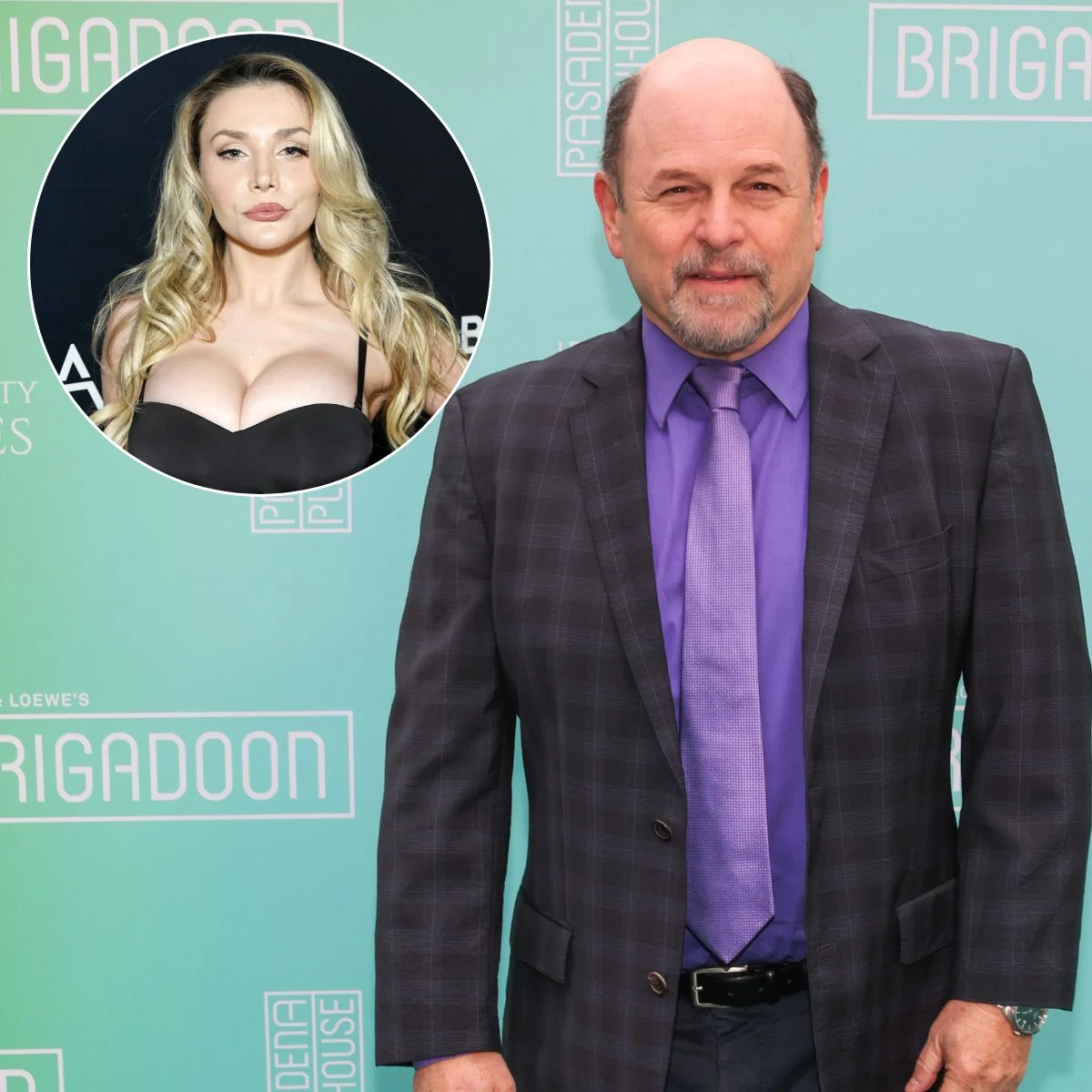
The intersection of early 2010s internet culture, the exploitation of minors in media, and the ongoing cultural reckoning regarding the treatment of young women in Hollywood has resurfaced in a major public apology. Actor Jason Alexander, widely known for his iconic role as George Costanza on the sitcom Seinfeld, has issued a formal, public apology to media personality and advocate Courtney Stodden.
The apology addresses Alexander’s participation in a 2012 comedy sketch produced by the humor website Funny or Die. In the video, which parodied daytime talk shows, Alexander engaged in highly inappropriate physical contact with Stodden, who was 17 years old and legally a minor at the time. The resurgence of the video and the subsequent apology highlight a broader, ongoing societal shift toward re-evaluating the ethical boundaries of past media, the vulnerabilities of minors in the entertainment industry, and the systemic failures that allowed such interactions to be packaged as mainstream entertainment.
1. Main Facts
The core of the controversy stems from a digital comedy short filmed and released in 2012. At the time, Courtney Stodden was a highly visible media figure, having entered the public eye in 2011 after marrying character actor Doug Hutchison. The marriage drew international scrutiny and intense criticism due to the extreme age disparity: Stodden was 16 years old, while Hutchison was 51.
The Nature of the Sketch
In the 2012 Funny or Die video, which parodied self-help and sensationalist talk programs like Dr. Phil, Jason Alexander portrayed a fictional, bombastic life coach named "Donny Clay." The sketch featured Hutchison and Stodden as guests seeking relationship advice.
During the performance, Alexander’s character interacted closely with the teenage Stodden. In a specific segment of the video, Alexander held a mobile phone camera up to Stodden’s breasts and proceeded to touch and fondle them. Delivering a scripted punchline, Alexander remarked that while there was "no cell signal" in Stodden’s head, there were "full bars" in her chest.
The Catalyst for the Apology
The sketch remained online for over a decade, but it came back into the public consciousness in July 2024 when Stodden shared a retrospective post on Instagram. Stodden, now 31, uploaded a still image from the video showing Alexander’s hand on her breast. In the accompanying caption, Stodden detailed the feelings of isolation, lack of agency, and exploitation they experienced as a minor surrounded by adult industry professionals who failed to protect them.
Following the public post, Alexander released an official statement to media outlets, acknowledging the inappropriate nature of the sketch, expressing deep regret for his actions, and offering an unequivocal apology to Stodden for the emotional distress and harm caused by the performance.
2. Chronology of Events
To understand the context of the sketch and the subsequent apology, it is necessary to examine the timeline of Stodden’s entry into the public eye, the production of the video, and the long-term aftermath of their relationship with Hutchison.
[May 2011] ------------------> [2012] -------------------------> [March 2020] ------------> [July 2024]
Stodden (16) marries           "Funny or Die" sketch             Divorce finalized;         Stodden posts reflection;
Hutchison (51) in Las Vegas    featuring Jason Alexander         Stodden labels union       Alexander issues formal
                               is filmed and released            as "grooming"              public apology
May 2011: The Marriage of Stodden and Hutchison
Courtney Stodden, then 16 years old, married 51-year-old actor Doug Hutchison in Las Vegas, Nevada. The marriage was legally permissible under Nevada law because Stodden’s mother signed a parental consent form. The union immediately became a media sensation, drawing widespread condemnation, mockery, and tabloid fascination.
2012: Production of the Funny or Die Sketch
Capitalizing on the viral notoriety of the couple, the digital production company Funny or Die produced the "Donny Clay" parody sketch. The production involved multiple adult entities, including the platform’s producers, Alexander, Hutchison, and Stodden’s legal guardians. Stodden, at age 17, participated in the filming, during which the inappropriate physical contact occurred.
March 2020: Divorce and Public Reckoning
After years of separation and turbulent media appearances, Stodden and Hutchison officially finalized their divorce. In the wake of the dissolution of the marriage, Stodden began to publicly reframe the narrative of their youth, describing the relationship not as an "unconventional romance," but as a systemic failure of adult supervision and an instance of grooming.
2021: Detailed Revelations of Abuse and Exploitation
In an interview with The Daily Beast, Stodden spoke candidly about the power dynamics of their marriage, the exploitation they faced by media outlets, and the lack of protection afforded to them as a minor. Stodden described feeling trapped in a cycle of media appearances designed to mock and sexualize them for adult entertainment.
July 20, 2024: The Instagram Reflection
Stodden published a social media post highlighting the 2012 Funny or Die video, specifically calling attention to the physical boundary violations that occurred during the shoot. Stodden emphasized that, as a minor, they lacked the legal power to consent to the contracts or the physical interactions depicted in the video.
July 2024: Jason Alexander’s Public Apology
Shortly after Stodden’s post gained traction, Jason Alexander issued a formal statement to the press, expressing deep regret for his role in the video and apologizing directly to Stodden for the harm caused.
3. Supporting Data and Historical Context
The controversy surrounding the 2012 sketch does not exist in a vacuum; rather, it reflects broader systemic issues regarding child protection laws, the legalities of child marriage in the United States, and the cultural landscape of the early 2010s.
Child Marriage Laws in the United States
At the time of Stodden and Hutchison’s marriage in 2011, Nevada—like many U.S. states—allowed minors under the age of 18 to marry with parental consent. According to data compiled by the advocacy group Unchained At Last, child marriage remains legal in the majority of U.S. states, though legislative reforms have gained momentum in recent years.
| State Reform Status (As of Recent Legislative Sessions) | Description |
|---|---|
| Fully Banned (Age 18, No Exceptions) | Over 10 states (including New York, New Jersey, Pennsylvania, and Minnesota) have passed laws completely banning marriage under the age of 18. |
| Parental/Judicial Consent Loopholes | The majority of states still allow minors aged 16 or 17 to marry if they have parental consent, judicial approval, or in cases of pregnancy. |
The legal framework that allowed a 51-year-old man to marry a 16-year-old child directly enabled the subsequent commercial exploitation of Stodden. Because Hutchison was legally Stodden’s husband, he exercised significant control over their career, finances, and public appearances.
The Entertainment Industry and Digital Media in the 2010s
The early 2010s marked a transitional period for digital comedy platforms. Outlets like Funny or Die, CollegeHumor, and early YouTube creators frequently relied on shock value, parody, and the exploitation of viral reality television stars to generate web traffic.
During this era, public figures who were deemed "famous for being famous" or who were involved in tabloid scandals were often viewed as fair game for intense public ridicule and sexualization, regardless of their age. The framing of Stodden as an active, consenting participant in their own sexualization was a common media narrative, which ignored the legal and developmental realities of adolescence.
4. Official Responses and Public Statements
The primary figures involved in the controversy have offered differing perspectives on the events of 2012 and the broader implications of Stodden’s early career.
Jason Alexander’s Statement
In a statement delivered to E! News, Jason Alexander addressed the situation directly, declining to make excuses for the behavior depicted in the decade-old video:
"Looking back at the comedy sketch in which Ms. Stodden and I participated in 2012, I completely agree that it was inappropriate and I truly regret it. But more importantly, I am deeply sorry for any harm or distress it has caused Ms. Stodden. I offer her my sincerest apologies."
Industry analysts noted that Alexander’s apology was notable for its directness. Rather than attributing the behavior to the "different cultural climate" of 2012 or the scripted nature of the comedy piece, Alexander took personal responsibility for his participation and acknowledged the validity of Stodden’s distress.
Courtney Stodden’s Statement
Stodden’s initial social media post focused heavily on the systemic abandonment they felt as a child surrounded by adults who profited from their exploitation. Stodden wrote:
"I was a minor. I didn’t have the legal power to decide whether I wanted to participate. The contracts were signed by adults. The paycheck went to Doug. The production moved forward. I was the only child in the room. I felt so alone."
Stodden’s commentary highlighted the economic realities of the situation: as a minor, the financial compensation for the sketch went directly to their adult husband, leaving Stodden with no financial independence and little leverage to refuse uncomfortable or inappropriate requests on set.
[Adult Industry Executives] ---> Contract Approval ---> [Doug Hutchison (Husband/Adult)]
                                                              |
                                                       Receives Paycheck
                                                              |
                                                              v
[Jason Alexander (Actor/Adult)] <--- On-Set Interaction ---> [Courtney Stodden (Minor)]
Doug Hutchison’s Stance
Representatives for Doug Hutchison did not respond to requests for comment regarding Stodden’s recent statements or Alexander’s apology. However, Hutchison has previously defended the marriage. In a February 2020 interview with Fox News, prior to the finalization of their divorce, Hutchison stated:
"Courtney and I got married legally in a church to consummate our union… But after the backlash, we had two choices—hide under a rock or not. Despite our unconventional union, we were in love."
Hutchison’s memoir and subsequent public statements have consistently framed the relationship as a legitimate, consensual romance, a characterization that Stodden has vigorously rejected in recent years.
5. Implications and Broader Societal Shift
The public interaction between Stodden and Alexander carries significant implications for the entertainment industry, the legal protection of minors, and the ongoing cultural reassessment of the 2000s and 2010s media landscape.
Legislative Advocacy Against Child Marriage
Since ending their relationship with Hutchison, Stodden has transitioned into an outspoken advocate against child marriage. Stodden has utilized their platform to lobby lawmakers to eliminate legal loopholes that permit individuals under the age of 18 to obtain marriage licenses, even with parental consent.
Stodden explained the motivation behind their advocacy in their July 2024 post:
"How did so many adults look at a minor and decide this was acceptable? That’s exactly why I speak out today. Children deserve laws that protect them. They shouldn’t have to become adults before realizing the law should have protected them all along."
Advocacy groups argue that parental consent laws often act as a cover for parental coercion, forced marriages, and the legal trafficking of minors. Stodden’s high-profile case serves as a prominent example of how legal marriage can be used to bypass child labor laws and protection systems in the entertainment industry.
The Accountability of Adult Collaborators
Alexander’s apology represents a growing trend of adult industry professionals accounting for their past participation in media that targeted or exploited vulnerable individuals. In recent years, public pressure has led to similar re-evaluations of how the media treated figures like Britney Spears, Janet Jackson, and Lindsay Lohan during the heights of their respective tabloid eras.
The situation underscores the responsibilities of adult actors, directors, and producers on set. Even in a professional, scripted environment—such as a shoot for a prominent comedy website—the presence of a minor requires a higher standard of care and ethical consideration. The fact that professional adults, union representatives, and production staff allowed a minor to be subjected to physical fondling under the guise of comedy is now viewed as a severe failure of industry safeguarding protocols.
Legal Protections for Minors in Digital Media
The controversy also highlights the gaps in legal protections for minors working in digital and reality television spaces. While traditional Hollywood film and television productions are strictly governed by child labor laws, Coogan accounts, and union (SAG-AFTRA) regulations, digital platforms in the early 2010s often operated in regulatory gray areas.
As digital media and influencer culture continue to expand, legal experts emphasize the need for updated legislation to protect children from financial exploitation and physical or emotional distress on digital sets, ensuring that the mistakes of the early internet era are not repeated.
 Sagoh
Sagoh
 Siti Muinah
 Nana
Nana
