

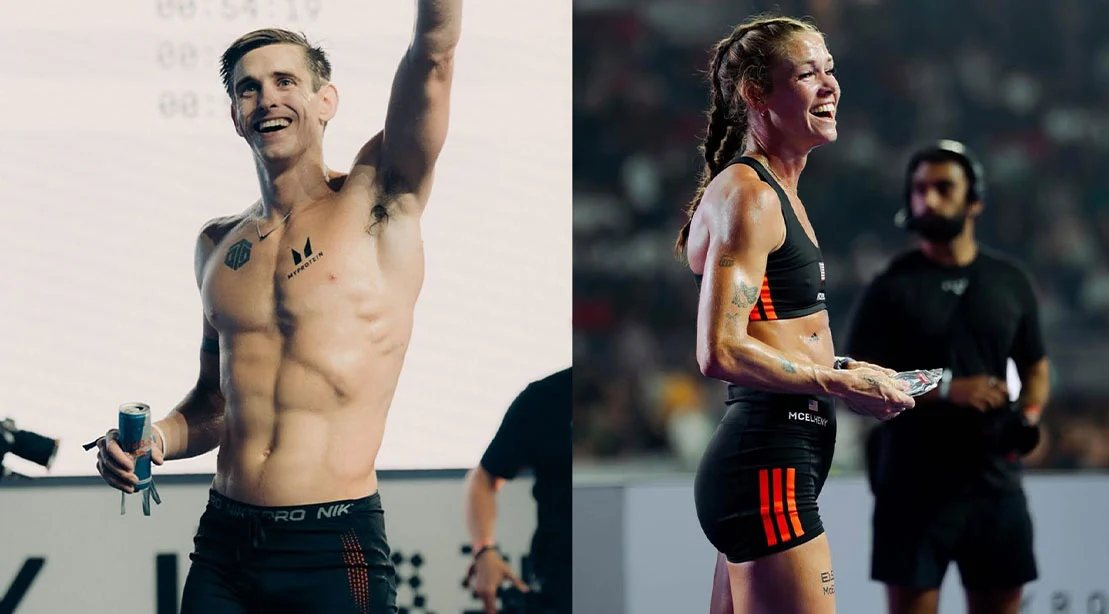
The world of competitive fitness witnessed a seismic shift on June 18, 2026, as the HYROX Elite 15 World Championships descended upon Stockholm, Sweden. In an electrifying display of endurance, strategy, and sheer willpower, two American athletes ascended to the pinnacle of the sport, claiming their maiden world titles. Dylan Scott and Alyssa McElheny outmaneuvered a field of the world’s most elite competitors to secure their names in the history books of this rapidly growing global fitness phenomenon.
The Elite 15, an invite-only spectacle reserved for the absolute best in the HYROX circuit, transformed Stockholm into the epicenter of hybrid athletics. As the sun set over the Swedish capital, the results confirmed a changing of the guard, signaling a new era of dominance for U.S. athletes in a sport that continues to push the physiological boundaries of human performance.
The Crucible: A Technical Breakdown of the Stockholm Course
To understand the magnitude of the victories achieved by Scott and McElheny, one must first appreciate the brutal architecture of the HYROX course. The Elite 15 format is designed not just to test speed, but to expose the slightest deficiency in a competitor’s functional capacity.
The course commenced with a high-intensity dash to the Ski Erg, setting a frantic pace that immediately forced athletes into an anaerobic state. From there, the competition became a grueling cycle of specialized movements: sled pushes, sled pulls, burpee broad jumps, rowing, farmers carries, sandbag lunges, and the iconic, gut-wrenching wall balls. The transition zones—often where races are won or lost—required a level of composure that only the top 15 in the world possess.
In Stockholm, the wall balls served as the ultimate arbiter of fate. For many of the favorites, this final station became a psychological trap, where fatigue reached its zenith and the margin for error effectively vanished.
Chronology of a Championship: Men’s Elite 15
The men’s race was a masterclass in tactical patience. Dylan Scott entered the competition with the hunger of a man who had tasted the podium before but never the gold. Having finished third in the 2025 championships, Scott’s preparation for 2026 was focused on one thing: closing the gap during the final stages of the race.
The Early Stages
The opening laps and the initial sled work saw the lead group jockeying for position. Scott noted later that he felt “punished” by the sled early on—a common sensation in elite HYROX racing where the heavy resistance can tax the posterior chain prematurely. However, rather than panic, Scott maintained a disciplined cadence.
The Turning Point
By the middle stages, it appeared that Germany’s Tim Wenisch, the 2025 champion, was well-positioned to defend his crown. Wenisch’s efficiency on the rowing machine and the farmers carry had given him a slim but noticeable lead. As the field entered the final segments, the atmosphere in the Stockholm arena reached a fever pitch.
The Final Push
The race reached its crescendo at the wall balls. Wenisch, feeling the pressure, maintained a high rep rate, but Scott’s strategy of consistent, unrelenting effort began to pay dividends. With every repetition, Scott narrowed the distance. In the final seconds of the heat, Scott surged, overtaking Wenisch in a dramatic sprint to the finish line. Scott clocked an official time of 53 minutes and 47 seconds, narrowly edging out Belgium’s Louis Osselaer (54:02) and Wenisch (54:04). It was a two-second margin that solidified his status as the new king of the HYROX world.
The Rise of Alyssa McElheny: Women’s Elite 15
If the men’s race was a tactical chess match, the women’s final was a statement of raw power. Alyssa McElheny approached the Stockholm course with an intensity that seemed to rattle the rest of the field from the very first kilometer.
Establishing Dominance
McElheny’s race turned on the sled pull. While many competitors struggle to find rhythm in the heavy, low-friction pull, McElheny utilized a fluid, rhythmic technique that allowed her to overtake the early frontrunners, including Australia’s Joanna Wietrzyk. Once she established the lead, she did not relinquish it.
Defending the Front
Throughout the latter half of the course, Wietrzyk and England’s Sinead Bent kept the pressure high, hoping for a lapse in form from the American. None came. McElheny navigated the sandbag lunges and the farmers carry with clinical precision. Her focus remained internal, a hallmark of a champion who understands that in a race of this caliber, the only opponent that truly matters is the clock.
Crossing the Line
McElheny crossed the finish line at 56 minutes and 59 seconds, a time that cemented her status as the clear victor. Wietrzyk followed in 57:14, with Bent rounding out the podium at 57:24. The victory was the culmination of years of dedicated training and a clear evolution in McElheny’s ability to manage high-intensity heart rates under extreme metabolic load.
Official Responses and Reflections
In the immediate aftermath of the event, both champions reflected on the journey that led them to the Stockholm podium. The sentiment shared by both was one of gratitude and respect for the rapidly maturing sport of HYROX.
Dylan Scott, speaking on his victory, provided insight into his mental approach: “I got punished by the sled early but never gave up the idea in the race that consistent effort, regardless of where it would get me by the finish, was what we would apply. It allowed me to lead two seconds of the race, and they were the two most important ones.”
Alyssa McElheny’s reaction echoed the camaraderie found within the Elite 15 community: “This sport and these people have been such a gift. I couldn’t have imagined a more perfect race and field, and crowd and atmosphere. Going to be thinking about this one for quite a while.”
These quotes underscore the professionalization of the sport. The Elite 15 are not merely athletes; they are ambassadors for a fitness movement that bridges the gap between traditional powerlifting, functional training, and middle-distance running.
Supporting Data: The Statistics of Success
The performance metrics from the 2026 Stockholm World Championships highlight the extreme level of parity at the elite level.
- Men’s Podium Gap: A mere 17 seconds separated the first and third-place finishers. In a race lasting over 50 minutes, this represents a margin of less than 0.6%. This illustrates the extreme level of physical parity among the world’s top 15.
- Women’s Efficiency: The women’s podium was similarly contested, with only 25 seconds separating the champion from the bronze medalist.
These statistics suggest that HYROX has entered a "golden age" of competition, where physical talent is increasingly augmented by data-driven training, recovery optimization, and advanced race-day fueling strategies.
Implications for the Future of HYROX
The victories of Scott and McElheny serve as a bellwether for the future of the sport. As HYROX continues to expand its footprint, the dominance of American athletes in Stockholm points toward a shift in the training landscape.
Global Talent Pipeline
With the success of these U.S. athletes, we can expect to see an influx of investment into dedicated HYROX training facilities across North America. The model established by Scott—focusing on consistent, high-output, low-variance performance—is likely to become the blueprint for aspiring professionals.
Commercial and Media Growth
The Stockholm event set a new benchmark for production value in hybrid fitness. With the Elite 15 gaining traction among sports fans, the commercial implications for sponsors and media outlets are significant. The narrative of "The Hybrid Raccoon" (Scott’s moniker) and McElheny’s rise provides a compelling story for broader audiences, potentially moving the sport further into the mainstream of professional athletics.
The Evolution of Training
The 2026 championships have essentially forced a re-evaluation of how athletes approach the "final leg" of the race. The importance of the wall ball station in determining the outcome of the men’s race will likely lead to specialized training blocks focused on maintaining structural integrity under extreme fatigue. Coaches will now prioritize not just aerobic capacity, but "movement durability"—the ability to perform complex, high-repetition exercises while the heart rate is at or near its maximum.
Conclusion
The 2026 HYROX Elite 15 World Championships in Stockholm will be remembered as the moment when the sport solidified its status as a premier global athletic competition. Through the trials of the sleds, the precision of the lunges, and the ultimate test of the wall balls, Dylan Scott and Alyssa McElheny emerged not just as winners, but as the new faces of a sport that defines the limits of human endurance.
As the echoes of the Stockholm crowd fade, the fitness community looks ahead to the next cycle. One thing is certain: the bar has been raised. For the rest of the world, the task is clear—if you want to stand on the top step of the podium, you must be prepared to match the grit, the speed, and the sheer consistency that defined this historic day in Sweden.
For those interested in exploring the complete results of the 2026 Stockholm World Championships, including the highly competitive Doubles and Adaptive categories, official documentation is available via the TrainRox portal. To keep up with the journeys of our new world champions, you can follow Dylan Scott and Alyssa McElheny on their respective social media platforms.
 Lina Hope
 rifanmuazin
 Laily UPN
