

The humanitarian situation in Lebanon has reached a critical nadir, with the latest data from UNICEF painting a harrowing portrait of a generation trapped in a cycle of violence, deprivation, and systemic collapse. In a report titled An Enduring Nightmare, the UN children’s agency reveals that the ongoing hostilities—marked by persistent airstrikes and the displacement of hundreds of thousands—have effectively dismantled the foundations of childhood for the nation’s youth.
At the heart of this crisis is a staggering statistic: one in five households in Lebanon now reports that their children go to bed hungry. This acute food insecurity is compounded by a simultaneous lack of access to safe drinking water, forcing families to prioritize basic survival over every other aspect of life. As the conflict drags on, the cumulative toll on Lebanon’s children—physical, psychological, and educational—threatens to leave an indelible mark on the country’s future.
Chronology of a Crisis: From Escalation to Stagnation
The current suffering is not a sudden phenomenon but the result of a protracted, multi-layered conflict. While the region has contended with economic instability since 2019 and intense fighting during the 2023–2024 period, the situation underwent a violent shift following the escalations that began in early 2026.
Despite an April 17, 2026, ceasefire agreement intended to end hostilities between Israel and Hezbollah, the ground reality remains grim. Six months into this supposed cessation of hostilities, the promised reprieve has failed to materialize. The landscape of southern Lebanon continues to be marred by active military operations, including ongoing airstrikes, shelling, and the systemic demolition of residential infrastructure.
For the more than one million people displaced in the initial weeks of the 2026 escalation, the promise of a "safe return" remains elusive. Approximately 330,000 individuals remain internally displaced, unable to return to their homes due to the destruction of property and the continued occupation of strategic strips of land in the south. The UN Office for the Coordination of Humanitarian Affairs (OCHA) has repeatedly warned that the conditions in these areas remain unviable, with humanitarian access severely restricted by ongoing military activity.
Supporting Data: A Statistical Portrait of Despair
The metrics provided by UNICEF and OCHA illustrate a societal fabric that is fraying at the seams. The impact of the violence is most visible in the casualty numbers: since March 2, 2026, at least 261 children have been killed, and 1,056 have been injured. This equates to a sobering average of seven children either killed or maimed every single day for the past six months. Perhaps most devastating is the long-term prognosis for these survivors; an estimated 12 percent of injured children are now living with permanent disabilities, a reality that will necessitate lifelong support in a country whose healthcare system is already on the verge of collapse.
The Educational Collapse
The conflict has hit Lebanon’s education sector with catastrophic force. With 436 schools damaged or destroyed, the physical infrastructure of learning has been systematically eroded. Roughly 100,000 children are currently at risk of being permanently excluded from the classroom. The loss of human capital is equally profound, with 86 teachers killed or injured, leaving a vacuum of leadership and instruction.
Financial pressures have forced a desperate re-prioritization within households. UNICEF reports that 46 percent of families have slashed their education budgets, and 17 percent have been forced to pull their children out of school entirely. For those still enrolled, the environment is far from conducive to learning: 29 percent of students are struggling to absorb information due to the persistent "emotional distress" and difficulty concentrating caused by the surrounding violence.
The Rise of Child Labor
The economic desperation is further underscored by the rise in child labor. According to the report, 14 percent of households now report that at least one child is working to support the family. This figure has more than doubled since January 2026, indicating that as the conflict persists, families are increasingly forced to sacrifice their children’s futures to secure their immediate survival.
Official Responses: The Call for Urgent Intervention
Marcoluigi Corsi, the UNICEF Lebanon Representative, has been unequivocal in his assessment of the situation. "Children and young people in Lebanon are being asked to bear a burden no child should have to carry," Corsi stated during the release of the report. He highlighted that the "profound psychological distress" impacting an estimated 770,000 children is not merely a transient reaction to trauma, but a structural change in their developmental trajectory.
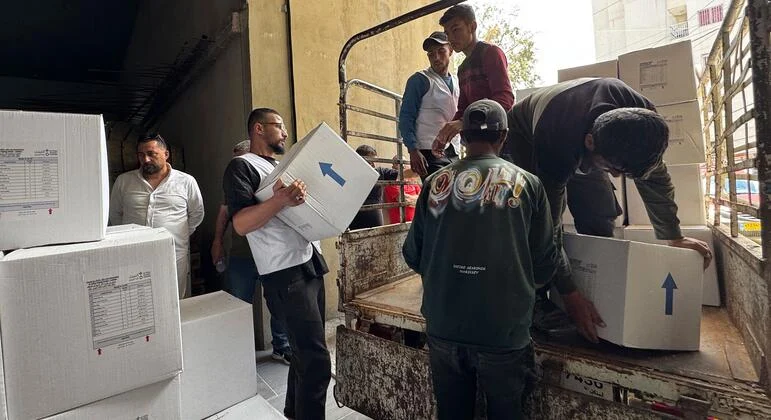
UNICEF has moved to increase its humanitarian footprint, delivering essential supplies to shelters, providing medical care for the wounded, and attempting to sustain national service systems. However, the agency emphasizes that these interventions are stopgaps rather than solutions.
"Without urgent and sustained action, these pressures are shaping their lives for years to come," Corsi warned. The agency’s position is that the international community must move beyond emergency relief to address the root causes of the instability, emphasizing that Lebanon’s recovery is entirely dependent on protecting the rights of its children to health, education, and security.
The Psychological Toll: A Generation Under Siege
Beyond the lack of food and water lies a silent epidemic of mental health issues. More than half of the households surveyed by UNICEF reported a visible deterioration in their children’s emotional well-being. Terms like "anxious," "nervous," and "fearful" dominate the descriptions provided by parents.
The psychological impact is perhaps best captured by the anecdotal evidence collected by aid workers. One mother, who fled the southern suburbs of Beirut, recounted how the sound of artillery and aircraft became so deeply traumatizing that her seven-month-old infant now recoils in terror at the sound of a colorful, musical toy. Such stories are representative of a generation that has learned to associate the world around them with threat rather than wonder.
The prognosis for older youth is similarly bleak. With only 22 percent of individuals aged 18 to 25 currently engaged in formal education or training, and an unemployment rate of 67 percent among the same demographic, the transition to adulthood is characterized by a lack of opportunity. This "lost generation" faces a future where their aspirations are curtailed by both the immediate physical danger of the conflict and the long-term economic stagnation of their country.
Implications: A Future in Jeopardy
The implications of this crisis extend far beyond the immediate suffering of individual families. When 83 percent of displaced families report that they have no idea when they will be able to return home, it signifies a massive, long-term displacement crisis that will complicate any future efforts at national reconstruction.
The cumulative damage—the destruction of schools, the loss of teachers, the prevalence of untreated trauma, and the abandonment of education—suggests that Lebanon is facing a developmental regression that could last for decades. If the current trajectory continues, the "scars" that Mr. Corsi alluded to will manifest as a diminished workforce, a crippled social structure, and a weakened national identity.
As the international community monitors the situation, the message from UNICEF is clear: the status quo is unsustainable. The conflict has not only devastated the physical landscape of Lebanon; it has fractured the inner lives of its children. Whether or not this generation is allowed to reclaim their childhoods depends on a shift from military-centric strategies to a focus on the urgent restoration of human rights and the basic services necessary for survival. Without such a shift, the "Enduring Nightmare" will remain the defining reality for the children of Lebanon, casting a long, dark shadow over the nation’s future.
 Lina Hope
 Asro
Asro
 Layla Zulfa
