

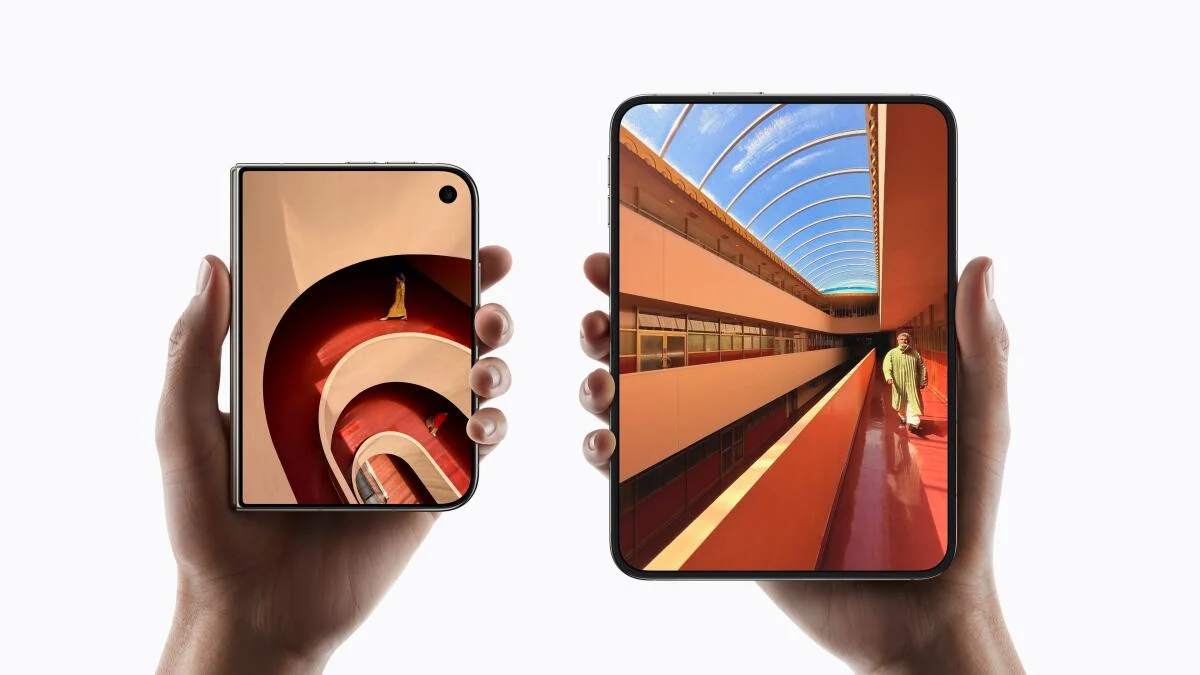
CUPERTINO, Calif. — The years of speculation, patent tracking, and breathless supply-chain rumors have finally reached an end. At its highly anticipated "Surprise and Shine" keynote event at Apple Park, the tech giant officially pulled back the curtain on its long-awaited entry into the folding smartphone market: the iPhone Duo.
Sporting a striking 7.6-inch inner display that folds seamlessly in half, the device represents Apple’s definitive answer to established foldable flagships from competitors like Samsung and Google. Yet, even as Apple executives heralded the hardware as a monumental leap forward for the company, the device’s debut triggered an immediate, highly publicized wave of internet culture crossfire, touching everyone from rival tech conglomerates to lexicon publishers and language-learning apps.
Main Facts: What is the iPhone Duo?
The iPhone Duo is Apple’s first-ever commercial foldable smartphone, designed to bridge the gap between pocket-sized portability and tablet-grade productivity.
- The Display: Unfolding reveals a vibrant, crease-minimized 7.6-inch inner OLED display, utilizing advanced ultra-thin glass and a newly engineered hinge mechanism designed to withstand years of rigorous daily use.
- The Positioning: Positioned as an ultra-premium, luxury device under the leadership of newly appointed Apple CEO John Ternus, the iPhone Duo commands a hefty price tag, squarely targeting power users, enterprise professionals, and early adopters.
- The Ecosystem Integration: Running a specially adapted version of iOS optimized for dual-screen multitasking, the Duo allows users to seamlessly drag and drop content between the cover display and the expansive inner canvas.
- The Market Context: Apple enters a maturing foldable market. Rivals such as Samsung—whose Galaxy Z Fold 8 launched just two months prior—and Google, with its Pixel Fold iterations, have spent years iterating on hardware durability, software multitasking, and form-factor optimization. Apple’s arrival changes the competitive landscape overnight, instantly legitimizing the category for millions of mainstream consumers who previously viewed foldables as a niche novelty.
Chronology of the Reveal and the Backlash
The rollout of the iPhone Duo unfolded in distinct phases, transitioning rapidly from corporate pageantry to digital pandemonium.
1. The Keynote Unveiling (Wednesday Morning)
During the "Surprise and Shine" event in Cupertino, Apple CEO John Ternus took the Steve Jobs Theater stage. After detailing incremental updates across the broader hardware ecosystem, Ternus teased a "one more thing" moment that had the auditorium buzzing. When the iPhone Duo finally flashed on the massive overhead screens, showcasing its folding capabilities, it instantly dominated live-blog feeds, tech news headlines, and social media trending topics.
2. The Immediate Competitor Retaliation
Barely had the applause died down in Cupertino before rival marketing teams mobilized. Samsung, the reigning heavyweight of the foldable space, took to X (formerly Twitter) within minutes. Capitalizing on months of market presence with its Galaxy Z Fold 8, Samsung’s official US account posted an unsubtle, thinly veiled jab at Apple’s late arrival to a category Samsung helped pioneer.
3. The Brand Hijacking and SEO Meltdown
Beyond traditional tech rivals, unexpected digital entities found themselves caught in the crossfire of Apple’s naming convention. The social media team behind the popular language-learning application Duolingo experienced a public, highly comedic existential crisis over search engine optimization (SEO) and brand identity.
"@johnternus It’s called the iPhone WHAT???" the official Duolingo account posted, spiraling into a series of frantic updates as they realized their brand name was now inextricably linked to a multi-thousand-dollar Apple product.
4. The Dictionary Weighs In
Not to be left out of the viral ecosystem, American dictionary publisher Merriam-Webster delivered one of the day’s most succinct daggers. Leveraging its signature deadpan tone, the official account tweeted: "Not to brag, but our product has been foldable since 1828," capturing the quintessential "just gonna leave this here" energy that quickly racked up hundreds of thousands of engagements.
Supporting Data: The Foldable Landscape in 2026
To understand why the iPhone Duo’s launch is such a seismic event—and why competitors reacted so sharply—one must examine the trajectory of the foldable market over the past half-decade.
- Market Share Shifts: Prior to the iPhone Duo, foldables accounted for roughly 3.5% of the total global smartphone market. Industry analysts project that Apple’s entry will skyrocket consumer awareness, potentially pushing foldable adoption past 10% of the premium smartphone segment by the end of 2027.
- Durability Milestones: Early iterations of folding phones faced widespread criticism regarding fragile inner screens, dust ingress, and prominent crease lines. Samsung’s Galaxy Z Fold 8 and Google’s Pixel 11 Pro Fold largely solved these structural issues through advanced drop-testing and water-resistance ratings. Apple’s delay was widely attributed to its internal mandate to eliminate the screen crease entirely—a technical hurdle the company claims to have mitigated through its proprietary hinge engineering.
- Pricing Pressures: Retailing at the highest tier of Apple’s product lineup, the iPhone Duo confirms that foldables remain luxury commodities. However, tech economists note that Apple’s supply chain muscle may eventually drive component costs down industry-wide, benefiting rival manufacturers in the long run.
Official Responses and Corporate Posturing
The war of words on social media reflects high-stakes corporate positioning. Apple has historically entered new product categories years after competitors, often facing mockery for being "late to the party"—only to reshape consumer expectations entirely. Think of the Apple Watch, the iPad, and even the original iPhone.
- Samsung’s Strategy: By poking fun at Apple’s delayed entry, Samsung aims to cement its status as the veteran market leader. Samsung’s marketing framework heavily emphasizes that while Apple is just now figuring out the folding form factor, Samsung is already refining its eighth-generation hardware.
- Apple’s Stance: Apple executives remain unbothered by the online chatter. Speaking to press members following the keynote, Apple’s product marketing team emphasized that being first to market is secondary to getting the user experience right. "We didn’t want to build a foldable just to say we could," one senior executive noted off-record. "We wanted to build a foldable that feels unmistakably like an iPhone."
- The Cultural Reaction: The involvement of non-tech brands like Duolingo and Merriam-Webster highlights a modern marketing phenomenon: the real-time hijacking of tech news cycles for viral brand visibility. For Duolingo, the naming coincidence was a goldmine for organic engagement, proving that internet humor often moves faster than corporate PR strategies.
Implications: What the iPhone Duo Means for the Future of Mobile Tech
The launch of the iPhone Duo is far more than just another expensive gadget release; it marks a structural turning point for the consumer electronics industry.
1. Mainstream Validation for Foldables
For years, foldables have occupied a purgatory of being viewed as fragile, expensive toys for tech enthusiasts. With Apple’s stamp of approval, the form factor transitions from a risky experiment to an inevitable industry standard. Consumers who hesitated to buy a Samsung or Google foldable due to ecosystem lock-in or brand loyalty now have a native Apple option.
2. Developer Ecosystem Adaptation
The introduction of a 7.6-inch folding iOS device forces third-party app developers to completely rethink their UI/UX paradigms. While iPad apps provided a baseline, dynamic screen-ratio shifting between the cover display and the unfolded inner canvas requires specialized optimization. Expect a massive push at Apple’s upcoming WWDC events to support foldable-native app architecture.
3. Intensified Hardware Rivalry
The gloves are off between Apple and Android manufacturers. With Samsung, Google, and now Apple all competing directly in the foldable space, innovation cycles will accelerate drastically. Over the next two years, consumers can expect fierce competition centered around thinner profiles, battery density improvements, under-display cameras, and aggressive pricing strategies.
As the dust settles at Apple Park and the internet moves on from its collective meme session over Duolingo and Merriam-Webster, one reality remains clear: the foldable wars have officially entered their second, and most consequential, chapter.
 Suro Senen
 Nana Wu
 Neng Nana
