

By Anna Lee
September 21, 2026
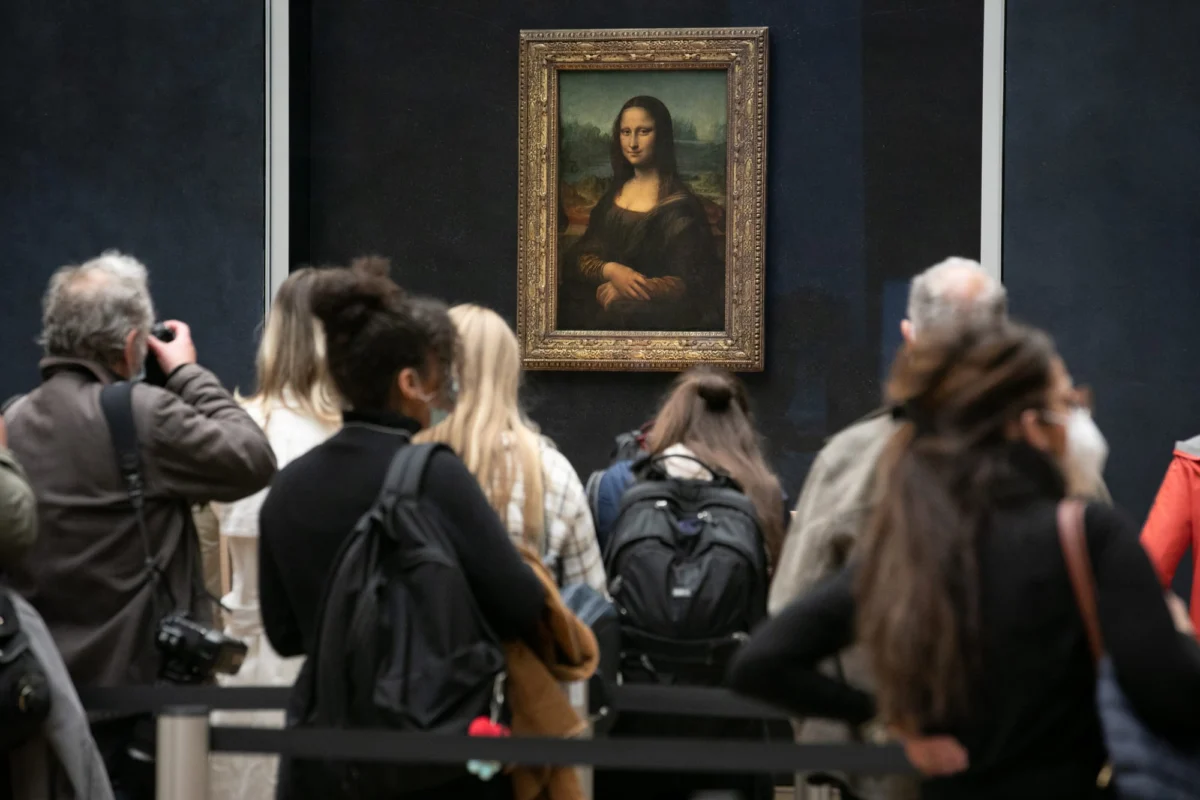
PARIS — Security protocols at the world’s most visited art institution faced renewed scrutiny on Saturday, September 19, 2026, when French authorities apprehended two German men inside the Louvre Museum. The suspects managed to bypass tight security measures to affix two unauthorized canvases directly onto the walls of the Salle des États—the heavily guarded exhibition room housing Leonardo da Vinci’s early 16th-century masterpiece, the Mona Lisa.
While da Vinci’s celebrated portrait escaped unharmed, the bizarre midday stunt has reignited intense international debate regarding museum security, rampant overtourism, and the architectural future of Paris’s crown jewel. The incident occurs against a turbulent backdrop for the Louvre, which has grappled with high-profile security breaches, administrative upheaval, and persistent logistical strain over the past year.
Main Facts: The Louvre Exhibition Hall Incursion
According to reports provided to Agence France-Presse by French law enforcement, the two unidentified German nationals entered the Salle des États during regular museum hours on Saturday afternoon. Blending seamlessly with the dense crowds that perpetually envelop the Mona Lisa, the men produced two small canvases, measuring approximately 30 by 40 centimeters (roughly 11.8 by 15.7 inches).
Using ordinary sticky tape, the pair mounted the paintings onto the exhibition wall mere feet away from da Vinci’s protected barrier. The content of the unauthorized artworks added a surreal layer to the prank: one piece depicted a portrait of one of the suspects dressed in medieval-style armor, while the second canvas featured a photograph-style image of both suspects alongside an unidentified woman.
Museum security personnel quickly identified the breach and detained the men before they could exit the galleries. Paris police subsequently took the duo into custody. Authorities confirmed that the men casually dismissed their actions during initial questioning, telling officers that the stunt was executed simply "for fun."
Once the Louvre management formally files a criminal complaint, the suspects are expected to be summoned to a Parisian court to face charges of minor property damage related to the adhesive residue and wall alterations. Fortunately, conservators confirmed that da Vinci’s iconic painting—protected behind bulletproof glass—sustained zero physical damage.
Chronology of Vulnerability: A History of High-Stakes Incidents
While Saturday’s prank ultimately resulted in mere administrative charges and mild embarrassment for museum curators, the timing has deeply unnerved cultural heritage experts. The Louvre has a long, troubled history of security vulnerabilities, stretching from legendary historical thefts to modern-day lapses.
- August 1911: The Mona Lisa is stolen from the Louvre by museum employee Vincenzo Peruggia, who hid the panel inside his coat. The masterpiece remains missing for two years, sparking a global media sensation dubbed "the art heist of the century" before its recovery in Florence.
- October 2025: In a dramatic daylight robbery, thieves breach Louvre security to make off with an estimated $102 million worth of historic jewels, triggering a massive public outcry and intense government scrutiny.
- January 2025: Following a leaked internal memo from then-Director Laurence des Cars detailing crumbling infrastructure and poor operational conditions, French President Emmanuel Macron announces a sweeping redevelopment competition titled Louvre Nouvelle Renaissance.
- Late 2025 / Early 2026: Amid mounting pressure, strikes by exhausted museum staff, and fallout from the October jewel heist, Laurence des Cars resigns from her post as director. Concurrently, a wave of museum thefts ripples across Europe, including high-profile incidents at Sicily’s Museo Interdisciplinare Regionale and Vienna’s Museum of Applied Arts.
- September 19, 2026: Two German tourists successfully tape unauthorized portraits to the walls of the Salle des États, underscoring ongoing vulnerabilities in gallery crowd management.
Supporting Data: The Logistics of Overcrowding
The persistent security challenges at the Louvre are inextricably linked to a staggering volume of foot traffic. Prior to the recent security shake-ups, the museum routinely welcomed upwards of nine to ten million visitors annually, with the vast majority converging immediately upon the Salle des États.
Statistical breakdowns of the Louvre’s visitor habits illustrate the core of the problem:
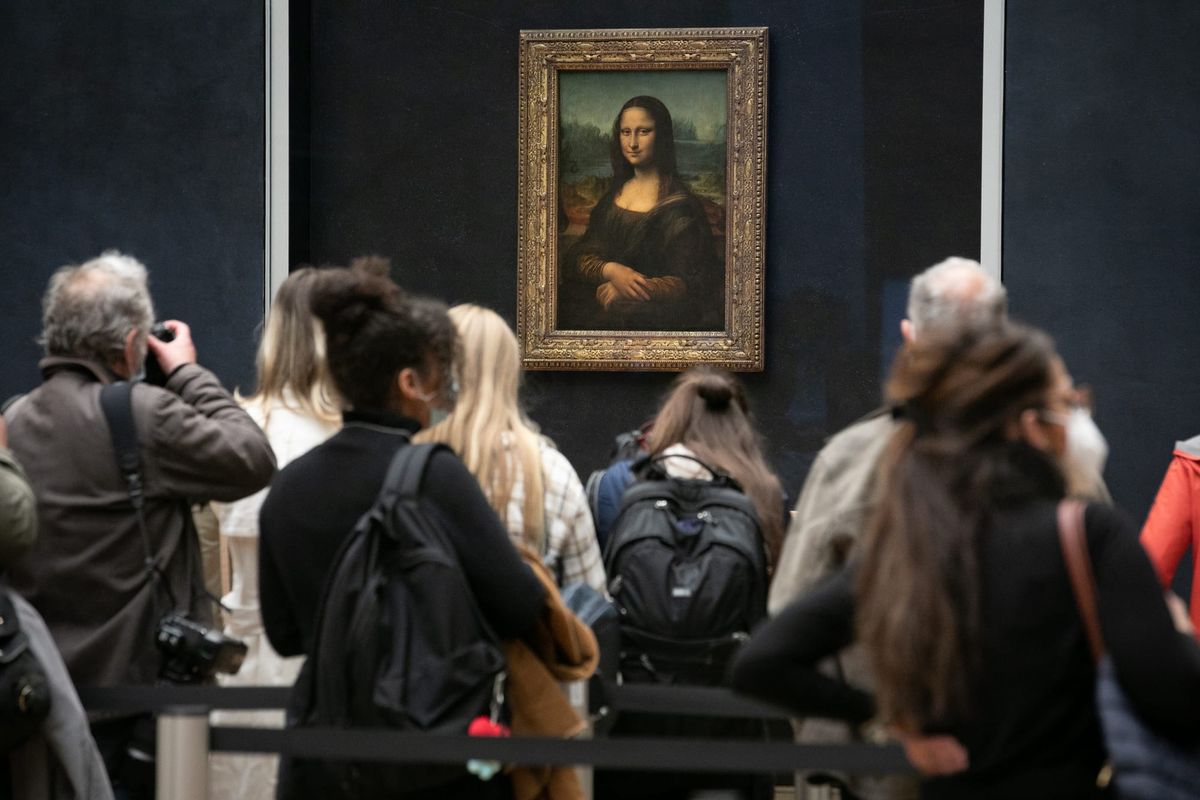
- The "Mona Lisa" Effect: Industry estimates suggest that roughly 80% of all museum visitors enter the Louvre explicitly to catch a glimpse of the Mona Lisa, leaving surrounding galleries underappreciated.
- Collateral Masterpieces: The Salle des États itself holds monumental works of Venetian Renaissance art, such as Paolo Veronese’s massive The Wedding Feast at Cana (1562–63). Yet, these works are routinely overshadowed and physically obscured by the relentless human sea trying to photograph da Vinci’s 77-by-53-centimeter panel.
- Spatial Disproportion: While the Louvre spans over 400,000 square meters of floor space, crowd congestion routinely forces administrative bottlenecks in specific wings, stretching security personnel thin and making targeted monitoring exceedingly difficult.
- European Museum Crime Wave: The past twelve months have seen a 30% rise in reported security incidents across major European cultural institutions, highlighting a broader vulnerability in post-pandemic museum operations.
Official Responses and Administrative Fallout
The audacity of the September 19 stunt has immediately triggered sharp reactions from French cultural officials, law enforcement, and international art preservation bodies.
In a brief statement, Louvre representatives emphasized that the institution maintains zero tolerance for unauthorized installations or vandalism of any kind, praising the rapid response of on-site security guards who intercepted the men before they could cause structural harm to the gallery walls. However, critics note that the ease with which two tourists affixed objects to a high-security wall exposes deeper operational flaws.
The incident revives tensions from the explosive testimony delivered by former Director Laurence des Cars before the French Senate. Des Cars had publicly lambasted the institutional neglect, structural decay, and overwhelming staffing shortages plaguing the museum. Her leaked memo to President Macron—which warned that the Louvre was operating on borrowed time—ultimately catalyzed her resignation amidst the fallout from the October 2025 jewel heist.
Cultural ministry officials speaking on condition of anonymity admitted that Saturday’s prank demonstrates that gallery attendants are simply overwhelmed by the sheer density of visitors, making individualized observation of every wall nearly impossible.
Implications: The Future of the Mona Lisa and European Museums
Beyond the immediate legal consequences for the two German pranksters, the incident serves as a glaring symptom of a much larger institutional crisis. It reinforces the urgent necessity of structural reform that cultural leaders have demanded for years.
Relocation and the "Louvre Nouvelle Renaissance"
In response to chronic congestion and mounting safety hazards, the French government’s Louvre Nouvelle Renaissance initiative—unveiled following President Macron’s directive—includes radical plans to permanently alter how visitors interact with the museum’s most famous resident.
Architectural proposals currently under consideration outline the creation of a dedicated subterranean gallery specifically for the Mona Lisa. Moving the painting into its own specialized basement chamber aims to achieve multiple goals:
- Pacing Visitor Flow: By creating a dedicated queue and a separate architectural ecosystem, the museum can regulate the number of people entering the viewing space at any given moment.
- Rebalancing the Galleries: Removing the Mona Lisa from the Salle des États will force a redistribution of foot traffic, allowing visitors to properly rediscover and appreciate masterpieces by Veronese, Titian, and Tintoretto that currently suffer from "collateral invisibility."
- Enhanced Security Infrastructure: A custom-built modern gallery would allow for state-of-the-art biometric screening, environmental controls, and physical barriers far superior to the improvised crowd-control ropes currently deployed in the historic Salle des États.
A Turning Point for European Cultural Heritage
The broader implications extend far beyond the banks of the Seine. Across the continent, institutions are reckoning with a dangerous convergence of overtourism, stretched operational budgets, and sophisticated security threats. From Vienna to Sicily, recent thefts have shattered the illusion that historic European museums are immune to modern criminality or public stunts.
For the Louvre, the message delivered by two men taping amateur portraits to a wall "for fun" is painfully clear: the current model is unsustainable. As Paris prepares to overhaul its prized institution, the Mona Lisa remains a prisoner of her own fame—a lightning rod for spectacle, security breaches, and the complex realities of 21st-century mass tourism.
 Basiran
 Muslim
 Evan Lee Salim
