

VENICE — The 61st Venice Biennale has long functioned as the geopolitical and artistic barometer of the contemporary art world, drawing hundreds of thousands of visitors to the lagoon city to evaluate the state of global culture. Running through November 22, this year’s edition has already sparked intense debates over the enduring relevance of the centuries-old national pavilion model.
In the first installment of Hyperallergic’s critical retrospective, Editor-at-Large Hrag Vartanian and critic Aruna D’Souza celebrated the exhibition highlights, making a provocative case for why national pavilions still matter. Now, in this second and final installment, the gloves are off. Vartanian and D’Souza turn their critical gaze toward the presentations that fell flat, examining the misfires, structural fatigue, and polarizing spectacles that left audiences—and the critics themselves—deeply divided.
Main Facts: A Clash of Perspectives on the Global Stage
The national pavilions at the Venice Biennale are more than just architectural containers for contemporary art; they are state-sponsored diplomatic gestures. Governments invest millions to project cultural authority, engage with urgent sociopolitical themes, and curry favor with the global elite. However, the 61st iteration has exposed a widening gulf between state-sanctioned messaging and critical reception.
While some pavilions successfully navigated complex political landscapes, others were lambasted for offering superficial commentary, catering exclusively to the commercial art market, or retreating into safe aesthetic exercises while ignoring real-world crises.
The core takeaways from Vartanian and D’Souza’s assessment highlight a fundamental crisis of purpose within the pavilion system:
- The Comfort Zone of Safe Politics: Major Western pavilions, including Germany and the United States, faced sharp rebukes for engaging in navel-gazing or avoiding pressing contemporary injustices.
- Economic Radicalism vs. Aesthetic Disappointment: Saudi Arabia’s pavilion sparked an internal debate between the critics regarding whether labor practices and economic justice can redeem a lackluster physical presentation.
- The "Opening Week" Bias: Installations dependent on live activation—such as Qatar’s open-air lounge—struggled to maintain relevance for the remaining months of the six-month exhibition cycle, while logistical failures and avant-garde spectacles like Austria’s alienated everyday visitors.
Chronology: The Arc of the 61st Biennale Dissected
To understand the friction at this year’s Biennale, it is essential to trace how these national presentations are experienced over the course of the massive six-month exhibition timeline.

- The Preparatory Phase (Early Spring): Governments and commissioning bodies finalized their installations, promising deep dives into heritage, climate futures, and geopolitical critique.
- The VIP Preview and Opening Week (Late April / Early May): High-profile crowds flooded the Giardini and the Arsenale. During this initial window, interactive performances, celebrity artist appearances, and catered events kept pavilions like Qatar dynamically "activated."
- The Post-Opening Reality (Summer Months): As the initial wave of collectors, curators, and international press departed, the true durability of the pavilions was tested. Static installations felt abandoned, and queues for high-concept performances stretched into hours-long ordeals, frustrating everyday art tourists.
- The Critical Reckoning (Autumn): As the Biennale moves toward its November 22 close, critics have begun publishing comprehensive evaluations, stripping away the glamorous varnish of opening week to expose systemic curation failures.
Supporting Data: Examining the Divisive Pavilions
Germany: Trite Commentary and the Elephant in the Room
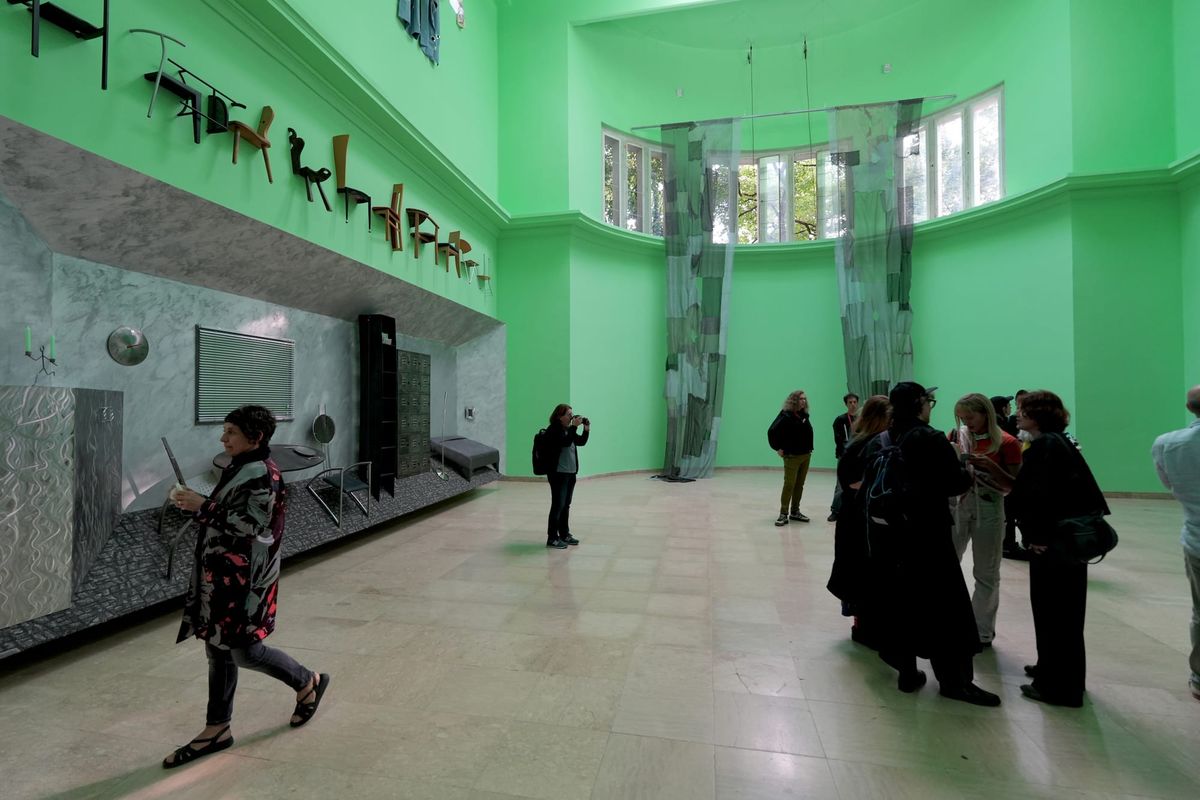
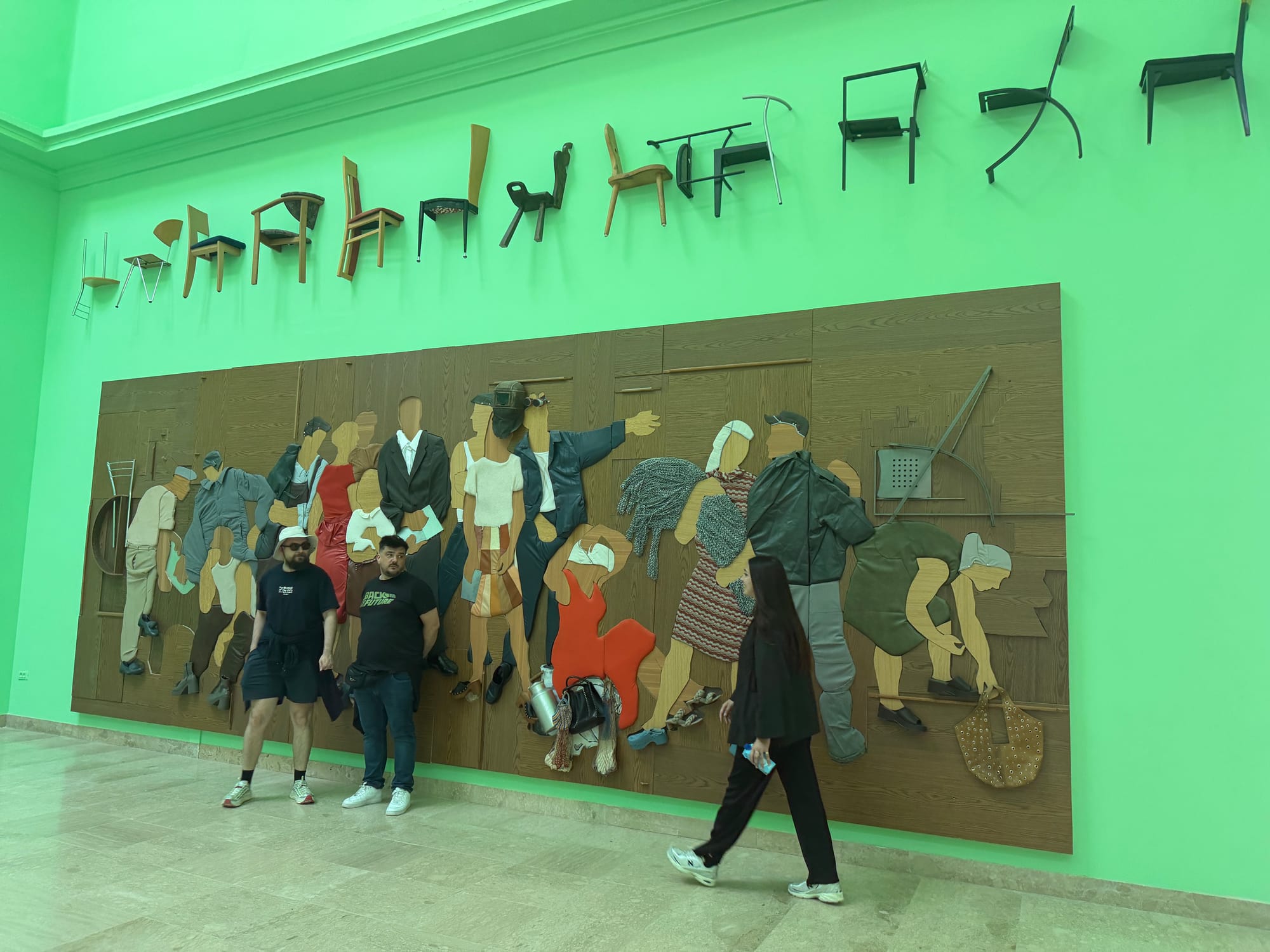
The German pavilion—featuring works by Sung Tieu and Henrike Naumann under the conceptual rubric Ruin—faced some of the harshest condemnations from the critical desk.
Vartanian didn’t mince words, writing that the exhibition amounted to "trite political commentary for people who think surface is content and navel-gazing on the parts of German history that are safe to explore while ignoring the elephant in the room that has turned the country into a bastion of intolerance and injustice."
Comparing it unfavorably to the isolationist tendencies of the United States pavilion, Vartanian argued that the show retreats into "safe spaces that will give the Epstein class hard-ons," while catering uncritically to the commercial art market elite and its courtiers.

Saudi Arabia: A House Divided Over May Your Tears Never Dry
Dana Awartani’s presentation, May your tears never dry, you who weep over stones, for the Saudi Arabia pavilion proved to be one of the most intellectually contested projects of the Biennale.
- Hrag Vartanian’s Critique: "I wanted to like this, but couldn’t because it fell flat… Awartani’s forms can often be more energizing and provocative than this, but here they felt like a bad designer showroom rather than what they were reputedly about — the mosaic floors across West Asia and their archeological and multicultural heritage and preservation."
- Aruna D’Souza’s Defense: Offering a direct counter-perspective, D’Souza defended the installation: "I’m agreeing to disagree on this one. In a biennale that seemed hectic and overinstalled, this pavilion offered a moment of contemplation." D’Souza argued that the work resonated less as a museum-style preservation project and more as an indirect manifestation of regional violence. Crucially, she highlighted a vital economic data point: approximately 90% of the pavilion’s production budget went directly to the artisans who handcrafted the tiles, a financial distribution model she called "quietly radical."
Qatar and Austria: Spectacle, Scheduling, and Logistical Nightmares
The pairing of Qatar and Austria underscored the structural flaws in how contemporary biennales manage visitor flow and long-term engagement.
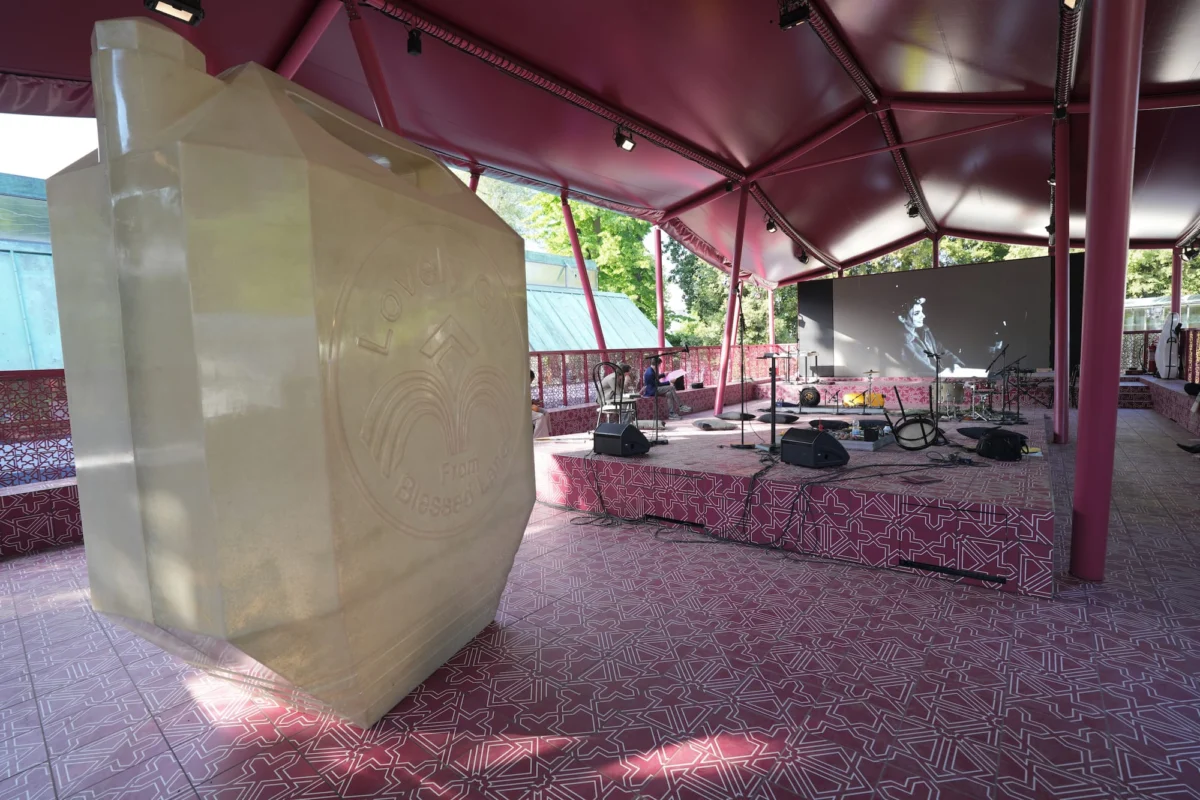
- Qatar’s Open-Air Lull: D’Souza pointed out a major systemic flaw in the Biennale’s operational philosophy—its disproportionate pandering to opening-week VIPs. Qatar’s open-air pavilion, designed as a striking red outdoor lounge, thrived during preview days when artist Rirkrit Tiravanija cooked on-site and performances abounded. However, for the subsequent months of the exhibition, the space sat largely inert and under-activated. Vartanian admitted to repeatedly missing the pavilion entirely due to scheduling conflicts.
- Austria’s Logistical Quagmire: The Austrian pavilion became infamous for multi-hour queues—one visitor reported waiting three hours just to gain entry on the Saturday following press previews. While Vartanian acknowledged an appreciation for Austria’s overarching conceptual framework, both critics struggled with its execution. D’Souza bluntly dismissed the piece, stating, "I am not standing in line to watch — whatever that was. Too many nekkid ladies doing random things in recycled pee water for me." Vartanian echoed this fatigue, finding the sensory spectacle exhausting amidst an otherwise quiet and introspective Biennale.
Official Responses and Curatorial Defense
Commissioners and participating artists have largely defended their respective choices against the barrage of critical reviews. Proponents of the German pavilion have argued that Sung Tieu and Henrike Naumann’s exploration of infrastructural decay and surveillance architectures speaks directly to contemporary anxieties regarding state control and psychological fragmentation.
Meanwhile, representatives for Saudi Arabia’s arts commissions have emphasized the project’s dedication to intangible cultural heritage, framing Awartani’s intricate tilework as an act of resistance against the erasure of historical craftsmanship in West Asia. Regarding the operational complaints surrounding Qatar and Austria, biennale organizers continue to grapple with the eternal challenge of balancing ephemeral, performance-based art with the demands of a six-month international tourist influx.
Implications: What the Misfires Mean for the Future of the Biennale
The sharp divisions exposed by Vartanian and D’Souza point to deep-seated structural issues within the Venice Biennale model:
- The Crisis of State Branding: As geopolitical tensions mount globally, national pavilions are increasingly viewed with skepticism. When wealthy nations produce navel-gazing art or aestheticize violence without genuine institutional critique, they risk exposing the hollow nature of state-sponsored cultural diplomacy.
- Economic Justice vs. Formal Innovation: The debate over the Saudi pavilion forces the art world to confront a thorny ethical question: Can an aesthetically underwhelming or commercially slick presentation be redeemed if its backend economics radically empower local craftspeople and laborers?
- The Lifespan of Ephemeral Art: The disparity between a pavilion’s vibrant opening week and its long, quiet summer decline forces curators to rethink how spaces are programmed. Art installations that rely entirely on high-profile performances or initial culinary spectacles risk alienating the vast majority of regular visitors who arrive long after the VIP parties have ended.
As the 61st Venice Biennale winds down toward its late-November closure, these critical flashpoints will undoubtedly shape the strategic planning for upcoming international art exhibitions, forcing commissioners to question whether the traditional national pavilion is equipped to meet the demands of a turbulent modern world.
 Muslim
 Evan Lee Salim
 Jia Lissa
