

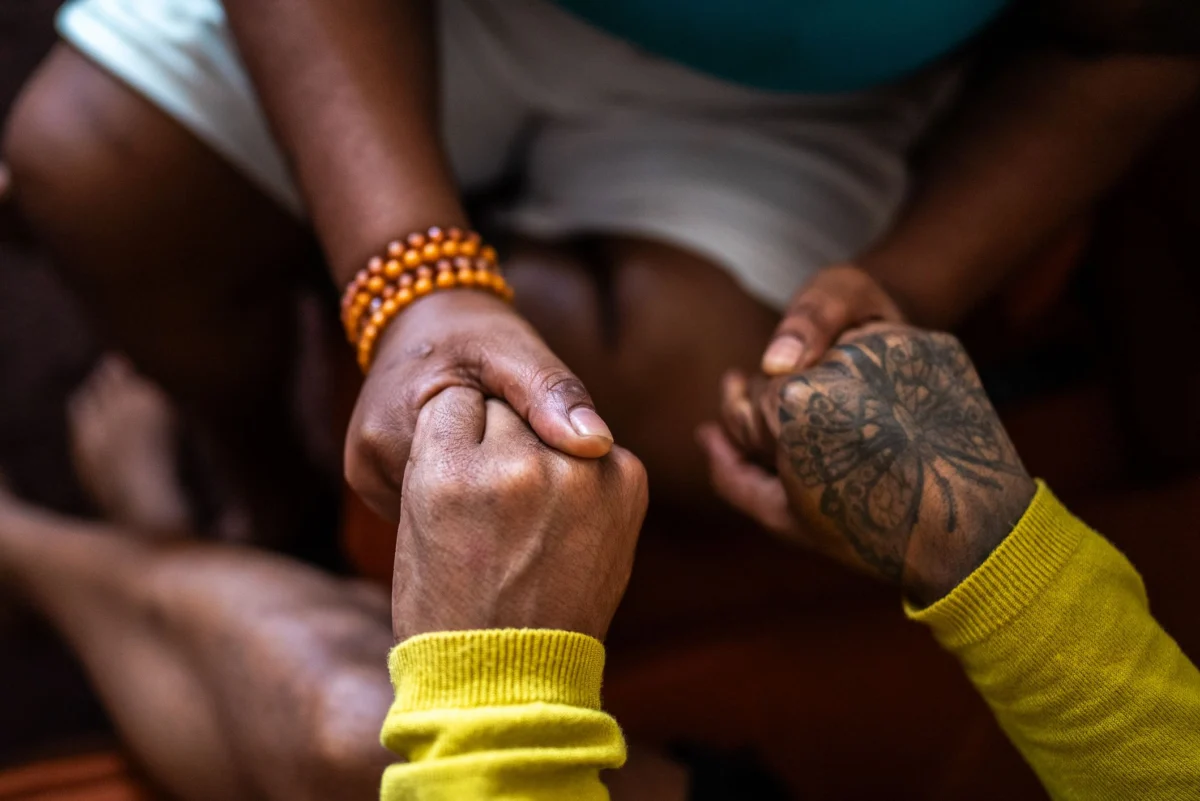
For decades, the statistics surrounding Black women’s breast health have painted a bleak and persistent narrative. The data is clear, cold, and often devastating: Black women are diagnosed at a younger median age (60) compared to their white counterparts (62). They are 38% more likely to die from the disease and consistently face the lowest survival rates across every clinical stage. Perhaps most alarmingly, roughly one in five Black women diagnosed with breast cancer faces triple-negative breast cancer (TNBC)—an aggressive, hard-to-treat subtype that disproportionately affects them more than any other racial or ethnic group.
However, numbers fail to capture the human reality of these diagnoses. They do not document the 3 a.m. phone calls, the quiet courage of head-shaving parties, the raw emotional breakthroughs in therapy, or the profound moment a mother looks into her child’s eyes and finds the singular motivation to fight. Black women have always been more than a statistic; they are the architects of their own survival, transforming personal devastation into community, purpose, and a blueprint for those who will follow in their footsteps.

The Chronology of Resilience: 13 Stories of Defiance
The following accounts detail the lived experiences of 13 Black women who refused to be defined by a medical record. Their journeys—ranging from initial discovery to long-term advocacy—highlight a common thread: the necessity of self-advocacy and the power of community.
Navigating the Early Stages: Discovery and Pushback
For many, the battle began with an internal "knowing." Monique Bass, 53, discovered a lump during a self-exam at 47. Despite three benign biopsies, her intuition told her otherwise. She pushed for a lumpectomy, which revealed stage 1 invasive ductal carcinoma. Similarly, Marylande Regis, 38, faced medical skepticism after childbirth, with providers initially dismissing her symptoms as a clogged milk duct. Her insistence on further testing led to a diagnosis of stage 2B BRCA1-positive breast cancer.

These stories underscore a recurring theme: the necessity of challenging the medical establishment when it fails to listen. Annita White, 51, found that her diagnosis arrived during a period of intense personal stress as a doctoral student and single mother. Her path—marked by chemotherapy and surgery—eventually led her to become a pillar of the African American Breast Cancer Alliance.
The Emotional and Psychological Toll
The diagnosis is rarely just physical. For Jessica Ncube, 41, a social worker, the challenge was learning to accept help after a lifetime of providing it. She notes, "Strength became less about holding everything in and more about being honest about what I needed." This sentiment is echoed by Patricia Fox, 38, who utilized therapy to navigate the psychological trauma of being diagnosed at 26. "Therapy fortified me," she explains, working to dismantle the taboo surrounding mental health support within the Black community.
.jpg)
Radical Life Changes and Advocacy
Some women found that cancer served as a catalyst for total life recalibration. Ricki Fairley, 69, diagnosed with stage 3A TNBC, made the decision to quit her job, divorce, and sell her house—prioritizing her peace above all else. Today, she co-founded The Black Breast Cancer Alliance to actively work toward closing the mortality gap. Ameiko Newman, 40, channeled her energy into designing comfort scarves for fellow patients, turning her own struggle into a source of support for others.
Supporting Data: The Disparity Gap
The disparities cited at the beginning of this article are not accidental; they are rooted in a complex intersection of biological, environmental, and systemic factors.

- Triple-Negative Breast Cancer (TNBC): As noted, Black women are more likely to be diagnosed with TNBC, which lacks the three most common receptors (estrogen, progesterone, and HER2) that fuel breast cancer growth. Because TNBC does not respond to hormonal therapies or drugs that target HER2, treatment options are historically more limited, placing a higher premium on early detection.
- Age of Onset: While mammography guidelines often emphasize screenings starting at age 40 or 50, the fact that Black women are diagnosed at a younger median age suggests a need for earlier clinical evaluation and risk assessment.
- The "Strong Black Woman" Schema: Multiple survivors in this series noted the cultural pressure to remain the "strong one." This societal expectation can lead to delayed help-seeking behavior and an isolation that hampers the healing process.
Official Perspectives: The Push for Health Equity
Medical organizations, including the American Cancer Society and the National Breast Cancer Foundation, have increasingly shifted their focus toward "culturally competent care." The goal is to move beyond generic guidelines and address the specific barriers Black women face, such as access to high-quality diagnostic imaging, clinical trial participation, and the systemic biases that lead to the under-diagnosis or misdiagnosis of symptoms.
Dr. Nita (Annita White) and other advocates emphasize that the medical community must listen to the patient’s voice. When women like Monique Bass and Marylande Regis insisted on further testing despite initial "clear" results, they were not being difficult; they were exercising life-saving agency. Official recommendations now increasingly support "shared decision-making," where the patient’s self-reported symptoms are given equal weight to standard screenings.

The Implications: A Blueprint for the Future
The implications of these 13 stories are twofold: they serve as a warning and as a beacon.
1. The Power of Self-Advocacy
The medical system is not infallible. These women demonstrate that the most vital tool in a patient’s arsenal is their own voice. From demanding MRIs when mammograms come back inconclusive to seeking second opinions, these survivors prove that advocacy is a core component of treatment.

2. The Necessity of Community
Whether it is through the "What’s Behind the Bra?" podcast, the African American Breast Cancer Alliance, or informal support circles, the act of sharing one’s story is a transformative force. These communities provide the logistical support—such as food delivery and transportation—that is often missing for those fighting alone.
3. Redefining "Strength"
Perhaps the most significant takeaway is the evolution of the definition of strength. As Jessica Ncube noted, strength is no longer about "holding everything in." It is about vulnerability, honesty, and the willingness to accept support. It is the ability to find joy in milestones—like watching a child graduate or reaching a new personal goal—even while navigating the uncertainty of a chronic or life-threatening illness.

Conclusion
The statistics will continue to be tracked by scientists and public health officials, but the true history of breast cancer in the Black community is being written by the women themselves. By refusing to let their diagnosis be the final word on their lives, these survivors are creating a new reality. They are proving that while the medical data might show where we have been, their resilience shows where we are going: toward a future where early detection is universal, support is accessible, and every woman is empowered to define her own journey through—and beyond—cancer.
As Annette Colden, who serves as a guide for others at the Roswell Park Comprehensive Cancer Center, simply puts it: "It’s going to be a long road. If you don’t want to travel it alone, I’m right there with you." This collective spirit of support is perhaps the most powerful weapon against the disparities that have plagued the community for too long. Through advocacy, faith, and the refusal to be reduced to a number, these women are ensuring that the story of Black breast cancer is no longer one of tragedy, but one of survival and profound transformation.
 Asro
Asro
 Suro Senen
