

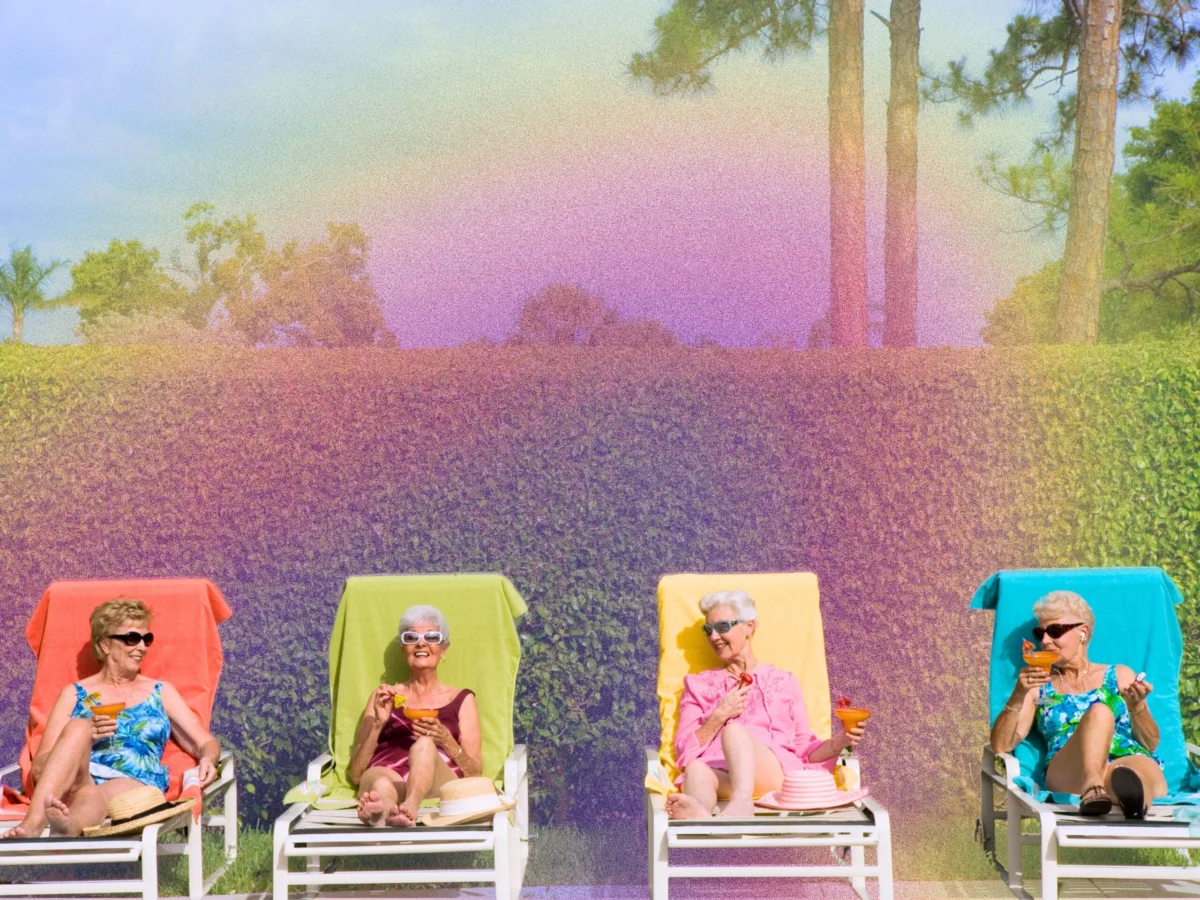
For generations, the narrative arc for women was scripted with the precision of a period drama: childhood, education, courtship, marriage, and motherhood. Deviation from this path was often viewed through a lens of pity or pathologization. Terms like "old maid," "spinster," and the more modern, derisive "childless cat lady" served as cultural warning signs—reminders that to be single was to be a work-in-progress, a life stalled in a permanent state of "not yet."
However, a profound cultural recalibration is underway. Across the globe, and particularly in the United States, women are increasingly treating singlehood not as a transitional waiting room, but as a destination of choice. This shift—supported by shifting economic realities, changing social norms, and a growing body of psychological research—suggests that for a significant portion of the population, a life without a romantic partner is not a fallback. It is a full, expansive, and deeply intentional life.
The Evolution of the "Single" Identity
To understand the current zeitgeist, one must look at the historical scaffolding that supported the institution of marriage. For centuries, marriage was the primary vehicle for a woman’s financial stability, social standing, and survival. It was a structural necessity rather than a romantic elective.
Joan, a 79-year-old who has spent the better part of her adult life unmarried, recalls the climate of the 1980s with stark clarity. "Back then," she notes, "a woman who didn’t want a husband was assumed to have something wrong with her. There was a clinical assumption that you were either broken or in denial."
During a therapy session in her 30s—a time when the pressure to "settle down" was at its zenith—Joan was pushed to reconcile her desires. When asked what kind of husband she would theoretically want, Joan’s list was telling: someone busy, someone deeply absorbed in his own life, someone who was rarely home. When her therapist asked if she wanted an intellectually stimulating partner, Joan retorted, "No, I want someone who’s never there."
What began as a defensive quip became the bedrock of her philosophy: some individuals simply thrive in the autonomy of their own company. Joan’s experience, while considered radical four decades ago, has evolved into a quiet movement. Today, she is one of many women who have spent decades proving that a life uncoupled is not an empty one.
The Fatigue Factor: Why Romance is Taking a Backseat
The shift away from compulsory marriage is being accelerated by a growing, collective fatigue regarding modern dating. According to recent data from Forbes Health, approximately 78% of users on major dating applications—including Tinder, Hinge, and Bumble—report significant burnout. This exhaustion is not merely a byproduct of interface design; it is a fundamental shift in how young adults perceive the return on investment for romantic labor.
The statistics are compelling. A significant decrease in sexual activity among young adults, particularly those in their mid-20s to early 30s, suggests that the "prime marriage years" are being reallocated toward other priorities. Sexual inactivity among women has risen by roughly 50% over the last decade, pointing to a generation that is increasingly uninterested in the performative aspects of early-stage dating.
This trend is mirrored in pop culture, where narratives are pivoting away from the "happily ever after" of romance and toward the "happily ever after" of platonic friendship, career development, and chosen family. The cultural appetite for stories—seen in the thematic focus of films like Barbie or the bonds portrayed in Wicked—emphasizes that the most enduring relationships are often those that exist outside the traditional romantic framework.
The Expert Perspective: The "Single at Heart" Framework
Sociologist Dr. Bella DePaulo has spent years academicizing what many women have felt intuitively. In her work, including her book Single at Heart, Dr. DePaulo outlines a framework for those who do not "end up" single, but rather orient toward it as a genuine preference.
"I still smile when I think about the men I dated when I was a very young adult," says Dr. DePaulo, 72. "But I remember even more fondly how I felt when each of those relationships ended: finally free."
Dr. DePaulo argues that the distinction is psychological. In a marriage or long-term partnership, a significant other often occupies a permanent, albeit sometimes peripheral, space in one’s mind. There is a constant, reflexive calibration of one’s own desires against the needs, moods, or expectations of another person.
"Couples are never free the way single people are," she notes. "Remove the constant presence of a partner, and your attention, energy, and cognitive load become entirely your own. For many, this is not just a preference; it is a necessity for their psychological well-being."
The Economic and Social Shift
Dr. Kris Marsh, a sociologist and author of The Love Jones Cohort: Single and Living Alone in the Black Middle Class, highlights that the ability to choose this lifestyle is a relatively modern phenomenon rooted in economic liberation.
"For a long time, women didn’t have the luxury of choosing to be single because they didn’t have the access to education, careers, or property ownership that allowed for true independence," Dr. Marsh explains. As of 2023, the Pew Research Center reports that 42% of U.S. adults are unpartnered, a significant jump from 29% in 1990. Among non-daters under the age of 50, half report no interest in pursuing a relationship.
This is not necessarily an "anti-love" stance. Instead, it is an "additive" one. Dr. Marsh observes that many women today enter the dating market—or choose to exit it entirely—from a position of strength. "I hear it over and over," she says. "‘I am already in a very good place on my own. You cannot be a distraction. You cannot disrupt my peace.’"
Case Study: Recalibrating Life After the Script
For many women of the older generation, this realization came only after following the traditional path. Alice Foster, 80, spent years in a conventional marriage. "It was fine," she reflects, "but I felt like it was never really about me. It wasn’t my life."
Following her divorce in 1988, Foster did not experience the societal-predicted descent into loneliness. Instead, she experienced a radical expansion. She returned to school, established a new career in nursing, and curated a life centered on her own curiosities.
"I love being retired. I love traveling. I love having people visit me. I love not having to answer to anybody," Foster says. Her story is common among those who, having exited unsatisfactory partnerships, find that the "gap" they feared is actually a canvas for self-actualization.
The Implications: Moving Toward a New Happiness
The lingering question, often asked with a mixture of curiosity and skepticism, remains: Are these women actually happy?
Recent research suggests the answer is a resounding yes. Satisfaction with singlehood tends to increase with age, with significant upticks starting in the 40s. Yet, public scrutiny persists. While married individuals are often assumed to be fulfilled—even when data suggests otherwise—single women are frequently subjected to a higher burden of proof.
"They have to be extra strong, exceptionally confident to stand comfortably in their singleness and validate to the world that they are, in fact, thriving," says Dr. Marsh.
The ultimate takeaway, however, is that this performative pressure is losing its grip. The women who have successfully embraced this path are increasingly uninterested in convincing the public of their happiness. They have moved past the need for validation.
What remains is a quieter, more enduring form of contentment. It is a life structured not by the expectations of tradition, but by the pursuit of what feels authentic. As these women continue to live openly and joyfully on their own terms, they are doing more than just defying a stereotype—they are creating a new blueprint for what a life well-lived can look like. Whether one views it as a rejection of romance or an embrace of autonomy, the message is clear: the most important relationship one will ever have is the one they maintain with themselves.
 Asro
Asro
 Suro Senen
 Azzam Bilal Chamdy
