

This essay is part of "Going Out," a series of stories celebrating the evolution and endurance of LGBTQIA+ travel.
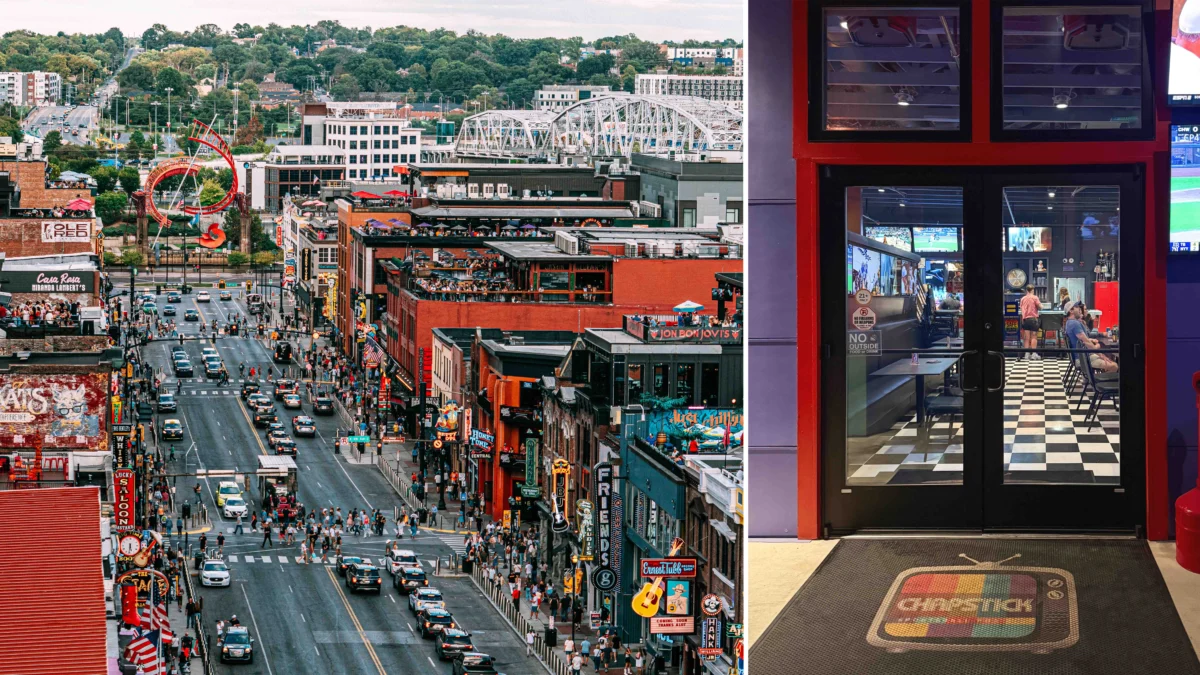
In the neon-soaked, guitar-strumming landscape of Nashville, Tennessee, the "NashVegas" brand is inescapable. Downtown’s SoBro neighborhood is a billion-dollar machine fueled by bachelor parties and multi-story, celebrity-branded honky tonks where the music never stops and the drink pours are heavy. Yet, just fifteen minutes away from the sensory overload of Broadway—a world away from the pedal taverns and the bachelorette-clogged crosswalks—sits a cozy, unassuming residential corner. Here, nestled among dogwoods and quiet porches adorned with small rainbow flags, is a sanctuary that defies the city’s dominant cultural narrative: Chapstick, and its downstairs sibling, The Lipstick Lounge.
Main Facts: A New Chapter in Queer Space
Chapstick, which opened in September 2025, represents more than just a new nightlife venue; it is a declaration of defiance and community. While Nashville is home to a sprawling, high-energy entertainment district, Chapstick provides something fundamentally different: a lesbian-owned sports bar that prioritizes women’s athletics and queer joy.

Stepping into the bar, the atmosphere is unmistakably sapphic. The décor features vinyl race-flag floors and Tiffany-style billiard chandeliers adorned with sunglass-wearing cartoon sharks. It is a space where the Indiana Fever game might be muted to make room for an episode of RuPaul’s Drag Race All Stars at full volume, and where the bartenders wear shirts featuring defiant, playful proverbs. It is the second officially recognized lesbian-owned bar in Nashville, joining The Lipstick Lounge—a local institution that has been a staple of the community since 2002. Together, these two venues offer a dual-layered experience, combining the rowdy, competitive energy of a sports bar with the intimate, long-standing tradition of a neighborhood lounge.
Chronology: From Lipstick to Chapstick
The story of this space is one of longevity and evolution. The Lipstick Lounge, opened in 2002, was the city’s sole lesbian-owned bar for over two decades. It weathered the "infamous nationwide wave" of closures in the late 1980s and early 1990s—a period that saw the number of lesbian bars in the United States dwindle to a precarious few.
For years, co-owners Jonda Valentine, an artist and daughter of a Pentecostal preacher, and Christa Suppan, who began her career at Lipstick as a bartender, operated the lounge as a vital hub for music and camaraderie. However, as the conversation surrounding women’s sports began to shift and the national landscape for queer bars saw a surprising, necessary resurgence, the duo decided it was time to expand.

In 2025, they opened Chapstick on the floor above the original lounge. The expansion was not merely a business decision; it was a targeted effort to fill a gap in the sports bar market. "Chapstick was a totally selfish endeavor," says Suppan. "I always wanted to have a bar to highlight women’s sports because there was no one even showing them. If you went to a sports bar, you had to beg to get them to put something on."
Supporting Data: A National Resurgence
The narrative surrounding lesbian bars has, for years, been one of "protracted decline." In 2024, Condé Nast Traveler reported that there were only 21 such establishments remaining in the entire United States. The challenges were myriad: ballooning commercial rents, the impact of the global pandemic, and a societal shift where anti-discrimination laws theoretically made general bars more welcoming to queer patrons.
However, the last two years have defied those grim predictions. According to the Lesbian Bar Project, the ranks of these institutions have swelled by 16 new venues. From Dani’s Queer Bar in Boston to the Boyfriend Co-op in Brooklyn, the model is shifting toward sustainability and niche specialization.

Lesbian sports bars, in particular, are emerging as a successful sub-genre. The Sports Bra in Portland, Oregon—a pioneer in this space—has already announced plans for an ambitious expansion into Boston, Las Vegas, St. Louis, and Indianapolis by 2027. This growth indicates that queer patrons are not just looking for a "safe space," but a space that reflects their specific interests, whether that be in professional basketball, community activism, or just the ability to watch a game without having to ask for permission.
Official Responses and Philosophy
Despite the clear identity of the bars as lesbian-owned and queer-centered, the owners take a purposefully inclusive approach to their mission. On their shared website, they avoid the restrictive label of "lesbian bar," opting instead for the mantra: "A bar for everyone who’s human!"
This philosophy is rooted in the political reality of living in Tennessee. As Christa Suppan notes, the state government’s frequent introduction of "hate bills"—specifically those targeting the LGBTQIA+ community and drag performances—makes the existence of such a space not just a luxury, but a necessity. "Of all the places in the universe to have a women-owned bar that is queer-focused, I would say Nashville was probably a poor choice," Suppan admits. "However, I feel like it’s a very important thing for us to be here. Probably more important now than ever."

The owners are supported by a network of local creatives and activists. During a recent visit, the bar was a "green room" for Nashville’s alternative talent: indie musicians, grunge designers, and community leaders like Holly G, founder of the Black Opry. These figures are not just patrons; they are the architects of a new, inclusive Southern culture.
Implications: The Power of Joy as Resistance
The existence of Chapstick and The Lipstick Lounge holds significant implications for the future of queer nightlife in the American South. By hosting events like karaoke nights led by public school teacher and drag performer Kennedy Ann Scott, the venues create a buffer against the external pressures of the Tennessee General Assembly.
When the 2023 "Adult Entertainment Act" threatened to criminalize the art of drag in public spaces, venues like Lipstick Lounge became essential bunkers for artistic expression. Inside, the environment is one of total liberation. Whether it is a Deaf patron performing CeeLo Green’s "Fuck You" in sign language to a cheering, beer-swilling crowd, or a group of friends gathering after a long work week, the message is clear: these spaces are about the preservation of the individual.

"The most important thing for both Jonda and I is to make sure that people know that they’re loved," Suppan says. "It’s really easy to go through life, especially in states like this, to feel like nobody loves you, nobody accepts you. Just to have this space to say, I get to be who I am, and people here actually love me for who I am, with no judgment. It’s all about the love."
As the resurgence of the lesbian bar continues, the example set by Nashville’s Chapstick suggests that the best way to protest an environment of intolerance is to build something beautiful, loud, and unapologetically fun. It is a reminder that while the political climate may change, the need for communal gathering—and the joy that comes with it—is a constant, enduring human necessity.
 Asro
Asro
 Siti Muinah
