

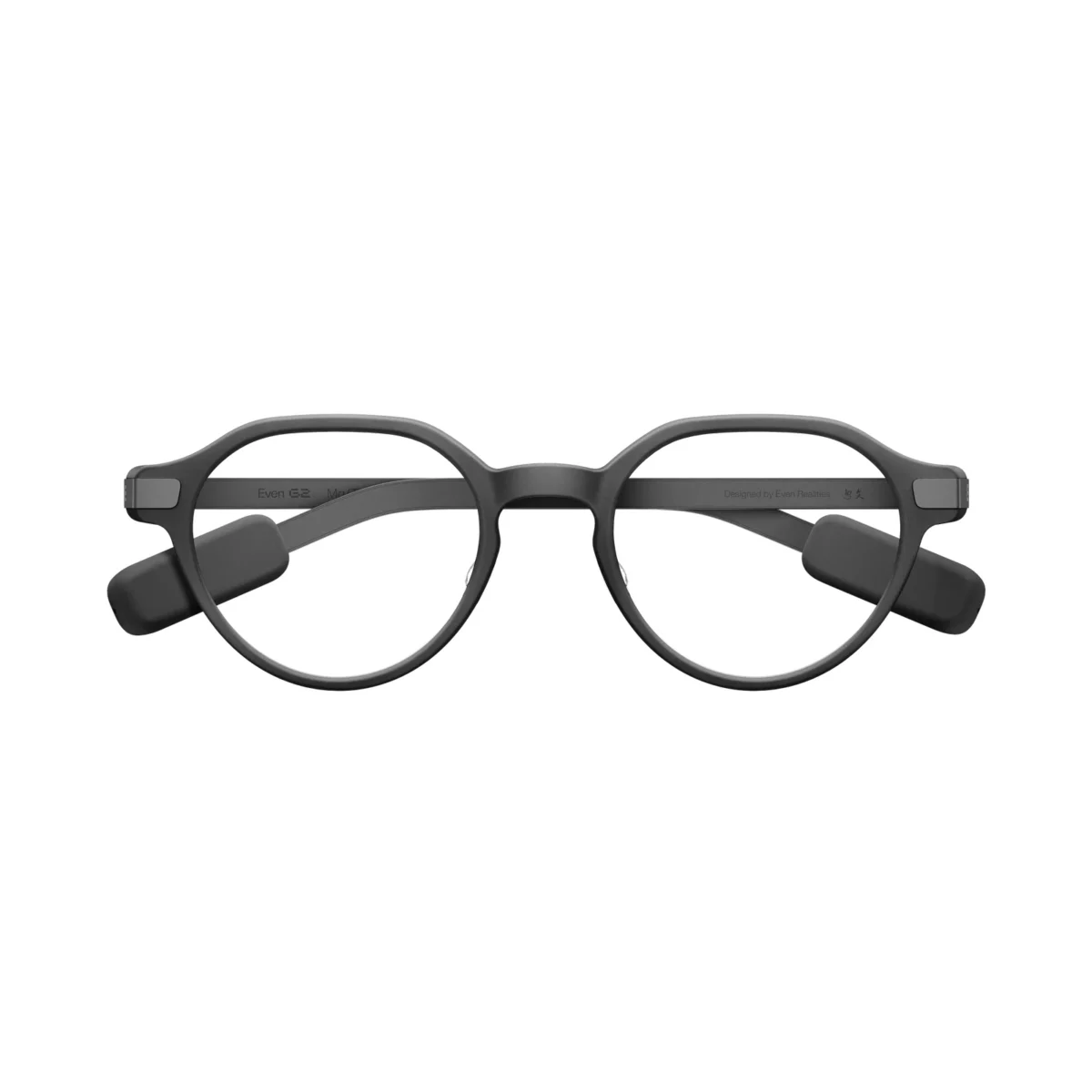
For years, the promise of “smart glasses” has loomed over the consumer electronics landscape like a mirage. Tech titans and ambitious startups alike have long pitched eyewear as the ultimate post-smartphone interface—a way to overlay our digital lives onto the physical world without the constant distraction of a handheld screen. Yet, despite the lofty rhetoric, the reality remains tethered: most modern smart glasses are effectively glorified, expensive peripherals for the smartphones already sitting in our pockets.
The latest entry in this field, the Even Realities G2, finds itself grappling with this same fundamental limitation. While it offers a sleek, premium aesthetic and a unique "neon-style" heads-up display (HUD), the G2’s reliance on a consistent, often temperamental, smartphone connection highlights the hurdles still facing the wearable industry. As Even Realities hits a milestone $1 billion valuation, the question remains: is the G2 a genuine leap forward for productivity, or is it another high-tech accessory in search of a problem to solve?
Main Facts: The Hardware Evolution
The G2 represents a significant iterative jump from its predecessor, the G1. Even Realities has clearly listened to early adopters, addressing several hardware bottlenecks that hampered the original model.
The most striking feature remains the display. Unlike the camera-heavy, AR-lite approach taken by Meta’s Ray-Ban collaboration, Even Realities has opted for a monochrome green projection that mimics a retro-futuristic neon HUD. It is a bold, aesthetic choice that provides high-contrast information regardless of ambient lighting conditions.
Key hardware upgrades include:
- Enhanced Luminance: The G2 boasts a 1,200-nit display, a notable improvement over the 1,000-nit panel found on the G1.
- Fluidity: The refresh rate has been bumped to 60Hz, a massive upgrade from the jarring 20Hz of the previous generation, making text scrolling significantly more comfortable.
- Audio Capture: The mic array has doubled from two to four, intended to improve voice command accuracy and AI interaction.
- Display Real Estate: The viewing area has been expanded by 75%, allowing for more complex data visualization.
Designed with a magnesium alloy frame and titanium temples, the G2 weighs in at a mere 35 grams. They feel substantial enough to be premium, yet light enough for extended wear, effectively mirroring the comfort level of high-end optical frames.

Chronology: From Connection Woes to Stability
The journey of the G2 has not been without friction. During the initial weeks of testing, the user experience was defined by connectivity instability. The glasses would frequently drop their link with the companion app, rendering the HUD blank and the device useless. This is a common pain point for early-stage wearable hardware, where the Bluetooth handshake between the glasses and the phone is often the "weakest link."
However, a series of rapid-fire firmware and app updates issued by Even Realities transformed the experience. By the end of a multi-month testing period, the connection had become, for the most part, rock-solid. This trajectory—from "nearly giving up on them" to "reliable daily companion"—serves as a case study for the current state of the smart glasses market: hardware is often ready, but the software ecosystem requires constant, aggressive iteration to keep pace.
Supporting Data: Features and Functionality
Even Realities has made the conscious decision to omit cameras and speakers from the G2. This is a strategic pivot designed to differentiate the device from competitors like Meta, which prioritize social recording. By focusing exclusively on "productivity-first" features, the G2 targets a specific demographic: professionals in meetings, presenters, and international travelers.
The Feature Set
- Navigation: The G2 provides turn-by-turn directions directly in the user’s line of sight. However, this is currently limited to the proprietary app. Because it lacks integration with Google or Apple Maps, users must manually input routes. During testing, accuracy issues occasionally led to incorrect addresses, suggesting this feature is better suited for known routes or cyclists than for urban exploration in foreign cities.
- Translate and Conversate: Perhaps the most impressive utility is the real-time translation and transcription tool. During trials at the Global Connect Show (GCS) in China, the glasses successfully displayed real-time translations of foreign speakers, allowing the wearer to follow along with ease. The addition of "prep notes" allows the AI to reference uploaded documents, providing "explainer bubbles" for complex topics like "Green Hydrogen" during meetings.
- Even AI: The built-in voice assistant serves as the brain of the operation. While useful for quick reminders or checking stocks, it suffers from a lack of conversational nuance. Responses are often long, unskippable blocks of text that crawl across the screen, making the assistant feel more like a teleprompter than a conversational partner.
Official Responses and Strategic Direction
Even Realities has recently reached unicorn status, securing $150 million in funding led by industry heavyweights like Meituan and Tencent. This capital injection signals a high level of confidence from institutional investors in the "screen-free, camera-free" wearable model.
The company’s leadership maintains that by removing the social baggage of a camera, they can position their glasses as a "productivity tool" rather than a "content creation device." This is a clever play in an era of increasing privacy awareness. However, the company is now at a crossroads. With the funding secured, there is an expectation from the market to move beyond "nice-to-have" hardware and build a software ecosystem that makes the glasses indispensable.
The launch of the R1 ring—a $249 peripheral meant to control the glasses—seems to have been a misstep. While functional, it overlaps entirely with the touch-sensitive temples already present on the G2, and its health-tracking features struggle to compete with established incumbents like Oura. The market consensus is that the R1 is an unnecessary expense for a device that already needs to prove its baseline value.

Implications: The Road Ahead
Where does the Even Realities G2 stand in the broader market? Currently, the device is priced at $599, positioning it as a premium gadget for the tech-curious. It occupies a niche alongside other innovative Chinese manufacturers like Rokid and Inmo, who are also pushing the neon-HUD aesthetic.
The "Everyday Use" Challenge
The fundamental challenge for the G2, and for smart glasses in general, is the "use case gap." Outside of niche professional scenarios—such as a diplomat needing real-time translation or a public speaker using the built-in teleprompter—it is difficult to justify wearing these glasses for 12 hours a day.
For the average consumer, the convenience of a smartphone remains superior. When a notification arrives, it is often easier to glance at a phone than to decipher a monochrome text feed in the corner of one’s eye, especially when the G2’s brightness must be manually adjusted via an app rather than sensing ambient light automatically.
The Path to Mainstream Adoption
For the G2 to move from a "tinkerer’s toy" to a "must-have tool," two things must happen:
- Ecosystem Expansion: The reliance on the proprietary app is a bottleneck. Opening the API to third-party developers, as the company plans to do, is essential. If a user can see their Slack notifications, calendar, or specific project management tools integrated natively without clunky workarounds, the value proposition shifts dramatically.
- Autonomous Intelligence: The glasses need to become more context-aware. If the device can identify that a user is in a meeting and proactively offer relevant data without being prompted, it stops being a "smart display" and starts being an "intelligent assistant."
Conclusion
The Even Realities G2 is a masterclass in hardware refinement. It is lighter, brighter, and more responsive than its predecessor, proving that the company is serious about the form factor. However, the device currently exists in a liminal space: it is too expensive to be a casual impulse buy, and its software is not yet robust enough to be a critical enterprise tool.
As the company leans into its new unicorn valuation, the focus must shift from the glass to the intelligence behind it. The G2 has successfully proven that glasses can be comfortable and aesthetically pleasing. Now, Even Realities must prove that they can be truly smart. Until the software can reliably anticipate user needs and move beyond the limitations of its companion app, the G2 remains a compelling vision of the future—but one that is still waiting for its "killer app" moment.
 Asep Darmawan
 Siti Muinah
 Ali Ikhwan
