

In an industry often defined by the glitz of the red carpet and the technical specifications of the latest hardware, the fundamental philosophy of visual storytelling can sometimes be obscured. Filmmaking is, by its very nature, a collaborative endeavor, yet the role of the Director of Photography (DP) often carries a sense of profound isolation. While the camera department relies on a rigid hierarchy and seamless teamwork, the department heads—the cinematographers themselves—rarely find the space to exchange the "war stories," philosophical hurdles, and practical strategies that define their craft.
Natasha Braier, the Argentinian-born cinematographer whose work has defined the visual language of modern cult classics, is seeking to dismantle this isolation. Through her newly established community, Deep Light, Braier is pivoting away from the industry’s obsession with "gear-talk" to foster a global dialogue centered on meaning, mentorship, and the preservation of the independent spirit.
Main Facts: The Architecture of Deep Light
Deep Light is not merely a website or a social media page; it is a multi-faceted educational and community ecosystem designed to bridge the gap between established masters and emerging talent. Overseen by Braier and moderated by a dedicated group of her mentees, the platform provides a structured environment for learning that mimics the apprenticeship models of cinema’s golden age, updated for the digital era.
The initiative comprises several key pillars:
- The Discord Community: A private server where cinematographers at various career stages can interact, share advice, and troubleshoot technical or creative issues in real-time.
- "Through Their Eyes" Interview Series: A long-form content series that bypasses standard press-junket questions. Instead of focusing on which camera was used for a specific scene, Braier engages peers like Lol Crawley, Michael Bauman, and Autumn Durald Arkapaw in deep dives regarding career longevity, psychological resilience, and artistic DNA.
- The Cine Club: A monthly virtual gathering where members analyze the films that have shaped the visual identities of leading DPs. Recent sessions have focused on seminal works like Spike Lee’s Malcolm X.
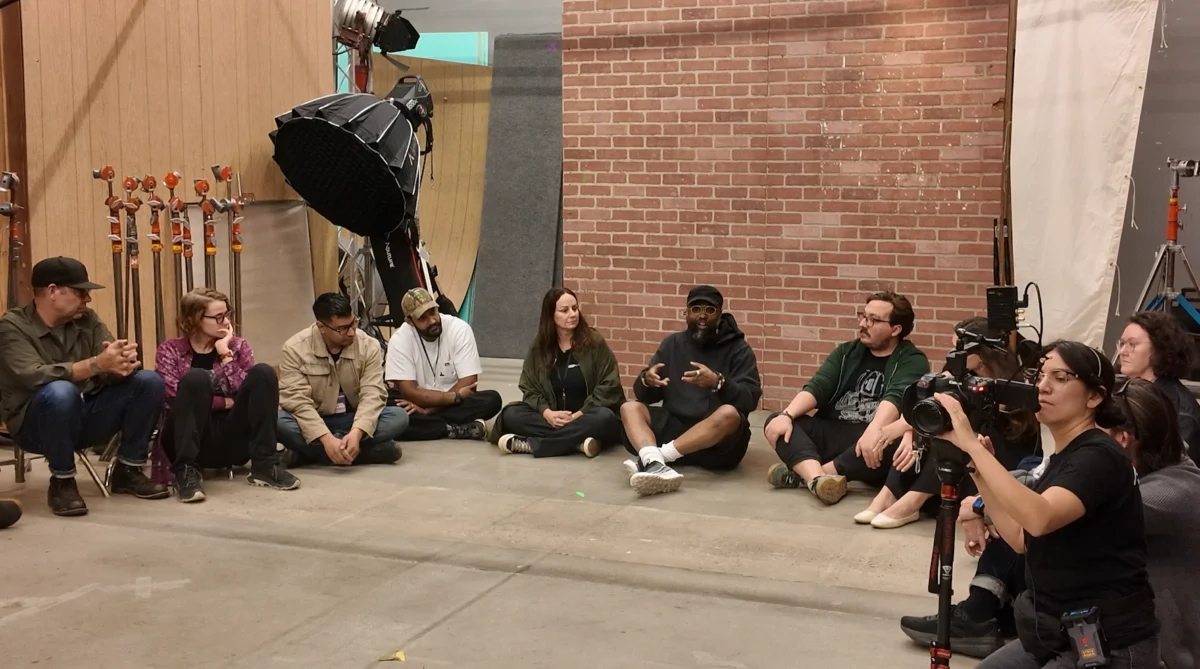
- Practical Workshops: High-level, hands-on intensives led by industry titans. The inaugural workshop featured Academy Award nominee Bradford Young (Arrival, Selma) at the Panavision facilities, offering thirty students an intimate look at his process.
- Global Crew Recommendations: A curated database that helps DPs find trusted collaborators across the world, fostering a more connected international filmmaking community.
Chronology: From Argentina to the ASC and the Genesis of an Idea
To understand the necessity of Deep Light, one must look at Natasha Braier’s own trajectory. Born in Buenos Aires, Braier’s career has been a masterclass in versatility and bold aesthetic choices. Her filmography reads like a roadmap of contemporary auteur cinema: the neon-soaked, ruthless aesthetic of Nicolas Winding Refn’s The Neon Demon, the gritty, slippery fantasy of Alma Har’el’s Honey Boy, and the boisterous, inventive energy of Boots Riley’s upcoming I Love Boosters.
Despite her success—which includes shooting high-profile music videos for global stars like Ed Sheeran—Braier frequently encountered the "loneliness at the top" that characterizes the cinematography profession. When she was invited to join the American Society of Cinematographers (ASC), she felt a sense of homecoming. She had finally found a community of peers. However, she quickly realized that while the ASC provided a prestigious network of legends, the industry still lacked a "real-time" support system for those still climbing the ladder.
The catalyst for Deep Light was the global COVID-19 pandemic. As film sets around the world went dark, the enforced downtime provided Braier with the space to reflect on the educational landscape of her profession. She noted a troubling trend: the democratization of filmmaking through technology had led to a saturation of "how-to" content that lacked "why-to" substance.
Braier recalled her own days as a student, noting that she only knew of three major cinematographers by name and didn’t even know what they looked like. This lack of visibility for the human beings behind the camera—and the lack of a "mirror" for young filmmakers to see themselves in—became the driving force behind Deep Light’s launch during the lockdown.

Supporting Data: The Shift from Tools to Meaning
The modern cinematography landscape is inundated with technical data. Thousands of YouTube channels, Instagram accounts, and specialized publications focus almost exclusively on the "tools of the trade." Whether it is the dynamic range of a new sensor, the flare characteristics of a vintage lens, or the portability of a new LED mat, the conversation has become increasingly hardware-centric.
Braier’s Deep Light seeks to counter this "technological noise." In her discussions with IndieWire, she emphasized that the proliferation of tools has led to a vacuum of meaning.
"Everyone talks about the tools. And there’s new tools every day," Braier observed. "I felt like the conversation was really becoming about the tools and not about the meaning. What are we doing with these tools? What stories are we telling as filmmakers? Why do we want to be filmmakers? Why do we want to produce images?"
By focusing on the "DNA" of a cinematographer—the ten films that shaped their soul rather than the ten lenses in their kit—Deep Light provides a qualitative rather than quantitative education. The success of the Bradford Young workshop, which sold out and received universal acclaim from its thirty participants, serves as a proof of concept. The demand for "off-the-record" honesty and philosophical depth is clearly high among the next generation of DPs who are tired of the polished, marketing-heavy rhetoric of traditional trade shows.
Official Responses: Redefining Success in the Hollywood Ecosystem
Braier’s initiative is also a subtle but firm critique of the traditional Hollywood "success" narrative. In an industry that often views the transition from independent film to massive studio franchises (such as the Marvel Cinematic Universe) as the ultimate goal, Braier offers an alternative perspective.
"There’s always this perception that people in this town perceive success as going into studio movies, as getting out of indies to do Marvel," Braier told reporters. "I don’t want out of indies. I’m here for these kinds of movies."
This sentiment is echoed by many of the collaborators she has brought into the Deep Light fold. For cinematographers like Autumn Durald Arkapaw, who has successfully navigated both the indie world (Palo Alto) and the blockbuster realm (Black Panther: Wakanda Forever), the dialogue within Deep Light allows for a nuanced exploration of how to maintain one’s artistic voice regardless of budget size.
Braier’s definition of success is personal and grounded: "To me, success is doing movies that we love." By vocalizing this, she provides a necessary counter-narrative for young DPs who may feel pressured to abandon their aesthetic principles in favor of commercial upward mobility.

Implications: The Future of Independent Cinematography
The implications of Deep Light extend far beyond a simple Discord server. By fostering a community that values mentorship and artistic integrity, Braier is helping to build a more resilient independent film ecosystem.
1. Representation and the "Mirror" Effect
One of the most significant implications is the impact on diversity and representation. By making notable DPs accessible and visible, Braier is providing that "mirror" she lacked as a student. When young cinematographers from underrepresented backgrounds see someone like Braier or Bradford Young discussing the emotional weight of a frame, it legitimizes their own aspirations and provides a roadmap that isn’t solely dependent on expensive gear.
2. The Democratization of Professional Secrets
The decision to record parts of the high-level workshops for later release (with an expected launch in August) means that the knowledge of the elite is being democratized. Editing these sessions to ensure speakers can be "free to talk as much as possible" ensures that the advice given is practical, honest, and unburdened by corporate sponsorships.
3. Psychological Resilience in a Gig Economy
The film industry is notoriously taxing on mental health. By creating a space where DPs can discuss career challenges—such as burnout, creative blocks, and the difficulty of balancing life with a shooting schedule—Deep Light acts as a support group. This community-led approach could lead to longer, healthier careers for cinematographers who might otherwise have left the industry due to isolation.
4. A New Model for Film Education
As traditional film school tuition continues to skyrocket, decentralized, practitioner-led communities like Deep Light offer a viable supplement (or even alternative). It emphasizes a "living education" that evolves as the industry does, led by those currently in the trenches of production.
In conclusion, Natasha Braier’s Deep Light is a testament to the power of the "why" over the "how." In an era of digital saturation, she is reminding the filmmaking world that while the camera is the eye, the cinematographer is the soul. By fostering a community that prioritizes meaning, Braier is ensuring that the art of the image remains as ruthless, beautiful, and boisterous as the films she creates. Through Deep Light, the next generation of cinematographers is finding not just their tools, but their voices.
 Jia Lissa
 Lina Irawan
 Iffa Jayyana
