

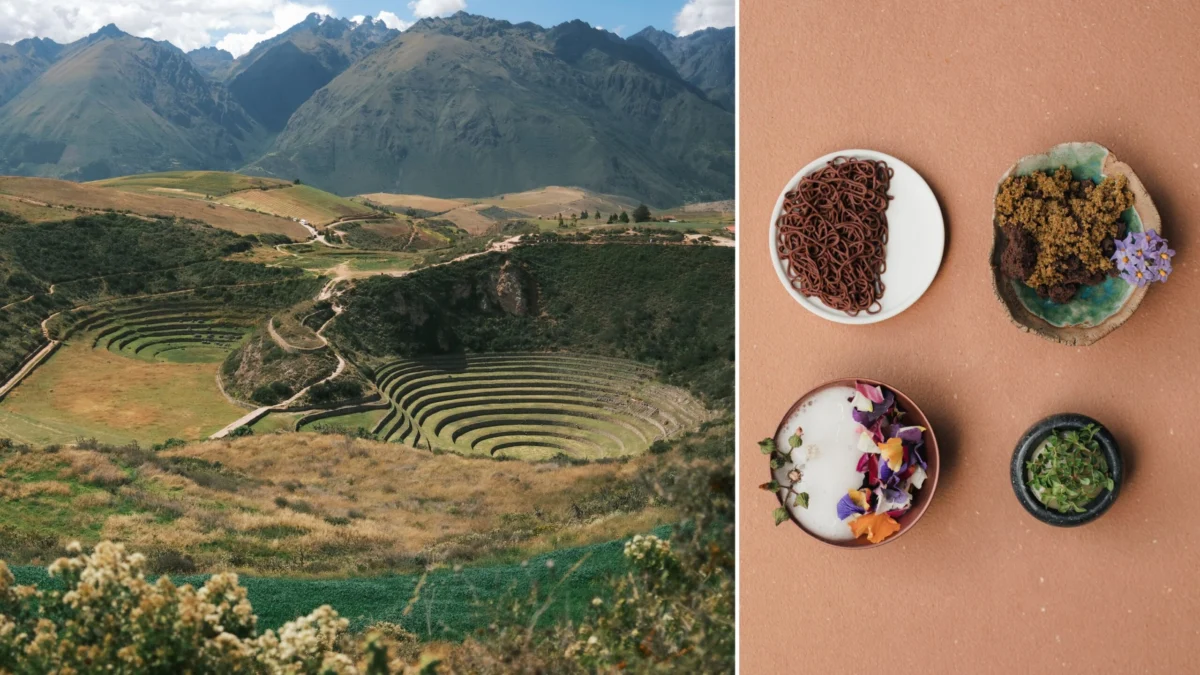
At 3,500 feet above sea level, the air in the Sacred Valley of the Incas is thin, sharp, and carries the weight of history. Here, in the tiny community of Kollparay—a cluster of just five households totaling 15 souls—the landscape is defined by the apus. In Quechua, the word translates literally to "lords" or "spirits," a fitting title for the jagged, snow-dusted peaks that loom over the valley.
But beneath the breathtaking vistas lies a growing tension. Climate change has rendered the traditional agricultural calendar increasingly erratic. Frosts strike during the dry season; rains arrive with unpredictable fury. In this environment, food security is not a theoretical policy debate, but a daily necessity. It is here that a quiet revolution in food preservation is taking place, led by the team behind Mil, the globally acclaimed restaurant founded by culinary visionaries Virgilio Martínez, Pía León, and Malena Martínez.

The Mil project has evolved far beyond a dining destination. It is now the beating heart of Mater Iniciativa, a research arm dedicated to mapping the biodiversity of the Andes and reintroducing ancestral knowledge to solve modern-day challenges. Their latest undertaking, the "Qollqa Mater" route, invites guests to participate in a living experiment that marries Incan engineering with 21st-century survival strategies.
The Ritual of Connection: Entering Kollparay
The immersive experience begins not with a menu, but with the earth itself. Norma Quispe Juarez, a resident of the area and a guide for the program, meets guests at the village entrance. Before a single step is taken, she performs a gesture of profound respect: she takes the guest’s hands and smears them with the soil of the village.

"I have to introduce you," she explains. "The land needs to know who is treading upon it so you can walk freely."
This is the embodiment of ayni, an Andean philosophy of reciprocity—"today I work for you, and tomorrow you work for me." It is a belief system that binds the community, where neighbors labor together to build homes or harvest crops, confident that their efforts will be returned in kind. As we walk the stone paths of Kollparay, the only sound is the rhythmic swish of dried ichu grass. We are heading to the adobe home of 89-year-old Doña Concepción Meza Challco, affectionately known as Doña Conchi.

A Chronology of Collaboration
The relationship between the world-renowned chefs and the local community is not new. Since its opening in 2018, Mil has functioned as a base camp for the Mater team. The site was strategically chosen for its proximity to the ancient Moray agricultural laboratory, where the Incas once studied how to adapt crops to different microclimates.
- 2018: Mil opens in the Sacred Valley, moving away from the urban centers of Lima to work directly with high-altitude farming communities.
- 2019-2023: Mater Iniciativa begins cataloging everything from cacao experiments to fermented fruit profiles and the use of botanical dyes.
- 2024: Planning for the Qollqa Mater begins in earnest, involving local leaders like Wilber Juárez Huamán.
- June 2026: The official launch of the Qollqa Mater immersive experience, allowing guests to witness the fusion of historical architecture and modern food security.
The Science of the Qollqa: Ancient Technology for Modern Crises
The centerpiece of the new route is the qollqa—the Incan granary. Historically, these were massive, sophisticated structures designed to leverage the environment. By positioning these granaries strategically on slopes and utilizing natural wind currents, the Incas were able to store food for years without the need for refrigeration.

The Spanish conquest, however, largely dismantled these systems, leaving them to crumble into archaeological curiosities like the site at Pinkuylluna. The project led by Mil aims to reclaim this lost technology. The new structure, designed by architect Juan Carlos Pareja in collaboration with archaeologist Rachel Schloss, is a circular, conical building with walls of adobe and stone.
"The qollqa is a way to bring ancient technology into the present," says Malena Martínez, director of Mater. "It shows that we can safeguard what matters most using nothing but the wind."

Supporting Data and Technical Efficacy
The efficacy of the Qollqa Mater is already being measured. The structure is divided into three distinct zones: one for seeds, one for fresh food, and one for textiles.
- Environmental Control: The building is oriented to face the apu Verónica, catching the cool, dry air currents that sweep through the valley. This creates a stable, low-humidity microclimate inside the structure.
- Preservation Results: As of the latest check, over 110 pounds of potatoes and mashuas (native tubers) have been stored in the qollqa since December. Unlike produce stored in standard pantries—which would have sprouted eyes and begun to degrade within weeks—these specimens remain dormant and firm, proving the viability of the design.
- Community Integration: The qollqa is not a museum piece. It is a shared community resource. By providing a secure, long-term storage solution, the project helps local farmers mitigate the risks posed by volatile weather patterns, allowing them to hold onto their harvests until market prices are more favorable or during times of lean production.
Official Perspectives: The Philosophy of Mil
For Virgilio Martínez and Pía León, Mil has always been an exercise in humility. The tasting menu is a testament to the landscape, featuring ingredients that are often ignored by global food systems.

"It’s a construction that shifts our understanding of the past," Virgilio notes. His partner, Pía León, emphasizes the versatility of the new build: "It’s about bringing different storage needs under one roof. It respects the past while answering the immediate logistical needs of our neighbors."
The researchers are quick to point out that this is an iterative process. They are not simply "restoring" an old way of life; they are testing how those ancient methods interact with modern materials and shifting climate realities. Every harvest brought into the qollqa provides data on how flavors evolve and how texture changes over time, turning the granary into a culinary research lab.

Implications: The Future of Andean Gastronomy
The implications of the Mil project extend far beyond the plate. By integrating the local community into the high-end dining economy, the restaurant provides a sustainable income stream for families like Doña Conchi’s, while simultaneously fostering a culture of pride in ancestral techniques.
When visitors sit down to the eight-course tasting menu, they aren’t just eating a meal; they are consuming the results of a multi-generational dialogue. Dishes like the huatia (native potatoes cooked in clay) or the lamb tartare with cushuro (Andean river algae) are expressions of a deep, symbiotic relationship with the land.

The non-alcoholic pairing, featuring clarified extracts of papaya, corn, tumbo fruit, and 72% cacao nibs, underscores the restaurant’s commitment to zero-waste, high-value utilization of every component of the harvest.
A Lesson in Patience
As Doña Conchi waves goodbye, her gaze fixed on the new qollqa, there is a sense of quiet triumph. For her, the structure represents a bridge between the world she inherited and the world her descendants will inhabit.

In the high Andes, time is not measured in seconds or minutes, but in seasons and cycles. The challenges of the future—food scarcity, climate instability, the loss of cultural heritage—are immense. But through the work at Mil and the resilience of the Kollparay community, there is a tangible sense that the answers have been here all along, hidden in the wind-swept stone and the wisdom of the earth.
For the traveler, the five-hour journey is an invitation to witness this: to see that the most innovative solutions for our future may, in fact, be the ones we left behind in the past.

How to Experience the Mater Qollqa Route
The immersion begins at Mil, located approximately 30 miles (an hour and a half drive) from Cusco, adjacent to the Moray archaeological site.
- Format: The experience is available in English and Spanish for groups of two to four people.
- Schedule: Offered twice weekly.
- Pricing: $720 USD per person, which covers the immersive site tour, the cultural exchange, and the signature Mil tasting menu.
- Booking: Reservations can be secured through the Masi website.
 Sagoh
Sagoh
 Asro
Asro
