

By Tim De Chant
Senior Climate Reporter
Farmers around the world face a silent crisis beneath their feet. For generations, the heavy machinery required to till, plant, and harvest fields has steadily compacted the earth, squeezing out vital air pockets and choking root systems. Studies have estimated that severe soil compaction can slash crop yields by an alarming 20% to 60%, severely eroding profit margins in an industry already vulnerable to volatile weather, shifting commodity prices, and rising operational overhead.
While traditional plowing can temporarily alleviate compaction, it remains a notoriously laborious, energy-intensive, and expensive task. Worse still, mechanical tilling disrupts delicate underground microbial ecosystems, accelerates soil erosion, and releases sequestered carbon back into the atmosphere.
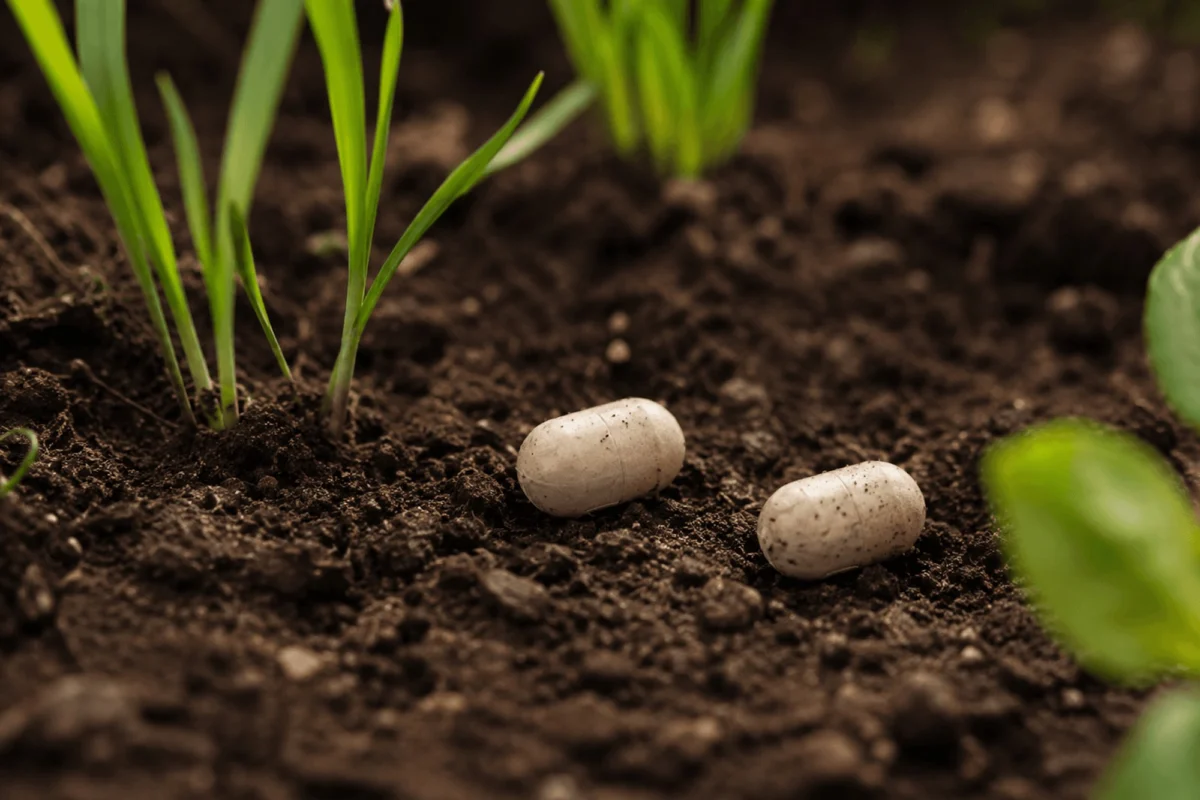
Enter Muju Earth, an innovative agritech startup aiming to redefine how humanity interacts with the earth. The company has developed a radical alternative called the Aeropod—a fingernail-sized device that automatically aerates soil without the need for heavy machinery, complex robotics, or exhaustive manual labor. According to the startup, this technology can dramatically improve soil health while cutting farmers’ tilling costs by half or more.
As a member of the elite cohort selected for the TechCrunch Startup Battlefield at TechCrunch Disrupt in San Francisco, Muju Earth is poised to bring its low-tech, high-impact solution to a global stage. With paid field trials kicking off in the United Kingdom this autumn, the agricultural sector is beginning to take notice of a device that could fundamentally change modern farming.
Main Facts: What is the Aeropod?
At its core, the Aeropod is designed for maximum simplicity and seamless integration into existing agricultural workflows. Co-founder and CEO Ifeoluwa Afolayan summarizes the product’s design philosophy with a striking metaphor: "It’s built like a seed, it sows like a seed, and it ships like a seed."
Measuring roughly the size of a human fingernail, the Aeropod requires no specialized deployment infrastructure. Farmers simply drop the devices into the soil alongside their traditional crop seeds, utilizing the exact same planting machinery they already own. No pre-tilling is required, eliminating the upfront labor and fuel expenses traditionally associated with preparing a seedbed.
"It just really seems like a no-brainer," Afolayan notes.
The magic of the Aeropod lies in its responsive materials science. Once the device is embedded in the ground and exposed to a specific combination of ambient temperature, subterranean pressure, and soil moisture, it undergoes a controlled reaction. The pod bursts open underground, mechanically loosening the surrounding earth and carving out microscopic channels. These pathways allow air, water, and plant roots to penetrate deeper and move more freely through dense, compacted layers of soil.
By bypassing heavy tractors and chisel plows, farmers can achieve deep-soil aeration organically, preserving the structural integrity of the earth while optimizing the growing environment for their crops.
Chronology: From Imperial College Labs to the Fields of the UK
The genesis of Muju Earth stretches back to the academic halls of Imperial College London. It was there that Afolayan and co-founder Wangyang Hu first joined forces, driven by a shared ambition to design a product that could simultaneously bolster farmers’ bottom lines and regenerate degraded soil health.
During their initial research and development phase, the founders anchored their engineering strategy around a single, guiding question: "How do you make this as simple as sowing a seed?"
Afolayan realized early on that any successful agricultural innovation must respect the realities of global farming. Complex robotics or proprietary machinery might work on sprawling, well-capitalized corporate mega-farms, but true impact required a universal delivery mechanism. "That’s the most equitable practice across every farmer on the planet," she explained.
Transitioning from theoretical concepts to physical prototypes, the duo tested various iterations of the Aeropod in laboratory settings, refining the trigger mechanisms for moisture and pressure sensitivity. Having successfully validated the mechanics in controlled environments, Muju Earth is now crossing a major commercial threshold: paid field trials.
This fall, the startup is launching its inaugural field trials across the United Kingdom. Nine working farms are participating in the initial rollout, while more than 30 additional growers sit on an eager waitlist. Muju Earth has strategically chosen to focus its initial market penetration on UK onion growers, as onions are notoriously sensitive to soil compaction and require meticulous growing conditions to yield profitable harvests.
Following the UK trials, Muju Earth will present its technology on the main stage at TechCrunch Disrupt in San Francisco, competing among the top 20 finalists in the Startup Battlefield pitch competition—a critical milestone for securing future investment and expanding international reach.
Supporting Data: The Economics of Aeration
To understand why farmers are lining up for a waitlist, one only needs to look at the ledger. Traditional farming economics heavily penalize soil compaction, and the remedies are remarkably costly.
According to data shared by Afolayan, tilling a field just once can easily cost between £250 and £400 per hectare. This calculation factors in a compounding list of expenses:
- Labor costs: Hours spent operating heavy machinery.
- Fuel consumption: The massive amounts of diesel required to pull deep-tillage equipment through dense earth.
- Equipment wear-and-tear: The heavy maintenance and replacement costs associated with plow blades and tractor transmissions.
In stark contrast, Muju Earth projects that deploying Aeropods will achieve comparable or superior soil-loosening results at a fraction of the cost—roughly £100 per hectare. For a mid-sized farming operation, this represents a potential savings of hundreds, if not thousands, of pounds per season, directly protecting profit margins from the relentless creep of operational inflation.
Furthermore, the yield data underpinning the technology is impossible to ignore. Agricultural extension studies, such as those from the University of Minnesota, indicate that unchecked soil compaction can depress crop yields by anywhere from 20% to 60%. By restoring subterranean porosity without the destructive side effects of mechanical tilling, Aeropods help crops reach their maximum biological potential, turning stunted harvests into high-yield successes.
Official Responses and Ecosystem Partnerships
While Muju Earth initially envisioned an aggressive outbound marketing campaign, reality has proven far more organic. Farmers have been leading the adoption curve themselves, driven by an intuitive understanding of the product’s value proposition.
"The best thing about Aeropod is the farmers intuitively understand the proposition," Afolayan said. When growers are shown a fingernail-sized capsule that can replace a tractor pass and eliminate hundreds of pounds in diesel costs, the sales pitch practically writes itself.
Beyond traditional growers, Muju Earth has also attracted intense interest from an unexpected adjacent sector: companies developing biologic soil amendments. These innovative products—often formulated with living microbes, fungi, or bio-stimulants—are designed to supercharge plant growth and gradually replace synthetic chemical fertilizers.
However, biologic amendments face a major operational hurdle: they perform best in well-aerated soils where oxygen and water can circulate freely. Because compacted earth suffocates these beneficial microbes, biotech companies are actively looking to partner with Muju Earth. By pairing biologic amendments with Aeropods, these companies can ensure their microbial products thrive immediately upon application, creating a symbiotic ecosystem within the rhizosphere (the root zone).
Implications: The Future of Regenerative Agriculture
The implications of Muju Earth’s technology extend far beyond individual farm balance sheets. As global agriculture faces the dual pressures of feeding a growing population and mitigating climate change, the shift toward regenerative farming practices has never been more urgent.
Traditional industrial agriculture has long relied on a paradigm of brute force: heavy machinery to force compliance from the earth, and chemical inputs to mask the declining natural fertility that results from mechanical abuse. This cycle is fundamentally unsustainable. Soil degradation threatens global food security, while agricultural emissions contribute significantly to the climate crisis.
By reimagining soil aeration through a biomimetic lens—distributing the work across millions of tiny, autonomous units that mimic natural processes—Muju Earth is pointing toward a lighter, smarter touch on the landscape. If the upcoming UK field trials confirm the startup’s lab data and economic projections, the Aeropod could herald a new era of "passive" agronomy.
In this future, heavy diesel tractors may no longer rule the fields during planting season. Instead, the heavy lifting will be done quietly, efficiently, and invisibly by thousands of tiny pods working in harmony with the earth—proving once and for all that sometimes, the biggest revolutions come in the smallest packages.
 Asep Darmawan
 Siti Muinah
 Ali Ikhwan
