

Main Facts
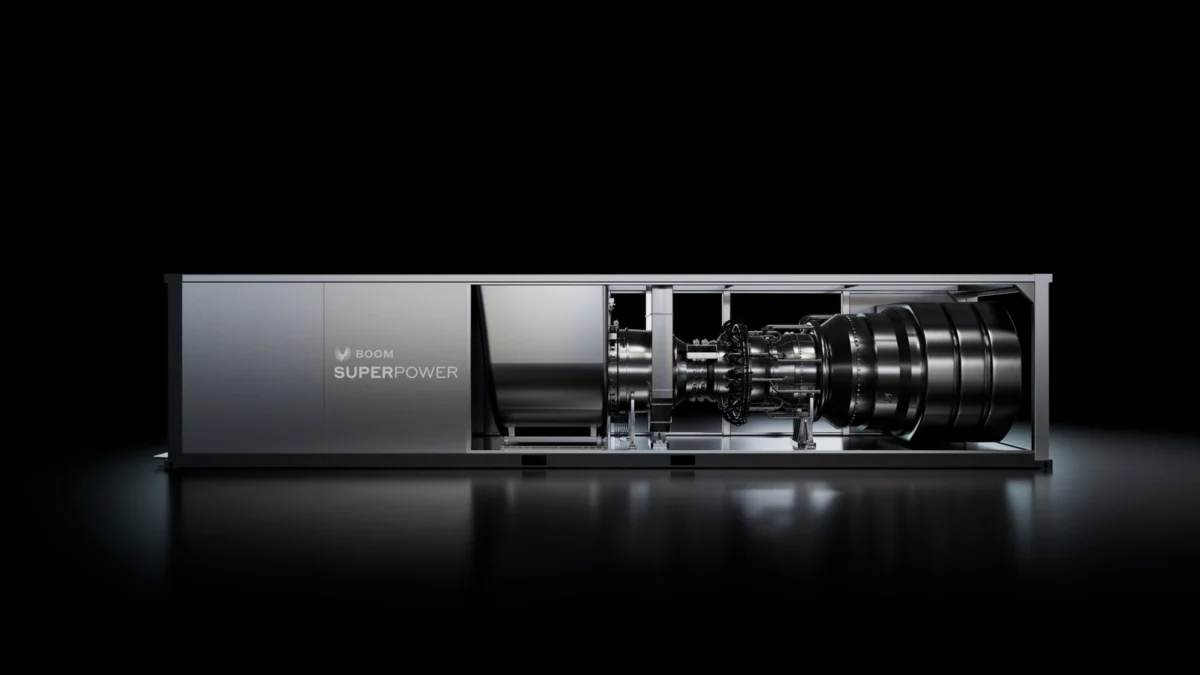
In a high-profile unraveling of a cross-industry energy partnership, Denver-based artificial intelligence data center giant Crusoe has officially pulled out of a landmark $1.25 billion agreement with local aerospace firm Boom Supersonic. The cancelled deal would have seen Crusoe become the inaugural launch customer for Boom’s newly minted stationary power plant division, deploying 29 heavy-duty, 42-megawatt "Superpower" natural gas-fired turbines beginning in 2027.
The abrupt termination comes at a critical juncture for both companies. Crusoe—originally founded in 2018 as a niche cryptocurrency miner utilizing stranded and excess natural gas from oil fields—has rapidly evolved into a heavyweight in the AI infrastructure space. Fresh off a massive $3.9 billion funding round, the company is scaling up mega-campuses across the United States to supply immense computing power to tech titans like OpenAI and Microsoft.
Boom Supersonic, meanwhile, is primarily known for developing "Overture," its ambitious supersonic passenger jet. To offset the immense capital expenditures required for commercial aviation, Boom launched an industrial power venture leveraging technology from its proprietary "Symphony" aircraft engine. The resulting Superpower stationary turbine shares roughly 80% of its architectural components with the airborne engine.
While the sudden dissolution of a $1.25 billion contract represents a major hurdle for Boom’s diversification strategy, leadership from both organizations insist the separation is amicable, driven purely by shifting infrastructural demands rather than institutional animosity.
Chronology of the Partnership and Split
To understand how a billion-dollar industrial pact dissolved, it is necessary to examine the timeline of growth, pivot, and abrupt realignment between the two Denver companies:
- 2018: Cully Cavness and Chase Lochmiller found Crusoe, initially focusing on mitigating flaring in oil fields by powering modular bitcoin mining operations with wasted natural gas.
- Late 2023 – Early 2024: As the generative AI boom accelerates, Crusoe pivots sharply toward constructing high-density AI data centers, securing major partnerships to build expansive computing campuses, including a landmark site in Abilene, Texas, for OpenAI.
- 2024: Boom Supersonic branches out, establishing a stationary power generation business unit. The company introduces the Superpower turbine, utilizing an 80% parts overlap with its flight-bound Symphony engine designed for the Overture supersonic jet.
- The Agreement: Crusoe signs on as Boom’s marquee launch customer, committing to purchase 29 of the 42-megawatt Superpower turbines in a deal valued at $1.25 billion. Deliveries are slated to begin in 2027.
- December 2025: Capitalizing on the high-profile energy venture, Boom Supersonic successfully raises $300 million largely earmarked for commercializing and scaling its natural gas stationary turbine manufacturing business.
- September 2026: Crusoe closes an enormous $3.9 billion funding round to fuel the rapid construction of massive data centers and smaller modular AI factories.
- Late September 2026 (The Announcement): Boom Supersonic CEO Blake Scholl takes to social media platform X to publicly congratulate Crusoe on its historic fundraising round while breaking the news that the turbine launch partnership is officially dead. Crusoe independently confirms the termination of the deal to industry media outlets.
Supporting Data and Project Metrics
The sheer scale of capital, energy, and infrastructure involved in the dissolved partnership highlights the massive resource demands of the modern artificial intelligence ecosystem.
Crusoe’s Operational Footprint
- Capital Injection: $3.9 billion raised in late 2026 to fund aggressive national expansion of AI data centers.
- Abilene Campus (OpenAI / Oracle): An initial 1.2-gigawatt data center facility primarily powered by the local electrical grid, supplemented by an on-site gas-turbine power plant utilized exclusively for backup generation.
- Abilene Expansion (Microsoft): An additional 900-megawatt data center currently under construction in Abilene, explicitly engineered to run on dedicated on-site gas turbines.
Boom Supersonic’s Industrial Venture
- The Superpower Turbine: A 42-megawatt natural gas-fired stationary power plant.
- Parts Synergy: Approximately 80% shared architecture and componentry with Boom’s "Symphony" aircraft engine designed for the Overture passenger jet.
- Contract Value: The scrapped Crusoe agreement was valued at $1.25 billion for a total of 29 units.
- Venture Capital: $300 million raised in December 2025 specifically to launch and scale the stationary turbine manufacturing business.
- Alternative Pipeline: Despite losing its launch customer, Boom reports a healthy backlog, projecting approximately 250 megawatts of Superpower turbine deliveries to alternative enterprise sites next year, with an ambitious target of 1 gigawatt by 2028.
Official Responses and Stakeholder Perspectives
Public communications from both executive teams frame the split as a strategic realignment rather than a bitter business dispute.
In his public statement on X, Boom CEO Blake Scholl addressed the shifting operational roadmap of his former partner:

"The TL/DR is that turbines are no longer part of Crusoe’s near term primary power mix at Abilene/etc., so a launch partnership just didn’t make sense," Scholl wrote. He emphasized that Boom’s commercial momentum remains unaffected: "Boom will be delivering about 250MW of Superpowers next year to other sites, and we’re targeting 1GW in 2028. We’re grateful for the help Crusoe gave us in shaping Superpower and continue cheering for their successes. The future is long, and we look forward to potentially teaming up if/when turbines become part of their primary power mix."
Crusoe spokesperson Andrew Schmitt echoed these sentiments in an official email correspondence, emphasizing the company’s dynamic energy strategy:
"We build AI factories from the power up, and we’re bringing new campuses online across the country, powered by innovative energy sources," Schmitt stated. "As our portfolio grows, we stay flexible, choosing the energy solutions that are right for each site as its needs evolve — including turbines, along with wind, solar, batteries and the grid. While Boom has been a great partner, the partnership isn’t the right fit today. We wish them well."
Broader Implications for the AI and Energy Sectors
The termination of the Crusoe-Boom agreement carries wide-ranging implications for how the technology and energy sectors will interface over the coming decade.
1. The Insatiable Power Hunger of Artificial Intelligence
Large-scale generative AI model training and inference require unprecedented amounts of electricity, often rivaling the power consumption of small cities. As grid infrastructure across the United States faces congestion and delayed interconnection queues, data center developers are increasingly forced to look "behind the meter" for dedicated, on-site generation solutions—including natural gas turbines, fuel cells, and nuclear integration. Crusoe’s shift in its "primary power mix" highlights how rapidly data center operators must adapt their energy procurement strategies based on geographic, regulatory, and logistical realities.
2. Aerospace Tech Diversification
For Boom Supersonic, the pivot to stationary power generation was viewed as a brilliant financial engineering strategy: using industrial cash flows to subsidize the notoriously capital-intensive development of supersonic passenger aviation. While losing a $1.25 billion launch customer stings, Boom’s ability to pivot toward other enterprise clients—projecting 250 megawatts of deployment next year—suggests that the market appetite for rapid-deployment industrial power remains robust. If Boom can successfully deliver on its 1-gigawatt target for 2028, the aviation venture may still achieve its financial goals, albeit without Crusoe anchoring the order book.
3. Flexibility as a Core Corporate Strategy
Ultimately, the fallout illustrates the premium placed on operational agility in the tech infrastructure space. As AI hardware evolves at breakneck speed, the physical facilities housing them must scale with equal fluidity. Whether Crusoe returns to turbine-based localized power down the line remains to be seen, but for now, both companies are pressing forward independently in a high-stakes race to redefine the future of physical and digital infrastructure.
 Asep Darmawan
 Siti Muinah
 Ali Ikhwan
