

By: Spirits & Beverage Desk
Published: October 2024
Main Facts
The persistent misconception that all Scotch whisky shares a singular, tarry, and smoke-drenched profile remains one of the spirits industry’s most enduring myths. In reality, the vast majority of Scotch produced in Scotland is unpeated, offering light, floral, and fruit-forward characteristics. However, a distinct subcategory of single malts embraces peat smoke with zealous intensity, tasting less like a traditional spirit and more like a burning campfire on a wild, windswept coastline.
Mastering this heavy-handed approach without sacrificing drinkability or drowning out underlying nuance requires exceptional distillation expertise. Enter the Octomore series from Bruichladdich Distillery, located on the remote Scottish island of Islay.
With the debut of the Octomore 17 series, Bruichladdich continues its tradition of pushing the absolute limits of phenolic levels while proving that astronomical smoke can coexist with profound complexity, elegance, and distinct terroir.
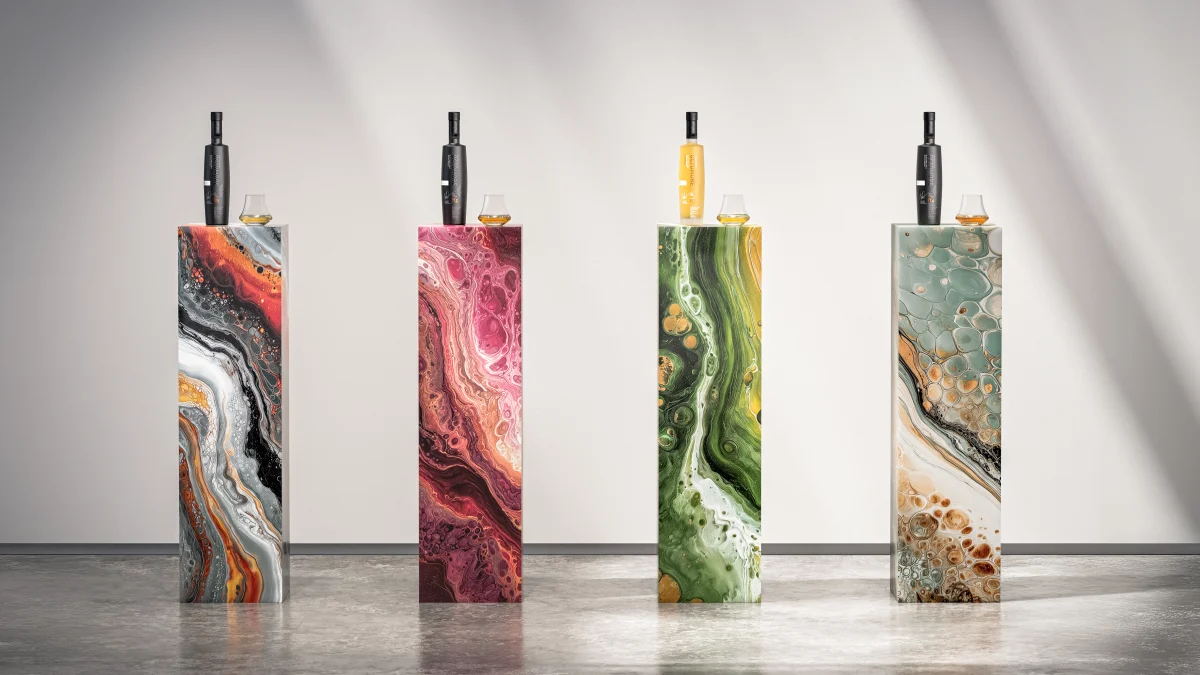
The new lineup comprises four distinct expressions, each exploring the intersection of ultra-heavy peat, innovative cask management, and traceable agricultural origins:
- Octomore 17.1: The foundational reference point, malted to 81 ppm (parts per million), matured exclusively in first-fill bourbon barrels for five years. (Retail: $205–$280)
- Octomore 17.2: Malted to 81 ppm, aged in second-fill French oak previously holding bourbon, and finished in first-fill port barriques. (Retail: $205–$280)
- Octomore 17.3: A peat monster clocking in at 132.1 ppm, distilled from barley grown on Octomore Farm and aged across an eclectic mix of bourbon, Ribera del Duero, Sauternes, Eiswein, and Syrah casks. (Retail: $205–$280)
- Octomore 17.4: Malted to 108.2 ppm, aged for seven years in first-fill Oloroso sherry casks, and finished in French virgin oak. Notably, this marks the first time a “.4” release in the series is widely distributed in the United States rather than remaining a distillery-only exclusive. (Retail: $250, launching October 1)
Chronology: The Evolution of Octomore
To understand the audacity of the Octomore 17 series, it is necessary to look back at the timeline of Bruichladdich’s radical experimentations on the Rinns of Islay.
2001–2008: The Genesis of an Impossible Idea
When Bruichladdich distilled its first batch of ultra-heavily peated spirit in the early 2000s, traditionalists scoffed. At the time, conventional wisdom held that peat levels above 50 ppm were unpalatable, masking any distinguishing characteristics of the distillate.
Named after the neighboring Octomore farm—which overlooks Loch Indaal and once housed a illicit 19th-century farm distillery—the inaugural Octomore release hit the market in 2008. That first bottle shocked the industry by registering a staggering 131 ppm of phenols. For context, heavy hitters of the whisky world like Laphroaig traditionally clock in around 45 ppm. Bruichladdich proved that by refining the distillation cuts and focusing on pristine spirit quality, a heavily peated spirit could emerge smooth, balanced, and remarkably sophisticated.
2017: Pushing the Envelope to the Extreme
As the series progressed through various iterations (culminating in the legendary Series 8), the distillery dared to push the boundaries even further. Certain experimental expressions within Series 8 shattered all previous records by hitting over 309 ppm. This astronomical concentration raised a fundamental question among blenders and connoisseurs alike: at what point does smoke completely obliterate all other sensory inputs?
2024: The Launch of Octomore 17
With the rollout of the Octomore 17 series, Bruichladdich has dialed back the extreme peaks of the Series 8 era, opting instead for a laser-focused synthesis of high peat and high culinary artistry. The first three expressions became available through specialty retailers in late summer, while the milestone 17.4 release opens up to the broader U.S. market on October 1.
Supporting Data: The Science of Smoke and Sourcing
Phenol parts per million (ppm) serve as the primary metric for measuring the smoke density absorbed by malted barley during the kilning process. However, as Bruichladdich repeatedly demonstrates, ppm is only part of the equation. The final flavor profile relies heavily on the type of grain, the length of fermentation, the shape of the copper stills, and—most importantly—the secondary maturation cask program.

Phenol Levels Across Notable Octomore Releases
- Octomore 01.1 (2008): 131 ppm
- Octomore Series 8 Peak: 309+ ppm
- Octomore 17.1: 81 ppm (Concerto barley, mainland Scotland)
- Octomore 17.2: 81 ppm (Concerto barley, mainland Scotland)
- Octomore 17.3: 132.1 ppm (Irene’s Field barley, Octomore Farm, Islay)
- Octomore 17.4: 108.2 ppm (Traceable Scottish barley)
Cask Engineering
The Octomore 17 series represents a masterclass in modern wood management. By utilizing a diverse array of secondary vessels—ranging from sweet Eiswein and rich Oloroso sherry to robust Ribera del Duero wine casks and rare port barriques—Bruichladdich ensures that the palate is met with layers of dried fruit, maritime salinity, baking spices, and citrus oil beneath the heavy shroud of smoke.
Official Responses and Philosophy
Bruichladdich’s Master Blender, Adam Hannett, has long been the creative engine behind the distillery’s forward-thinking liquid portfolio. Speaking on the ethos driving the new collection, Hannett emphasized that Octomore is not merely an exercise in shock value, but a philosophical statement about the potential of Scotch whisky.
"Octomore embodies Bruichladdich’s purpose: to create thought-provoking whiskies that challenge industry norms and offer consumers something they cannot get anywhere else," Hannett said in an official statement.
"We’ve used traceable, super-heavily peated barley from mainland Scotland and Islay, maturing each expression in a selection of high-quality casks, including bourbon, Sauternes wine, Port wine, Eiswein, and Oloroso sherry."
This commitment to agricultural traceability highlights Bruichladdich’s wider mission. Unlike many commercial distilleries that blend anonymous grain sources from across multiple regions, Bruichladdich champions terroir in whisky, proving that the specific field where a stalk of barley is grown profoundly impacts the final spirit in the glass.
Implications for the Single Malt Market
The release of the Octomore 17 series carries several significant implications for the global spirits landscape and the future of Islay single malts:
1. Challenging Preconceptions of "Smoke"
By continuously demonstrating that high ppm does not equal a one-note liquid, Bruichladdich educates consumers on the nuances of peat. The intricate balance achieved in bottles like the 17.3 (132.1 ppm) and the sherry-forward 17.4 forces rival distilleries to elevate their own cask programs and distillation techniques.
2. The Rise of Global Accessibility for Rare Releases
Historically, high-end or experimental fractions of the Octomore lineup—particularly the “.4” French virgin oak iterations—were strictly reserved as distillery-only exclusives on Islay. By opening up the distribution channels for Octomore 17.4 in the United States, Bruichladdich acknowledges the maturation and sophisticated palate of American spirits collectors, who are increasingly willing to invest in ultra-premium, high-abv single malts.
3. Sustainability and Traceability as Standard
As consumers increasingly demand transparency regarding the origin of their food and beverage products, Bruichladdich’s dedication to locally and regionally sourced, traceable barley sets a high benchmark. The distinct agricultural focus of the Octomore series proves that the future of luxury spirits lies in storytelling, provenance, and agricultural integrity.
Tasting Profiles: A Closer Look at the Lineup
For enthusiasts navigating the Octomore 17 release, each expression offers a distinct journey:
- Octomore 17.1: Clean, precise, and structured. Five years in first-fill bourbon barrels allows the 81 ppm spirit to shine, delivering classic coastal notes of sea salt, balanced smoke, and a gentle vanilla sweetness.
- Octomore 17.2: An innovative marriage of bourbon and port barriques. The initial four years in second-fill French oak are supercharged by a final year in first-fill port barriques, bringing forward a vibrant profile of cracked black pepper, bright citrus zest, and ripe dark berries.
- Octomore 17.3: The heavy hitter of the collection. Sourced from Irene’s Field on Octomore Farm and aged across a complex matrix of bourbon, Ribera del Duero, Sauternes, Eiswein, and Syrah casks, it delivers 132.1 ppm of peat balanced by surprising undertones of rich dark chocolate, orchard fruits, and citrus.
- Octomore 17.4: The crown jewel for U.S. fans this autumn. Malted to 108.2 ppm, aged seven years in first-fill Oloroso sherry casks, and finished in virgin French oak, this expression promises a deep, mahogany-hued dram rich in dried fruits, nutty sherry influences, and robust, warming spice.
With prices ranging from $205 to $280 for the first three bottles, and $250 for the 17.4, these whiskies represent a serious investment for collectors and peat enthusiasts alike. Yet, for those willing to brave the smoke, the Octomore 17 series offers an unparalleled masterclass in the art of modern distillation.
 Evan Lee Salim
 Laily UPN
