

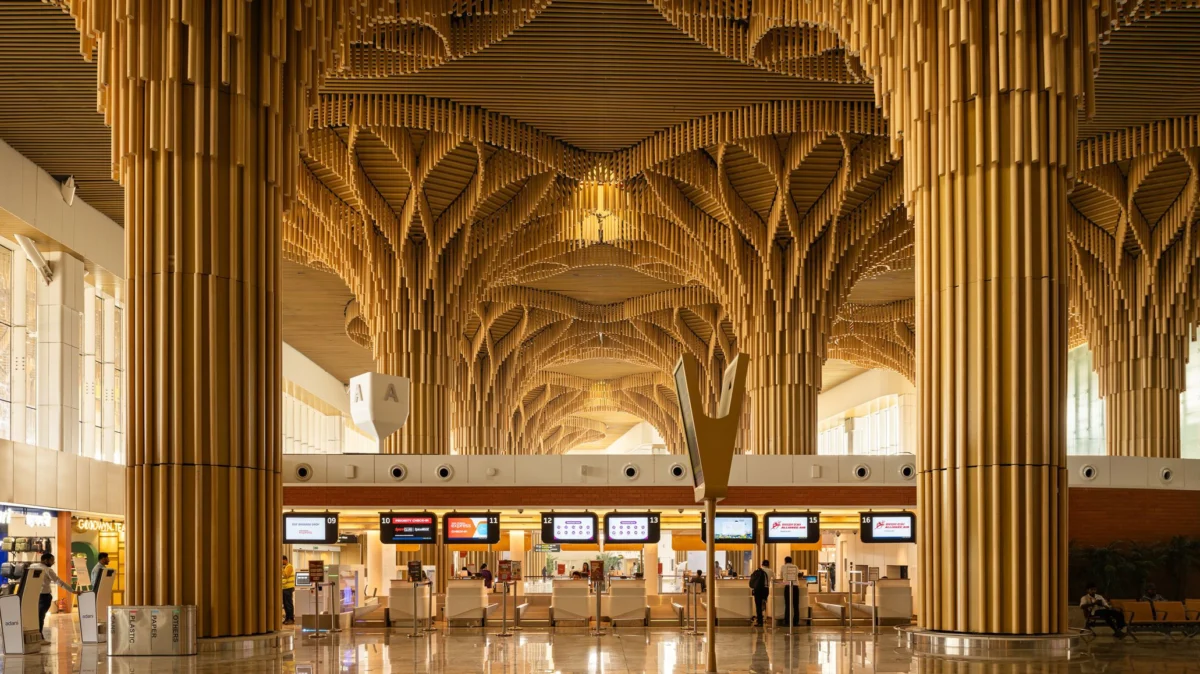
In the modern era of global mobility, the airport has long been relegated to the status of a "non-place"—a sterile, stressful, and purely functional environment designed solely to facilitate the movement of bodies from one point to another. However, a seismic shift in architectural philosophy is currently underway. On June 15, 2026, in Paris, the Prix Versailles organization unveiled its highly anticipated "World’s Most Beautiful Airports List," a curation of seven terminals that challenge the traditional, utilitarian view of aviation infrastructure.
From a "sky forest" in the lush landscapes of northeast India to a lotus-inspired glass cathedral in Mumbai, these projects prove that the journey is no longer just about the destination. By weaving local culture, sustainable engineering, and human-centric design into their structural DNA, these airports are evolving into destinations in their own right—emblems of economic, social, and cultural identity.
The 2026 Prix Versailles Selection: A Global Overview
The seven selected terminals—spanning China, Germany, India, Cambodia, and the United States—were chosen for their ability to balance the intense demands of high-volume transit with a deep, meaningful sense of place. According to the Prix Versailles, these buildings are not merely transit hubs; they are "innovative, inescapable hallmarks of their regions and their eras."

The list features:
- Guangzhou Baiyun International Airport, Terminal 3 (China)
- Frankfurt Airport, Terminal 3 (Germany)
- Lokapriya Gopinath Bardoloi International Airport, Terminal 2 (India)
- Navi Mumbai International Airport, Terminal 1 (India)
- Techo International Airport (Cambodia)
- Pittsburgh International Airport (United States)
- San Diego International Airport, Terminal 1 (United States)
Three of these seven architectural marvels will be selected for additional world titles in interior and exterior design later this year, further cementing their status as the gold standard for 21st-century aviation architecture.
A Chronology of the Modern Terminal Evolution
The trajectory toward "beautiful" airports did not happen overnight. For decades, the primary goal of airport design was efficiency: how quickly can we process thousands of passengers per hour?
.jpg)
In the early 2000s, architects began to pivot toward "experiential transit." The 2010s saw the introduction of high-end shopping and "airport cities," but it is only in the mid-2020s that we have reached the pinnacle of "biophilic" and "culturally resonant" design. The 2026 Prix Versailles winners represent the culmination of this evolution. Projects like the Navi Mumbai Terminal, which began development years prior and officially opened in 2025, represent the final stage of this transition, where the building itself serves as a piece of public art that reflects the local landscape, history, and ecology.
Architectural Spotlights: Form Meeting Function
Guangzhou Baiyun International Airport: The City of Flowers
Known as China’s "City of Flowers," Guangzhou has transformed its Terminal 3 into a sprawling, light-filled tribute to its heritage. Designed by Artelia in collaboration with the Guangdong Architectural Design and Research Institute, the terminal utilizes a sequence of organic curves, terraces, and gardens. The most striking feature is the highest open-air public observation deck in any Chinese airport, allowing passengers to reconnect with the physical act of flight.
Frankfurt Airport: The Modular Plaza
Architect Christoph Mäckler envisioned the new Terminal 3 as a series of urban squares and plazas, mirroring the human-scale layout of a city. The terminal’s most distinct feature is a set of three massive, rotating aluminum rings that hang overhead, creating a dynamic, kinetic atmosphere. Crucially, the terminal is modular, designed to adapt as aviation technology and passenger habits inevitably shift.

Lokapriya Gopinath Bardoloi: The Sky Forest
In northeast India, the Guwahati terminal serves as a masterclass in regional storytelling. Architect Nuru Karim drew inspiration from the local bamboo orchid and the winding path of the Brahmaputra River. The interior features a "sky forest" of branching structures that mirror the dense vegetation of the region, while the waiting areas function as informal galleries for indigenous art.
Navi Mumbai International Airport: The Lotus Canopy
Perhaps the most ambitious project on the list, the Navi Mumbai terminal by Zaha Hadid Architects is a testament to radical engineering. To create the "floating lotus" canopy, designers had to redirect rivers, move high-voltage power lines, and reclaim massive amounts of marshland. The result is a sculptural masterpiece where light filters through flower-like columns, turning the transition space into a place of wonder.
Techo International Airport: Cambodian Craft
Foster + Partners’ design for the Techo International Airport incorporates the aesthetic of Cambodian palaces. Using basketry-inspired ceilings and native rumduol trees, the airport creates a seamless indoor-outdoor experience. By prioritizing short walking distances and clear sight lines, the design proves that beauty does not have to come at the expense of passenger convenience.

Pittsburgh International Airport: The Man-Made Forest
Pittsburgh’s new terminal is a direct reflection of the Allegheny Mountains. Beneath a roof that mirrors the rolling hills of Pennsylvania, 38 steel columns branch out to form a forest-like structure. The terminal also introduces the "Petal Tunnel," an artistic homage to the city’s famous Fort Pitt Tunnel, which provides a dramatic, cinematic entrance to the airport environment.
San Diego International Airport: The Glass Promenade
San Diego’s Terminal 1 utilizes an 800-foot-long curved glass wall to bring the coastal light indoors. By collaborating with artist James Carpenter, the design team managed to filter glare while maintaining a bright, breezy atmosphere. This project is a triumph of sustainability, as its innovative column-less structural system helped reduce the carbon footprint of the building by 30%.
Official Responses and the Philosophy of Transit
Jérôme Gouadain, Secretary General of the Prix Versailles, emphasized that these airports represent a turning point in how society views infrastructure. "They are innovative, because they resolve the apparent conflict between the increasing frequency of travel and the need for speed," Gouadain noted.

He further argued that these airports are "inescapable" in their impact on humanity. By acting as the "amalgamation of architecture," these terminals serve as emblems of the economic, cultural, and social dynamics of the 2020s. They are no longer "transfer spaces"; they are the front porches of the cities they serve.
Implications: The Future of Global Travel
The recognition of these seven airports signals a broader shift in the travel industry. As the environmental and social impact of infrastructure becomes a primary concern for local governments and international bodies, the "beautiful airport" is becoming a necessity rather than a luxury.
- Economic Impact: Airports that are aesthetically pleasing and culturally relevant attract more tourism and investment. A terminal that tells a story—like Guwahati’s river-inspired ceilings—creates a lasting positive impression on travelers, encouraging repeat visits.
- Sustainability: The integration of native flora, natural lighting, and modular construction (as seen in Frankfurt and San Diego) proves that large-scale infrastructure can be built with a conscience.
- Human Well-being: The "stress-free" design philosophy adopted by Pittsburgh and Techo acknowledges that travel is inherently exhausting. By incorporating "sky forests" and "outdoor terraces," these airports actively lower passenger stress, making the transit experience more human-centric.
Conclusion: The Airport as a Cultural Icon
As we look toward the latter half of the 2020s, the benchmark for architectural success has been redefined. It is no longer enough to build a facility that moves planes and luggage efficiently. The world’s most beautiful airports of 2026 demonstrate that by honoring the land, the culture, and the passenger, architects can transform the most mundane part of a journey—the wait—into a highlight of the experience.

These seven winners remind us that whether one is passing through the lotus-petaled halls of Mumbai or the forest-like canopy of Pittsburgh, the architecture of our transit spaces is a mirror held up to our own society: creative, connected, and ever-evolving.
 Asro
Asro
 Siti Muinah
