

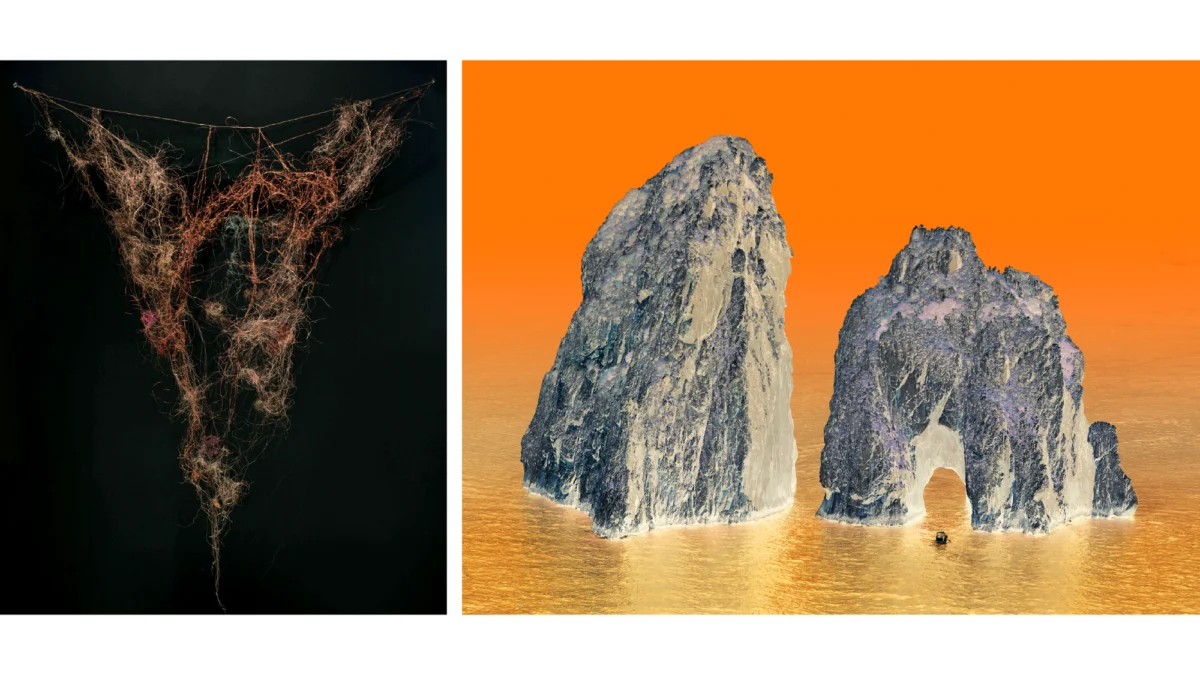
ISTANBUL — Borusan Contemporary has officially announced its upcoming cultural slate for the autumn season, featuring a powerful pairing of exhibitions that investigate the mechanics of human vision, the architectural psychology of space, and the growing hegemony of digital systems. Opening to the public on September 19, 2026, the museum will simultaneously debut Olivo Barbieri: Time Space Geometry and Haunted.
Together, these parallel presentations construct a profound intellectual and aesthetic dialogue. While Barbieri’s decades-spanning photographic practice interrogates how physical geography and antiquity are framed by the human gaze, Haunted turns its lens toward the computational apparatuses, artificial intelligence, and algorithms that increasingly construct our contemporary reality.
Curated by Dr. Fırat Arapoğlu and Dr. Kumru Eren respectively, these exhibitions arrive at a crucial technological and cultural inflection point. As screens, synthetic imagery, and machine-learning models saturate modern life, Borusan Contemporary’s dual showcase invites viewers to re-evaluate the very nature of looking, remembering, and knowing.
Main Facts
The autumn 2026 exhibition cycle at Borusan Contemporary centers on two distinct yet conceptually harmonious curatorial projects opening on September 19, 2026:
- Olivo Barbieri: Time Space Geometry: This exhibition marks the renowned Italian photographer’s very first solo presentation in Türkiye. Curated by Dr. Fırat Arapoğlu, the showcase spans over four decades of Barbieri’s prolific career, drawing from five major photographic series. It captures a diverse array of topographies—ranging from contemporary megalopolises and ancient archaeological excavations to the majestic peaks of the Alps, cascading waterfalls, and the island of Capri. Crucially, the exhibition debuts a brand-new, site-specific series commissioned by the Borusan Contemporary Art Collection, focusing on nine ancient cities across Türkiye.
- Haunted: Curated by Dr. Kumru Eren, Director of Borusan Contemporary, this thematic group exhibition mines the institutional collection to investigate the visual culture of the digital age. Featuring world-class new media artists such as Rafael Lozano-Hemmer, Memo Akten, teamLab, Quayola, Zimoun, DRIFT, Marco Brambilla, and Daniel Canogar, alongside works on paper by Kemal Önsoy, Haunted interrogates how data and artificial intelligence haunt our perception of physical and psychological space.
- Thematic Synthesis: Presented side-by-side at Istanbul’s dynamic cultural hub, the exhibitions use physical and digital mediums to bridge the gap between traditional optical framing and contemporary computational mediation. Both shows ask fundamental questions about how images dictate our understanding of truth, territory, and time.
Chronology: The Evolution of the Projects
The development of the autumn 2026 program represents years of institutional planning, curatorial research, and international artistic collaboration by the Borusan Contemporary team.
The Genesis of Barbieri’s Turkish Commission
The foundation for Olivo Barbieri: Time Space Geometry was laid years prior to its public announcement, rooted in a mutual desire to bring Barbieri’s radical methodologies into conversation with Türkiye’s rich historical landscape.
- Phase One (2022–2024): Curatorial dialogues between Dr. Fırat Arapoğlu and Olivo Barbieri established the thematic framework for a retrospective-style survey that would not merely review past masterworks, but actively generate new discourse.
- Phase Two (2025): Borusan Contemporary commissioned Barbieri to undertake an intensive photographic expedition across nine ancient cities in Türkiye. Working with his characteristic precision regarding scale, focus, and perspective, Barbieri captured sites laden with historical resonance, translating antiquity through his distinct contemporary lens.
- Phase Three (Early 2026): Final selections from Barbieri’s four-decade archive were collated alongside the newly minted Turkish series, establishing a narrative arc that moves from the artist’s early investigations of artificial lighting and urban morphology to his recent explorations of natural wonders and archaeological strata.
The Curation of Haunted
Concurrently, Dr. Kumru Eren and the Borusan Contemporary curatorial team mapped out Haunted as an exploration of the institution’s premier new media holdings.
- Collection Review: Over the past several years, the museum has aggressively expanded its holdings to encompass works that directly address the algorithmic turn in contemporary art.
- Synthesizing Media and Paper: A vital curatorial decision involved pairing heavy, immersive digital installations and data-driven sculptures by global pioneers with the intimate, tactile works on paper by Turkish artist Kemal Önsoy. This juxtaposition underscores a central curatorial thesis: that the ghost in the machine is not separate from traditional artistic impulses, but rather an evolution of them.
Supporting Data and Artistic Frameworks
To fully appreciate the scope of Borusan Contemporary’s upcoming season, one must examine the specific mechanics and philosophies driving both exhibitions.
Olivo Barbieri: Time Space Geometry
Olivo Barbieri (born 1954 in Carpi, Italy) has spent more than forty years challenging the conventions of documentary photography. Best known for his site specific_ project—initiated in 2003, in which he used selective focus techniques (often associated with tilt-shift photography) to make bustling global metropolises look like miniature architectural models—Barbieri investigates how humans construct scale and meaning.
- The Five Major Series: The exhibition synthesizes images from key chapters of Barbieri’s career, demonstrating his shifting focus from urban artificiality to natural sublimity.
- The Anatolian Commission: By turning his specialized optical gaze toward nine ancient cities in Türkiye, Barbieri disrupts comfortable notions of historical familiarity. The resulting images do not document ruins in the traditional archaeological sense; instead, they present ancient spaces as alien, uncanny, and perpetually reconstructed through the act of viewing.
- Thematic Core: The show hinges on the idea of the act of looking. Barbieri forces viewers to question whether they are observing objective physical space or a construct engineered by focal length, historical narrative, and subjective memory.
Haunted
While Barbieri examines the optics of the physical world, Haunted addresses a reality increasingly colonized by non-human actors: code, sensors, machine learning, and vast digital archives.
- The Roster: The exhibition features some of the most prominent names in contemporary media art:
- Rafael Lozano-Hemmer: Known for large-scale interactive installations that use robotics, biometric data, and surveillance tech to implicate the viewer.
- Memo Akten: An artist and researcher whose work explores the intersections of artificial intelligence, neuroscience, and digital culture.
- teamLab: The international collective bridging art, science, technology, and design through immersive digital environments.
- Quayola: An artist who uses computational methods, high-resolution laser scanning, and software algorithms to reinterpret classical masterworks and natural topographies.
- Zimoun: Renowned for minimalist, architectural sound sculptures that use simple industrial components to create complex, organic sonic ecosystems.
- DRIFT: The Amsterdam-based studio exploring the relationship between nature, space, and technology through kinetic sculptures.
- Marco Brambilla: Famous for complex, high-definition video collages that critique contemporary spectacle and digital culture.
- Daniel Canogar: An artist working with data visualization, recycled electronics, and real-time information streams.
- Kemal Önsoy: Providing a vital counterpoint through expressive, layered works on paper that ground the exhibition’s digital explorations in manual, tactile gestures.
- Thematic Core: The title Haunted is deliberately chosen. It references the digital "ghosts" embedded in our daily lives—the algorithms that predict our behavior, the synthetic images that blur truth and fiction, and the endless accumulation of data that constructs digital doubles of physical realities.
Official Statements and Institutional Vision
Borusan Contemporary continues to cement its reputation as one of Istanbul’s most forward-thinking cultural institutions, uniquely situated within the historic Perili Köşk (Haunted Mansion) along the Bosphorus. The pairing of these two exhibitions highlights the museum’s commitment to exploring the cutting edge of visual culture while maintaining a dialogue with historical contexts.

Dr. Kumru Eren, Director of Borusan Contemporary and curator of Haunted, emphasizes that the exhibition reflects the museum’s core mission:
"We live in an era where technology is no longer just a tool we use; it is the lens through which our reality is generated, experienced, and remembered. With ‘Haunted,’ we wanted to examine the haunting presence of computational systems, data, and artificial intelligence in our lives. By placing these works in conversation with Kemal Önsoy’s works on paper, we create a space to reflect on how technology mediates our humanity."
Dr. Fırat Arapoğlu, curator of Olivo Barbieri: Time Space Geometry, highlights the significance of Barbieri’s long-awaited debut in Türkiye:
"Olivo Barbieri does not simply take pictures of places; he deconstructs how places come to exist in our consciousness. His decades-long investigation into scale, perspective, and optical intervention challenges us to look deeper at the world around us. The new series commissioned for the Borusan Contemporary Art Collection brings a fresh, provocative perspective to Türkiye’s ancient architectural heritage, forcing us to ask how we remember and reconstruct our shared histories."
Implications for Contemporary Art and Cultural Discourse
The simultaneous presentation of Olivo Barbieri: Time Space Geometry and Haunted carries profound implications for the global contemporary art community, particularly regarding the evolution of image-making in the 21st century.
1. Bridging Analog Optics and Digital Computation
For centuries, the human relationship with space was mediated by optical devices—from the Renaissance camera obscura to the photographic lens. Barbieri’s work sits at the zenith of this optical tradition, utilizing focus and framing to reveal the constructed nature of photographic truth.
Conversely, the artists in Haunted operate in an era where the camera is often bypassed entirely in favor of generative AI, code, and synthetic data. By presenting these two paradigms under one roof, Borusan Contemporary maps out the complete trajectory of modern visual literacy: from the physical framing of the landscape to the algorithmic generation of synthetic realities.
2. Situating Turkish Heritage in a Global Dialogue
Barbieri’s newly commissioned series on Türkiye’s ancient cities offers a vital intervention in how national and archaeological heritage is visually represented. Rather than falling back on romanticized, orientalist tropes of antiquity, Barbieri’s cool, analytical gaze treats ancient sites as active participants in contemporary spatial discourse. This positions Turkish cultural heritage not as a static artifact of the past, but as a living canvas subject to modern optical interpretation.
3. The Institutional Role in the Age of AI
As cultural institutions grapple with the cultural anxieties surrounding artificial intelligence, data surveillance, and digital saturation, Borusan Contemporary’s autumn 2026 program offers a model for critical engagement. Rather than rejecting technology as a threat or embracing it uncritically, exhibitions like Haunted and Time Space Geometry provide platforms for artists and audiences to interrogate the power dynamics of the image.
Visitor Information
- Exhibition Dates: September 19, 2026 – [Closing Dates to be announced by the institution]
- Venue: Borusan Contemporary (Perili Köşk), Istanbul, Türkiye
- Featured Artists (Time Space Geometry): Olivo Barbieri
- Featured Artists (Haunted): Rafael Lozano-Hemmer, Memo Akten, teamLab, Quayola, Zimoun, DRIFT, Marco Brambilla, Daniel Canogar, and Kemal Önsoy
- Curators: Dr. Fırat Arapoğlu (Time Space Geometry) and Dr. Kumru Eren (Haunted)
- Official Website: borusancontemporary.com
As the art world prepares for the autumn 2026 season, Borusan Contemporary stands ready to challenge visitors to look closer, think deeper, and confront the digital and optical phantoms that shape our perception of the modern world.
 Basiran
 Muslim
 Evan Lee Salim
