

Main Facts
Warner Bros. Animation has officially launched the first installment of its ambitious, multi-part animated film trilogy adapting Batman: Knightfall, one of the most culturally significant and commercially disruptive comic book arcs in DC history. Originally published across 1993 and 1994, the sprawling crossover event introduced the world to Bane—a tactical, Venom-addicted powerhouse who achieved the seemingly impossible by breaking the Dark Knight’s spine.
While Christopher Nolan famously cherry-picked elements of the storyline for his live-action blockbuster The Dark Knight Rises (2012), the new animated trilogy aims to deliver a far more faithful, deep-dive adaptation of the source material. Batman: Knightfall – Part 1 is available now on major VOD platforms like Apple TV and Prime Video.
Helmed by a team of veteran animation creators, the project seeks to rectify what comic enthusiasts often viewed as oversimplifications in past media adaptations. Instead of portraying Bane merely as a mindless brute fueled by super-steroids, the new films emphasize his chilling intellect, psychological warfare, and brutal strategic dismantling of Bruce Wayne. Furthermore, the trilogy introduces Jean-Paul Valley Jr.—better known as the religious zealot Azrael—positioning him as a major player whose dark, uncompromising philosophy directly contrasts with Batman’s code of justice.
Chronology and Historical Context: The Origins of a 1990s Milestone
To understand the weight of Warner Bros. Animation’s new project, one must look back at the comic book landscape of the early 1990s. During this era, DC Comics was aggressively seeking ways to captivate a shifting readership by introducing shocking, high-stakes narratives that challenged the status quo. Alongside The Death of Superman, Knightfall stood as a crown jewel of this editorial strategy.

The arc began in earnest with Bane’s orchestration of a mass breakout at Arkham Asylum. Rather than confronting the Caped Crusader head-on, Bane systematically forced Batman to hunt down his most unhinged foes—including the Joker, the Riddler, Scarecrow, and Two-Face—without a single moment of rest. By the time a physically and mentally exhausted Bruce Wayne returned to Wayne Manor, his defenses were shattered. It was then that Bane struck the fatal blow, snapping Batman’s back across his knee and capturing the collective imagination of a generation.
When adapting a sprawling, year-long comic event into feature-length animation, creators face the daunting task of curation. For producer Jim Krieg, this editing process was nothing short of "agonizing." Yet, the team remained steadfast in their commitment to honoring the 1990s aesthetic—collaborating with animation powerhouse Studio Mir (The Legend of Korra, X-Men ’97) to capture the era’s signature visual hyperbole.
Supporting Data and Production Insights: Embracing the Extremes of the ’90s
The visual identity of Batman: Knightfall – Part 1 is a deliberate, nostalgic postcard to 1990s comic book art style, where subtlety took a backseat to sheer intensity. Supervising producer Rick Morales noted that the creative directive for the film was rooted in exaggeration.
"Everybody’s buff," Morales explained. "Even Tim, the 15-year-old boy [Tim Drake], has muscles on muscles. In the ’90s, everything was pushed to the extreme—big and bold and angry. All the superheroes were getting shoulder pads and pouches and big guns. Batman isn’t cool enough as he is. He needed to have spikes and metal gauntlets. I really wanted to lean into that."

Beyond the aesthetic choices, the production marks a notable shift in tone regarding violence for a Warner Bros. Batman project. While Morales is well-versed in handling visceral action through his work on the Mortal Kombat animated features, he was initially surprised by how far studio executives encouraged him to push the envelope for the Dark Knight.
Describing notes received from studio executives after submitting the first rough cut of Act One, Morales recalled being urged to heighten the visual impact: "Hey, I think we can burn this guy’s face off here and show it."
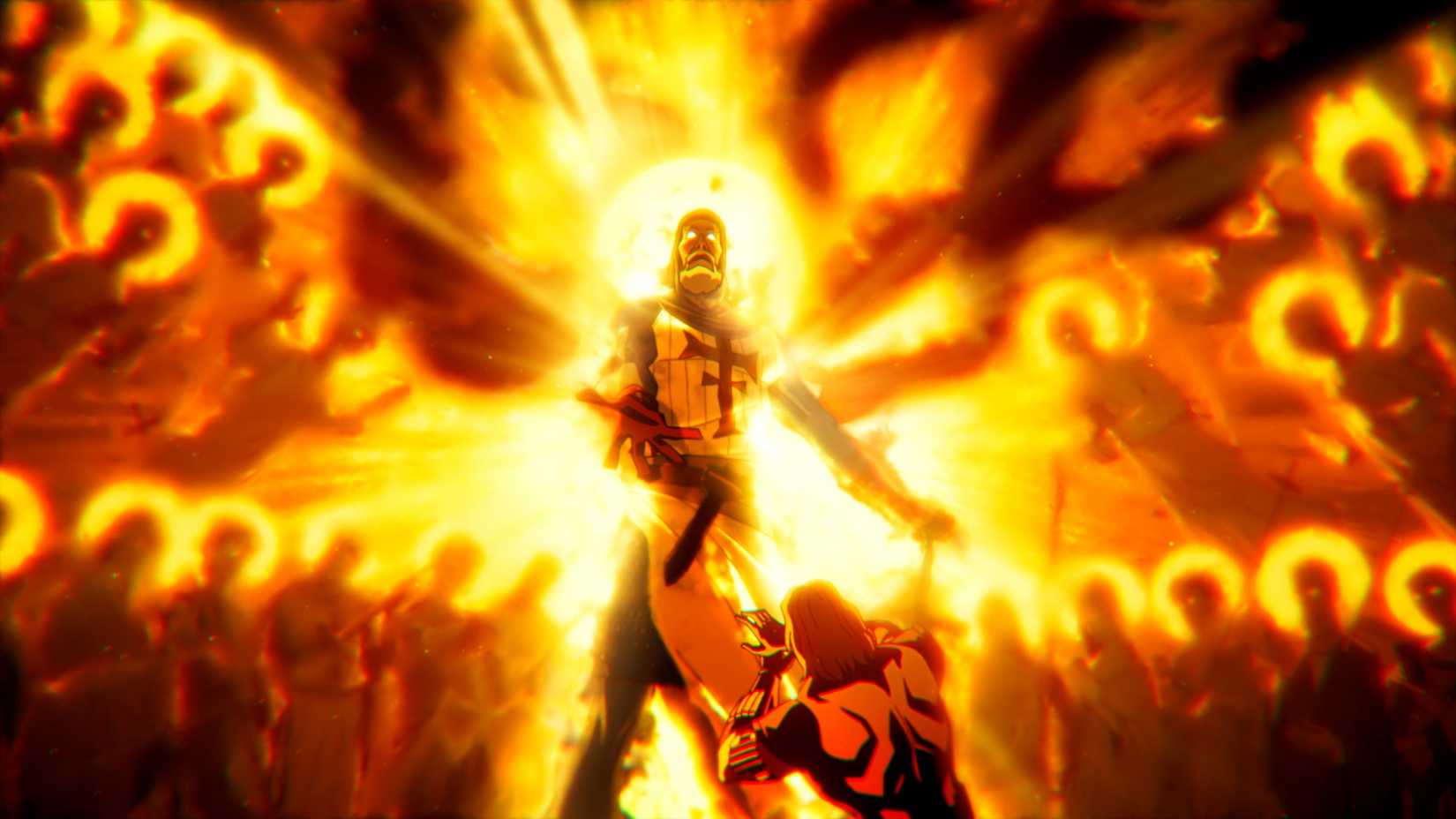
Rather than shying away from grit, the production team utilized the violence purposefully to define character philosophies. While Batman’s actions remain grounded in traditional crime-fighting, Azrael’s introduction involves a fiery, merciless assault on human traffickers that highlights his bloody origins rooted in the medieval Knights Templar.
Official Responses and Creative Vision
The creative team behind the trilogy has been vocal about their motivations, driven largely by their identities as lifelong comic book fans. While acknowledging the cultural footprint of Christopher Nolan’s live-action trilogy, the producers felt a distinct duty to the purists.
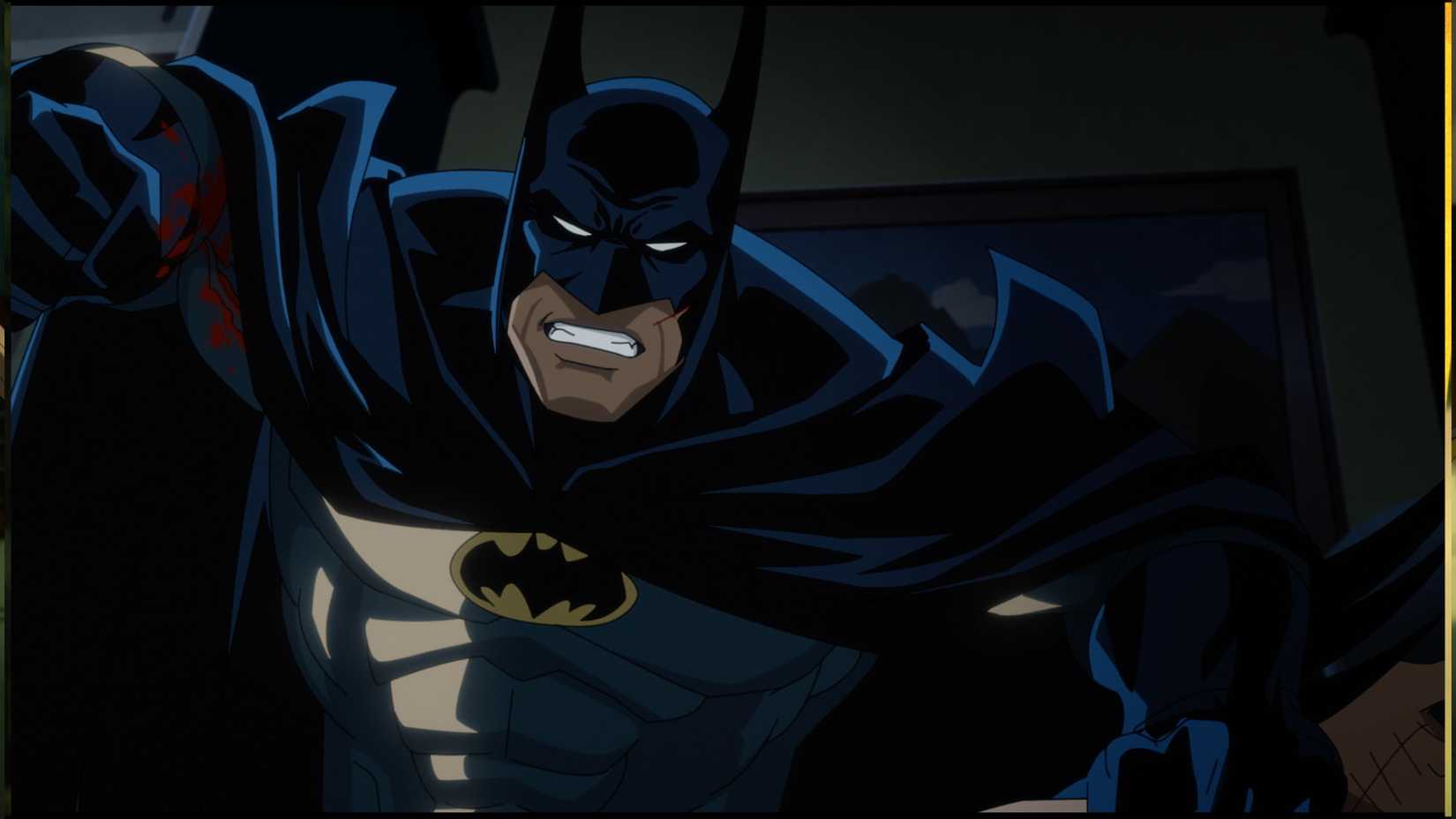
"Everybody on this team really respects Nolan and really enjoys that trilogy, but we are still comic book nerds, and so when there are big derivations from the comic book source, we get a little bit frustrated," Jim Krieg shared. "This felt like an opportunity to tell the Bane story we’ve known for a long time from comic books for an audience that may not be familiar with it."
Krieg emphasized that Bane’s characterization needed to transcend the muscle-bound archetype often depicted in mainstream media. "Bane’s not just a pile of steroided muscles, but actually a real calculating machine," Krieg noted. "He doesn’t beat Batman with his strength, but with his strategy of wearing him down bit by bit. It feels like Bane has earned this victory at the end of Part 1. I think that’s much more satisfying than [saying] he’s just so strong he beats the crap out of Batman."
Similarly, the introduction of Azrael required a delicate balance. Adapting the full lore of Batman: Sword of Azrael (1992) within a single feature was impossible, so the team focused on establishing his brutal operational world to lay the groundwork for his upcoming character arc in Part 2.
"We needed to give some context to that, because you can’t just have this dude in the Batcave with Tim and Alfred, but obviously we weren’t going to be able to adapt the entire story of the Sword of Azrael," Morales said. "Azrael is a little like the Boba Fett of the Batverse. He’s an image that people know, but they don’t know what his story is. Hopefully people will know him as well as they know the Joker at the end of this series and want to see more from him."
Implications for the DC Animated Universe
The release of Batman: Knightfall – Part 1 signals a broader strategic pivot for Warner Bros. Animation. By leaning into multi-part, serialized adaptations of legendary comic arcs rather than standalone original movies, the studio is catering directly to the dedicated graphic novel readership.
The success of Part 1—and the upcoming explorations of Jean-Paul Valley’s psychological deterioration and ascension to the mantle in subsequent films—will likely dictate the future of DC’s adult-oriented animated slate. If the creative team successfully transitions Azrael from a background enigma to a household name comparable to the Joker, it could pave the way for similarly granular, long-form adaptations of other historic DC crossovers.
For now, audiences are invited to witness the methodical dismantling of the world’s greatest detective. Batman: Knightfall – Part 1 is currently available to rent or purchase digitally on Apple TV and Prime Video.
 Reynand Wu
 Jia Lissa
 Layla Zulfa
