

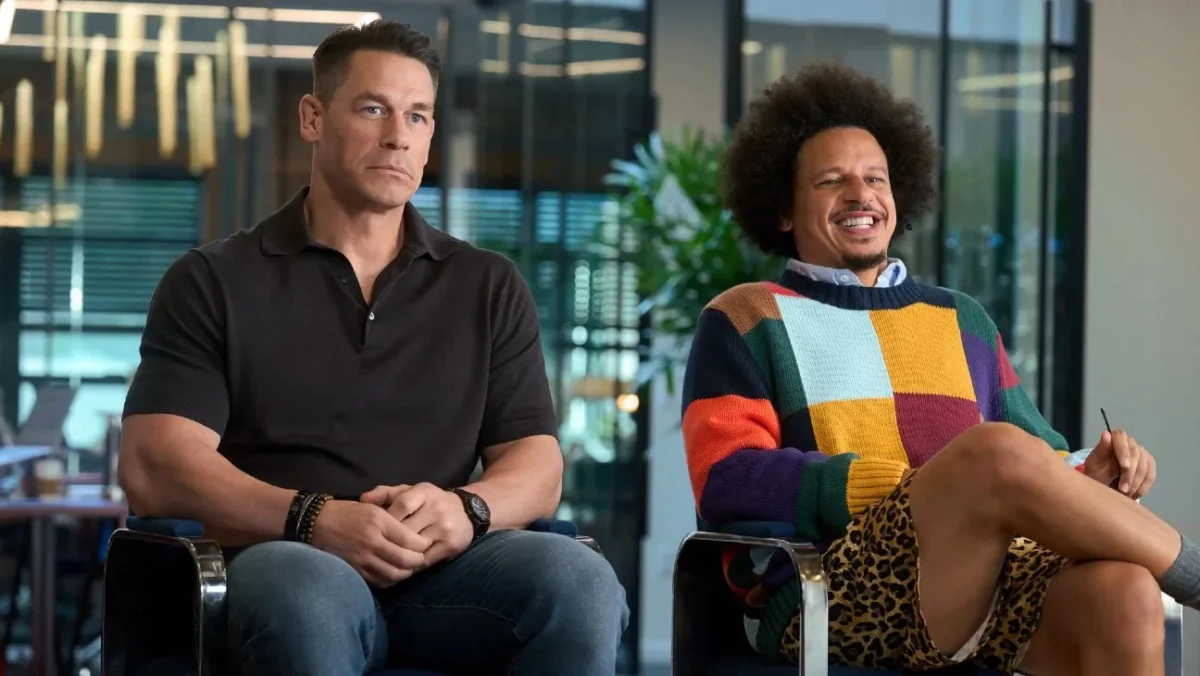
The streaming landscape is no stranger to the "odd couple" trope, but Netflix’s latest offering, Little Brother, attempts to push the boundaries of the "agent of chaos" sub-genre to its absolute limit. Starring the increasingly ubiquitous John Cena and the vanguard of surrealist humor, Eric André, the film represents a calculated move by Netflix to capture the high-energy, raunchy comedy market. Directed by Matt Spicer, the filmmaker behind the critically acclaimed Ingrid Goes West, Little Brother is a film that balances its "steroidal cartoonishness" with a surprisingly literate commentary on identity in the age of reality television.
Main Facts: A Collision of Comedic Styles
Little Brother centers on the explosive reunion between Rudd Landy (John Cena), a high-stakes Manhattan real estate agent with a desperate need for external validation, and Marcus Pinchel (Eric André), a man suffering from what the film affectionately dubs "Destructive Moron Syndrome." The narrative catalyst is a thirty-five-year-old connection: Rudd briefly mentored Marcus as part of a Big Brother-Little Brother program when they were children.
The film, which debuts on Netflix on Friday, June 26, is the latest entry in Cena’s prolific post-WWE career. Having successfully pivoted from the wrestling ring to the silver screen, Cena has carved out a niche as a comedic icon willing to undergo any indignity for a laugh. Opposite him, Eric André brings his signature brand of unpredictable, physical anarchy. The supporting cast is equally robust, featuring Michelle Monaghan as Rudd’s philanthropic wife, Deirdre, and Christopher Meloni as Rudd’s billionaire, DJing older brother, Josh.
Chronology: From Mentorship to Mayhem
The narrative arc of Little Brother is structured around a series of escalating disasters that threaten to dismantle Rudd Landy’s carefully curated life.
The Catalyst
The story begins with Marcus Pinchel’s violent and unorthodox escape from a psychiatric facility. Driven by a misinterpreted email from Rudd—which Marcus views as a formal invitation to move in—Marcus embarks on a cross-country journey to New York. This journey is punctuated by the first of many "vehicular gags," a hallmark of the film’s slapstick sensibility, as Marcus’s car is sideswiped by a truck, leading him to arrive at Rudd’s doorstep with nothing but chaos in his wake.
The Collision
Marcus arrives just as Rudd is reaching a critical juncture in his career. Rudd is vying for a spot on the Bravo reality series NYC Hustlers, a show he believes will finally allow him to step out of the shadow of his biological brother, Josh. The arrival of his "little brother" Marcus creates an immediate friction. Rudd, fearing that Marcus’s instability will ruin his chances with the show’s producers (played by Ego Nwodim and Caleb Hearon), attempts to manage Marcus while maintaining the facade of a superstar salesman.

The Climax and Resolution
The film’s second act involves a series of increasingly public humiliations for Rudd, including a notorious scene involving Michelle Monaghan and a roadside incident in suburban New Jersey that serves as the film’s "water cooler" moment. As the filming for NYC Hustlers progresses, Marcus’s antics—such as accidentally interrupting Rudd’s "hero shots" with crude behavior—force Rudd to confront his own insecurities. The tension between the "real" brother (Josh) and the "found" brother (Marcus) culminates in a high-stakes property deal where Rudd must choose between his manufactured image and his actual relationships.
Supporting Data: Cast, Crew, and Production Pedigree
The effectiveness of Little Brother relies heavily on its creative team, who bring a level of craft often missing from straight-to-streaming comedies.
Direction and Writing
Matt Spicer, whose work on Ingrid Goes West displayed a keen understanding of social media-driven neurosis, brings a similar lens to Little Brother. Spicer’s ability to ground absurd slapstick in a recognizable reality helps the film avoid becoming a mere collection of sketches. The script, penned by Jarrad Paul and Andrew Mogel (The D Train), utilizes the artifice of reality TV to explore the fragility of the male ego.
The Ensemble
- John Cena (Rudd Landy): Cena continues his streak of subverting his massive physique. By playing a man who feels "small" despite his muscles, Cena taps into a specific type of comedic vulnerability.
- Eric André (Marcus Pinchel): André serves as the film’s engine of destruction. His performance is a whirlwind of physical comedy, including a standout sequence involving a wheelchair and a staircase.
- Christopher Meloni (Josh Landy): Meloni provides a formidable foil for Cena. His portrayal of a "swollen and mad-eyed" billionaire property owner adds a layer of satirical grit to the film’s New York setting.
- Michelle Monaghan (Deirdre): Monaghan’s role as the "open-hearted wife" provides the film’s moral center, though she is frequently pulled into the film’s raunchier set pieces.
Official Context: The "Streaming Comedy" Landscape
While Netflix has not released official internal memos regarding the film’s production, industry analysts view Little Brother as a key component of the platform’s "Summer of Comedy" strategy. The film follows a pattern of high-concept, star-driven features designed to generate social media engagement through "viral" gags.
Cena’s involvement is particularly noteworthy. Industry insiders suggest that Little Brother is part of a broader "Cena-verse" strategy. The actor is currently one of the most sought-after talents for streaming platforms, with an inevitable team-up with Kevin Hart reportedly in development at Netflix. This "blue-collar superstar" appeal allows Netflix to bridge the gap between traditional action fans and comedy audiences.
However, the film also reflects a growing trend in streaming: the "hyper-edited" comedy. Critics have noted that Little Brother feels "plotted to the hilt and edited within an inch of its life," a style that prioritizes "no-frills efficiency" over the improvisational breathing room that characterized the comedies of the early 2000s.

Implications: Identity, Satire, and the Future of the Genre
The release of Little Brother carries several implications for the film industry and the evolution of the comedy genre in the 2020s.
The Satire of the Self
By placing Rudd Landy in the crosshairs of a reality TV production, Spicer and his writers comment on the performative nature of modern identity. Rudd’s desperation to be "cast" in his own life is a sentiment that resonates in the TikTok and Instagram era. The film suggests that the "straight man" in a comedy is often the most delusional character, as they are the ones most committed to a false sense of order.
The Evolution of the Action-Comedy Star
John Cena’s performance in Little Brother solidifies his status as the heir apparent to the comedic throne once held by actors like Arnold Schwarzenegger in his Twins era, but with a more self-deprecating, modern edge. Cena’s willingness to be the butt of the joke—quite literally in this film—marks a shift in how "tough guy" actors manage their brands. This "fearless buffoonery" is becoming a requirement for physical actors looking to maintain longevity in a market that favors versatility.
The "Disposable" Comedy Concern
Despite its successes, Little Brother highlights a potential crisis in the comedy genre: the "streaming-first" aesthetic. The film’s "C+" critical reception stems largely from a feeling that it is too short and too focused on efficiency. There is a concern among cinephiles that the era of the "cult classic" comedy—films that rely on slow-burn jokes and character development—is being replaced by "content" that is optimized for background viewing and quick clips.
Cultural Nostalgia
The film’s use of 2000s-era cultural touchstones, such as a romantic subplot involving a Hoobastank song, suggests a strategic pivot toward "Millennial nostalgia." By blending Gen Z-friendly chaotic humor (André) with Millennial-targeted references and Gen X-established stars (Meloni, Monaghan), Netflix is attempting a "four-quadrant" approach to comedy that is increasingly rare in the fragmented media landscape.
Conclusion: A Respectable Addition with Room to Grow
Little Brother is a film that thrives on the chemistry of its leads while occasionally being stifled by its own production constraints. It stands as a testament to John Cena’s growth as a performer and Eric André’s status as a premier comedic disruptor. While it may not reinvent the "agent of chaos" sub-genre, it provides a "satisfyingly idiotic" escape that serves as a snapshot of the current state of mainstream American comedy. As Cena moves toward his next project with Kevin Hart, Little Brother will likely be remembered as the moment he found his most effective screen partner to date, even if the film itself left audiences wanting just a little bit more of the madness.
 Nila Kartika Wati
 Lina Hope
 Asep Darmawan
